
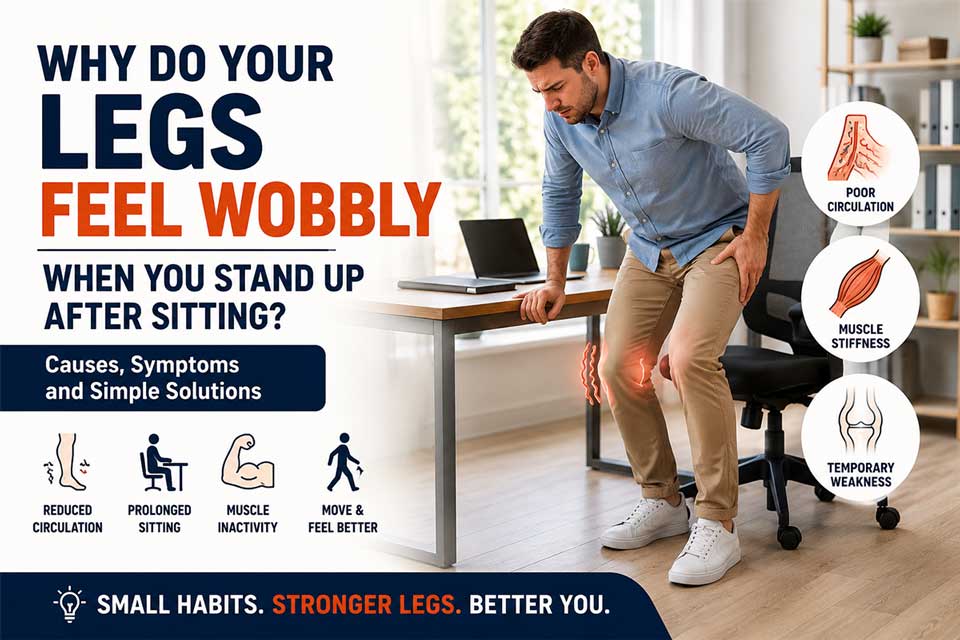
You stand up from your desk after a long stretch of work, and for a second or two your legs feel shaky, weak, or not quite steady under you. If you have ever wondered why do your legs feel wobbly when you stand up after sitting, you are far from alone. This kind of temporary wobbliness is one of the most common physical complaints among office workers, remote workers, students, and gamers who spend hours in the same seated position.
The good news is that this feeling is usually harmless and often fades within a few steps. It is your body’s way of telling you that your muscles, joints, and circulation need to “wake up” after a period of stillness. In this guide, you will learn exactly why it happens, what it feels like, how to prevent it, and when it might be worth mentioning to a healthcare professional.
| Quick Answer Your legs may feel wobbly when you stand up after sitting because prolonged sitting temporarily reduces muscle activity, blood flow, and joint movement in the lower body. When you sit still for a long time, your calf and thigh muscles relax, blood can pool in your legs, and your joints briefly lose their usual range of motion. Standing up suddenly asks these systems to reactivate all at once, which can create a brief feeling of shakiness or instability. This usually settles within a few seconds to a minute of walking or moving. |
Why Do Your Legs Feel Wobbly After Sitting?
Wobbly legs after sitting usually come down to a temporary mismatch between how your body was positioned and what it is suddenly being asked to do. Several small physical changes build up during long periods of sitting, and they tend to show up all at once the moment you stand.
- Reduced muscle activity: Sitting keeps your calves, hamstrings, and glutes relatively inactive, so they are not primed to support your full body weight right away.
- Temporary stiffness: Staying in one position lets connective tissue around the joints tighten slightly, which can make the first few steps feel less smooth.
- Decreased joint movement: Knees, hips, and ankles that have not moved through their full range for a while may feel briefly less stable.
- Leg fatigue: Even without obvious effort, sitting can lead to a heavy or tired feeling in the legs, especially later in the day.
- Pressure on muscles and nerves: Sitting, especially with crossed legs or an unsupported seat edge, can put mild pressure on nerves and blood vessels behind the knees.
- Temporary circulation changes: Blood tends to settle in the lower legs during sitting, and it takes the circulatory system a moment to redistribute it once you stand.
None of these changes are dangerous on their own. They are simply signs that your body needs a short adjustment period after sitting still.
Why Do Your Legs Feel Wobbly When You Stand Up After Sitting?
The direct answer is timing and position. Why do your legs feel wobbly when you stand up after sitting? Because standing up is the exact moment when reduced circulation, quiet muscles, and stiff joints are all asked to work together instantly. The situation tends to look a little different depending on what you were doing beforehand.
After Office Work
A typical office day involves long meetings, focused screen time, and few natural reasons to get up. By the time you finally stand, your legs may feel stiff or slightly unsteady simply because they have not moved in an hour or more.
After Long Meetings
Meetings, whether in person or on video calls, often involve sitting in the same chair without much thought about posture. Crossed legs, a slouched position, or an oddly angled chair can add to that wobbly feeling once the meeting finally ends.
After Gaming Sessions
Gamers often sit in a fixed, forward-leaning position for extended stretches with minimal leg movement. The intense focus on the screen can also mean hours pass before a break happens, which gives the legs even less chance to stay active.
After Studying for Hours
Students preparing for exams or working through long study sessions frequently lose track of time. Sitting at a desk or on a bed for hours without moving can leave the legs feeling heavy, stiff, or briefly shaky when standing.
Common Symptoms That May Occur
Wobbly legs after sitting can show up in a few different ways. Most people notice a short-lived combination of the following:
- Shaky legs when first standing
- A general weak feeling in the thighs or calves
- Heaviness in the lower legs
- Stiffness around the knees or hips
- Temporary numbness or a tingling sensation
- Reduced balance for the first few steps
- Tight calves that loosen up as you walk
These symptoms typically ease within a minute of walking around. If they last much longer, feel severe, or come with dizziness, that is worth paying closer attention to, which is covered later in this article.
How to Prevent Wobbly Legs After Sitting
Most wobbly-leg episodes can be reduced with a few simple habit changes. None of these require special equipment, though some tools, like a footrest, can make a noticeable difference.
Stand Up Slowly
Instead of popping up quickly, pause for a moment with your feet flat on the floor before rising. This gives your circulation and muscles a brief head start.
Stretch Before Standing
A few ankle rolls, calf flexes, or gentle knee extensions while still seated can wake up the muscles before you ask them to bear your full weight.
Perform Simple Desk Exercises
Short seated exercises, such as heel raises or leg extensions done every hour, can keep blood flowing and muscles engaged throughout the day.
Adjust Chair Height
A chair that is too high or too low can add unnecessary pressure behind the knees or force awkward foot positioning, both of which can contribute to that wobbly feeling.
Use a Footrest Properly
A properly positioned footrest supports the legs and encourages a healthier sitting angle, which may reduce the pressure that builds up during long sitting sessions.
Take Regular Walking Breaks
Standing up and walking for even one or two minutes every 30 to 60 minutes helps keep circulation and muscle activity closer to normal.
Can a Footrest Help Reduce Wobbly Legs?
A footrest may help reduce wobbly legs by supporting healthier lower-body positioning throughout the day. When your feet rest on a stable, slightly elevated surface, your knees and hips are often better aligned, which can ease pressure behind the knees.
- Better lower-body support: A footrest gives your legs a stable base instead of leaving your feet to dangle or rest unevenly.
- Less pressure behind the knees: Proper foot support can reduce the compression that sometimes builds up at the back of the knee during long sitting periods.
- Improved sitting angle: Footrests can help maintain a more open hip and knee angle, which supports more natural circulation.
- Reduced leg fatigue: With better support, your leg muscles may not need to work as hard to stabilize your position, which can lessen fatigue by the end of the day.
If you want a deeper look at how footrests support the lower body, our guide on the benefits of using a footrest under a desk walks through the full picture.
When Should You See a Healthcare Professional?
Occasional wobbliness after sitting is common and usually nothing to worry about. However, some symptoms deserve a closer look from a qualified healthcare professional.
- Wobbliness that lasts more than a few minutes after standing
- Frequent dizziness or lightheadedness along with the wobbly feeling
- Numbness or tingling that does not resolve with movement
- Weakness that seems to be getting worse over time
- Any fainting or near-fainting episodes
According to the Mayo Clinic, lightheadedness when standing after sitting or lying down can sometimes be a sign of orthostatic hypotension, a temporary drop in blood pressure that is usually mild but can occasionally point to an underlying health issue. This is not a diagnosis, and most everyday leg wobbliness is unrelated to it, but frequent or severe symptoms are always worth discussing with a healthcare provider.
Daily Habits That Keep Your Legs Feeling Strong
A few consistent habits can go a long way toward reducing wobbly, stiff, or fatigued legs over time.
- Stand up and move for a minute or two every hour
- Keep both feet flat on the floor or supported by a footrest
- Avoid crossing your legs for long stretches
- Stretch your calves and hamstrings during breaks
- Stay hydrated throughout the day
- Choose a chair height that keeps your knees near a 90-degree angle
- Take a short walk after long meetings or study sessions
Common Mistakes That Make It Worse
Certain everyday habits can make wobbly or fatigued legs more likely.
- Sitting still for hours without a break
- Crossing legs constantly, which can add pressure behind the knees
- Using a chair with poor height adjustment
- Ignoring movement breaks during busy workdays
- Leaving feet unsupported and dangling
Comparison Table
A quick side-by-side look at habits that tend to help versus habits that tend to make wobbly legs more likely.
| Situation | Better Habit |
| Standing up quickly | Standing up gradually, pausing briefly before walking |
| Unsupported feet | Feet flat on the floor or resting on a footrest |
| No movement breaks | Regular movement breaks every 30 to 60 minutes |
| Legs crossed for hours | Feet flat and evenly weighted |
| Chair set too high or low | Chair height keeping knees near 90 degrees |
Key Takeaways
- Wobbly legs after sitting are common and usually temporary, caused by reduced muscle activity, stiffness, and circulation changes.
- Standing up slowly and stretching beforehand can ease the adjustment period.
- A footrest and a well-adjusted chair may reduce pressure behind the knees and support better circulation.
- Regular movement breaks are one of the most effective habits for preventing wobbliness.
- Persistent, severe, or worsening symptoms deserve attention from a healthcare professional.
Frequently Asked Questions
Why do your legs feel wobbly when you stand up after sitting?
This usually happens because sitting reduces muscle activity, joint movement, and circulation in the legs. Standing up asks all of these systems to reactivate quickly, which can briefly cause shakiness or instability.
Is it normal for legs to feel weak after sitting?
Yes, mild weakness or wobbliness after sitting is common, especially after long periods without movement. It usually improves within a minute or two of walking.
Can poor circulation cause wobbly legs?
Temporary circulation changes from sitting still can contribute to a wobbly feeling. This is different from a chronic circulation condition, which would typically involve more persistent symptoms.
Can a footrest help?
A footrest may help by supporting a healthier sitting position, reducing pressure behind the knees, and encouraging better circulation throughout the day.
How often should I stand up?
Many ergonomic experts suggest standing and moving for a minute or two every 30 to 60 minutes to help maintain circulation and muscle activity.
Can desk exercises help?
Simple seated exercises, such as heel raises or ankle rolls, can keep the leg muscles active and may reduce stiffness when you eventually stand up.
Should I worry if my legs feel unstable?
Occasional, brief wobbliness is usually not a concern. Frequent, severe, or worsening symptoms are worth discussing with a healthcare professional.
Can sitting too long weaken muscles?
Extended sitting does not weaken muscles overnight, but a consistently sedentary routine over time can reduce muscle activation and endurance in the legs.
Does chair height make a difference?
Yes. A chair that is too high or too low can change the angle of your knees and hips, which may add pressure and contribute to stiffness or wobbliness when standing.
Final Thoughts
Feeling shaky or unsteady for a few seconds after standing is one of the most common experiences among people who sit for long hours, whether at a desk, in meetings, gaming, or studying. If you have been asking yourself why do your legs feel wobbly when you stand up after sitting, the explanation usually comes down to a short adjustment period as your muscles, joints, and circulation reactivate after being still.
Small, consistent habits make the biggest difference. Standing up slowly, stretching before you rise, using a well-adjusted chair, and supporting your feet with a footrest can all help reduce that wobbly feeling over time. Most importantly, building regular movement into your day is one of the simplest ways to keep your legs feeling strong and steady, rather than staying seated for long, uninterrupted stretches.
For more on building a healthier sitting routine, see our guides on correct sitting position for all-day desk work, how to reduce leg fatigue while sitting at a desk, and how to position your feet correctly while sitting at a desk.
You may also find these related articles useful: can sitting still for too long make your legs feel weak, can sitting too long cause poor blood circulation in your legs, why do your legs feel heavy after sitting but better after walking, and best desk exercises to improve leg circulation while sitting.