
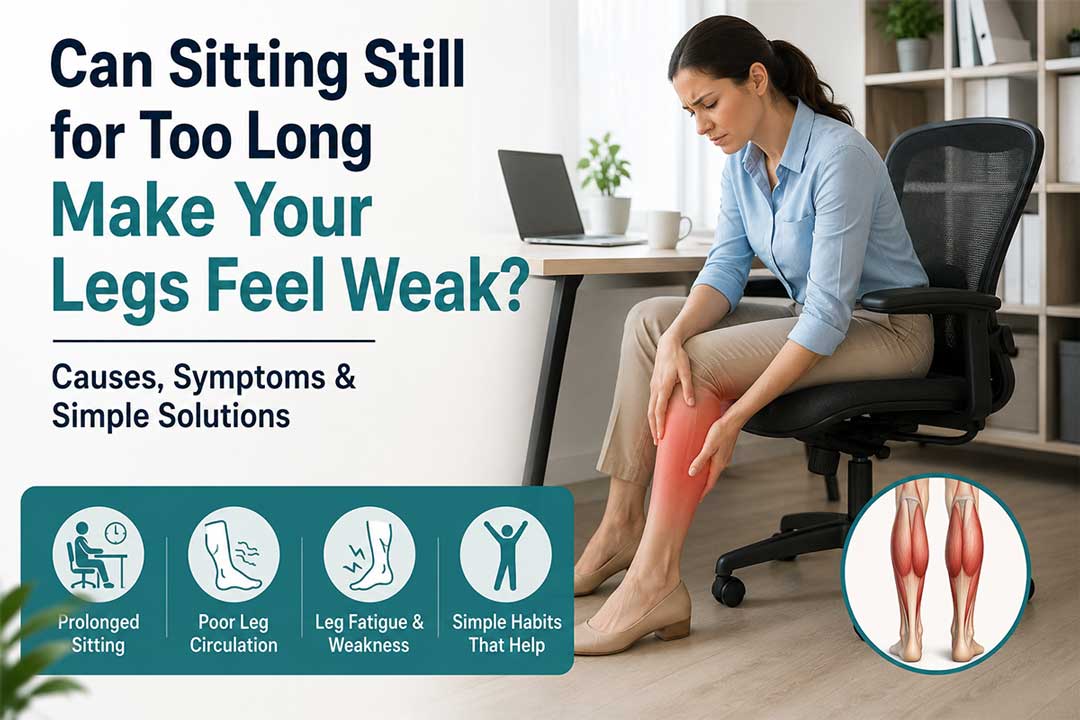
You’ve made it through a packed workday. You stand up to make a coffee, take a step, and your legs feel strangely unreliable—heavy, a little wobbly, not quite their usual selves. It’s a feeling that a surprising number of people who work long hours at a desk recognize immediately. The question of whether sitting still for too long can make your legs feel weak is one with a clear and practical answer, and it’s worth understanding properly if desk-based work is a significant part of your day.
The reassuring news is that this kind of weakness is usually temporary and directly related to prolonged inactivity rather than any underlying injury or illness. The less reassuring part is that it can accumulate quietly over months before people pay attention to it. Understanding why it happens is the first step toward preventing it.
Quick Answer
Yes, sitting still for too long can make your legs feel weak. Prolonged sitting reduces muscle activity in the legs, slows circulation, and increases pressure around the joints and soft tissues. Over time this produces symptoms like heaviness, stiffness, tingling, and a temporary loss of strength when standing. These effects are usually short-lived and improve quickly with movement. Consistent sitting habits without regular breaks, however, may contribute to gradual deconditioning of the leg muscles over weeks and months.
Why Do Your Legs Feel Weak After Sitting?
The legs feel weak after long sitting sessions because prolonged inactivity disrupts several interconnected systems at once. It isn’t one single cause—it’s a combination of reduced muscle engagement, slower blood flow, and sustained pressure that builds up quietly while the rest of your attention is on the screen.
Muscles Switch to a Low-Activity State
When you sit, the large muscle groups in the legs—the quadriceps, hamstrings, and calves—reduce their activity significantly. These muscles aren’t doing the work of supporting body weight or propelling movement the way they do when you stand or walk. After a long period of this reduced engagement, they feel sluggish and underresponsive when you first ask them to work again. That’s the “weak” sensation most people notice when standing up after two or three uninterrupted hours at a desk.
Circulation Slows Down
Sitting also reduces the efficiency of blood circulation in the lower body. The calf muscles play an important role in pumping blood back upward toward the heart—a function sometimes called the calf muscle pump. When those muscles are inactive, blood tends to pool in the lower legs, reducing the supply of oxygenated blood to the muscles and increasing the sense of heaviness and fatigue. Our article on how prolonged sitting affects leg circulation covers this process in detail if you want a deeper look at the circulatory side of things.
Joints and Soft Tissue Experience Sustained Pressure
Sitting also places sustained compression on the joints and soft tissue of the hips, knees, and ankles. Over time this reduces joint fluid distribution, which contributes to the stiffness many people feel when they first stand up. The temporary weakness felt in those first few steps is partly the body’s systems—muscular, circulatory, and joint-related—all recalibrating at once after being held in the same position for an extended period.
Common Symptoms Beyond Weak Legs
Leg weakness after sitting rarely arrives alone. It typically comes with a cluster of related sensations that together paint a clear picture of what prolonged inactivity is doing to the lower body:
- Heavy legs — a dense, dragging feeling that makes the first few steps after standing feel labored
- Stiffness — particularly in the knees, hips, and ankles, which tends to ease within a minute or two of walking
- Tingling or mild numbness — often in the feet or lower legs, related to reduced blood flow or minor nerve compression from the seated position
- Difficulty standing fully upright immediately — a brief moment of reduced stability when transitioning from sitting to standing
- Reduced flexibility — tightness in the hip flexors and hamstrings that develops from hours of shortened muscle position
- Foot or ankle swelling — particularly toward the end of the day, from fluid accumulating in the lower legs during prolonged downward positioning
Most of these symptoms are temporary and respond quickly to movement. The pattern to pay attention to is when symptoms take longer and longer to resolve, or when they appear with increasing frequency even after shorter sitting sessions.
Can Sitting Still for Too Long Make Your Legs Feel Weak?
Yes—and the experience varies somewhat depending on your daily work context. Here’s how prolonged sitting tends to affect different groups of desk-based people:
Office Workers
For traditional office workers, the pattern tends to involve long blocks of seated desk time punctuated by very short transitions—getting up to attend a meeting, visiting a colleague’s desk, or making a drink. These micro-breaks are often just enough to temporarily relieve symptoms without addressing the underlying pattern. Over a full working week, the cumulative sitting time adds up quickly, and many office workers report that their legs feel heavier and less reliable on Friday afternoon than on Monday morning.
Chair setup also plays a more significant role in this group than is commonly realized. A chair set even slightly too high elevates the thighs away from full seat contact, increases pressure behind the knees, and reduces the body’s stability cues—all of which can amplify the weak-leg feeling when standing.
Remote Workers
Remote workers often have more flexibility in their day but less structure around movement. Without the natural interruptions of an office environment—no one stopping by the desk, no commute, no shared kitchen a floor away—it’s easy to sit for four or five hours without any significant movement. Remote workers also tend to work from a wider variety of setups, including dining chairs, sofas, and beds, many of which provide less postural support than a dedicated office chair and encourage positions that restrict circulation more quickly.
Students
Students frequently combine long seated study periods with high mental focus, which reduces their awareness of physical discomfort building up. Studying for an exam or completing an assignment can involve two to three hours of continuous sitting without any perceived reason to stand. The leg weakness that follows these sessions is often written off as general tiredness rather than recognized as a specific response to inactivity—which means the habit of long static sitting tends to go unchallenged.
Gamers
Gaming sessions often involve some of the longest continuous sitting periods of any desk-based activity. Immersive gameplay actively suppresses awareness of physical discomfort, and the social or competitive nature of online gaming creates pressure to stay seated far longer than other desk activities. Gamers also frequently sit in positions that prioritize screen angle and controller reach over lower-body posture, which means the legs are often in suboptimal positions for the entire duration of the session.
How to Prevent Weak Legs During Long Sitting Sessions
Most of what causes post-sitting leg weakness is preventable through consistent habit adjustments. None of them require significant time or equipment—the changes that make the biggest difference are usually the simplest ones applied consistently.
Stand Up Regularly
Standing for two to three minutes every 45 minutes to an hour is one of the most effective things you can do. You don’t need to walk a specific distance or do a formal exercise routine—simply standing, shifting weight between feet, and taking a few steps is enough to reactivate the calf muscle pump and improve blood return from the lower legs.
Add Desk-Based Movement
Simple exercises performed while seated or in a small space next to the desk can meaningfully reduce the buildup of fatigue and weakness. Ankle circles, seated calf raises, knee lifts, and brief standing stretches all engage the leg muscles enough to keep circulation moving during long work blocks. Our article on desk exercises that improve circulation in the legs includes a practical set of movements that can be done without leaving the desk.
Check Your Foot Positioning
Feet that dangle without solid ground contact, sit tucked under the chair, or rest crossed at the knee all create unnecessary compression points in the lower body. The goal is a neutral foot position where the entire sole has contact with a firm surface and the knee sits at approximately 90 degrees. Our guide on how to position your feet correctly at a desk covers the specific adjustments that make the most difference.
Use a Footrest Where Needed
When chair height and desk height don’t naturally allow feet to rest flat on the floor, a footrest fills that gap practically and effectively. It maintains the neutral knee angle that reduces compression behind the knee, supports the calf muscle pump, and often reduces the heaviness and tingling that build up over long sessions. For an overview of how footrests contribute to leg health beyond simple foot support, our article on whether footrests actually improve leg circulation while sitting is worth reading alongside this one.
Adjust Your Chair Height
A chair set too high concentrates thigh pressure near the front edge of the seat and reduces stable foot contact. A chair set too low pushes the knees above hip level and creates different but equally problematic pressure patterns. Getting the height right is foundational to everything else. Our detailed guide on correct sitting position for long days at a desk covers chair height within the full context of a properly configured desk setup.
Common Mistakes That Make Leg Weakness Worse
These are the patterns that most consistently amplify the weak-leg feeling after sitting:
| Habit | Effect on Legs | Better Alternative |
|---|---|---|
| Sitting 3+ hours without breaks | Reduced circulation, muscle stiffness, weak feeling | Stand or walk for 2–3 minutes every 45 minutes |
| Feet dangling without support | Pressure behind knees, restricted blood return | Use a footrest to maintain a neutral knee angle |
| Chair set too high or too low | Uneven thigh pressure, hip imbalance | Adjust chair so knees sit at approximately 90 degrees |
| Crossing legs for long periods | Nerve compression, tingling, heaviness | Keep both feet flat or alternate positions regularly |
| No movement at all during the day | Gradual muscle deconditioning over weeks | Add short desk exercises or a daily walk |
| Ignoring early warning signs (tingling, heaviness) | Symptoms worsen and take longer to clear | Treat early signals as movement reminders, not minor inconveniences |
When Should You Be Concerned?
Most leg weakness after sitting is positional and resolves within a minute or two of standing and moving. That pattern—weakness that appears after long sitting and clears with movement—is a well-recognized response to prolonged inactivity and doesn’t by itself indicate a medical problem.
There are situations, however, where the symptom pattern suggests something worth evaluating with a healthcare professional:
- Weakness that doesn’t improve after several minutes of walking, rather than clearing within the first minute or two
- Weakness that appears after very short periods of sitting—twenty minutes or less—without an obvious positional explanation
- Weakness accompanied by significant pain, particularly in the lower back, hips, or down the leg
- Numbness or tingling that is persistent, severe, or doesn’t clear with position changes
- Any weakness accompanied by changes in bladder or bowel function
- A sudden or significant change in how the legs feel compared to recent weeks, without a clear explanation like increased sitting time
According to the Cleveland Clinic, leg weakness that is sudden, severe, or accompanied by other neurological symptoms warrants prompt medical attention. Gradual weakness that responds clearly to movement and improves with ergonomic adjustments is a different picture, but if there’s any doubt, a medical opinion is always the right step.
Best Daily Habits for Stronger Legs at Your Desk
Consistency matters more than any single change. These habits, applied together, address the main drivers of desk-related leg weakness:
- Stand up for two to three minutes every 45 minutes, without exception
- Walk to a different room, take the stairs, or step outside briefly at least once every two hours
- Do seated calf raises or ankle circles during calls or passive screen time
- Keep both feet flat on the floor or on a footrest rather than tucking, crossing, or dangling them
- Set your chair height so that thighs are approximately parallel to the floor and knees sit at around 90 degrees
- Check in with how your legs feel at the end of each working day—heaviness or persistent tingling that doesn’t clear quickly after standing is a signal the current routine needs adjusting
- Take a walk of at least ten minutes at some point during the day, separate from desk movement breaks
If leg fatigue is a recurring end-of-day experience rather than an occasional one, our article on practical ways to reduce leg fatigue during desk work goes into more detail on targeted strategies, and our overview of how long to use a footrest during a working day is useful if you’re incorporating footrest use as part of your routine.
Key Takeaways
- Sitting still for too long can make your legs feel weak by reducing muscle activity, slowing circulation, and compressing joints and soft tissue
- The weakness is usually temporary and clears with movement, but the pattern can worsen gradually if sitting habits don’t change
- Office workers, remote workers, students, and gamers are all affected, but the specific patterns differ across groups
- The most effective prevention is simple: stand regularly, move the legs, and set up the desk to support neutral leg positioning
- A footrest can play a meaningful role when feet don’t comfortably reach the floor at the correct chair height
- Persistent, worsening, or unusual leg weakness—particularly with other symptoms—is worth discussing with a healthcare professional
Frequently Asked Questions
Why do my legs feel weak after sitting for a long time?
Prolonged sitting reduces muscle activity, slows blood circulation in the lower body, and creates sustained pressure on joints and soft tissue. When you stand up, these systems all readjust at once, which produces the heavy, weak, or unsteady feeling most people recognize.
Is temporary leg weakness from sitting normal?
Yes. Transient leg weakness that resolves within a minute or two of standing and moving is a common response to prolonged inactivity and is not by itself a sign of a medical problem. The concern arises when it becomes more persistent, more frequent, or is accompanied by other symptoms.
Can sitting weaken leg muscles over time?
Sustained inactivity over weeks and months can contribute to reduced leg muscle tone and endurance, a well-documented effect sometimes referred to as deconditioning. This is distinct from the acute weak feeling after a single sitting session. Regular movement, both at the desk and outside of work, is the most practical way to counteract it.
Can a footrest help with leg weakness from sitting?
A footrest helps by maintaining a neutral leg position that reduces compression behind the knees and supports the calf muscle pump. This can reduce the accumulation of heaviness and weakness during long sitting sessions. Our article on the everyday benefits of using a footrest at a desk covers how footrest use fits into the broader picture of lower-body comfort.
Does poor chair height affect how weak my legs feel?
Yes, significantly. A chair set too high increases pressure from the seat edge on the back of the thighs and behind the knees, restricting circulation more quickly. A chair set too low creates a different pressure pattern in the hips and knees. Both can amplify the weak and heavy feeling that develops during long sitting.
How often should I stand up during the workday?
A practical guideline is to stand and move for two to three minutes every 45 to 60 minutes of sitting. This doesn’t need to involve a formal break—standing during a phone call, walking to a different room to think, or a brief stretch next to the desk all count.
Do desk exercises actually help with leg weakness?
Yes, targeted exercises like seated calf raises, ankle circles, and knee extensions engage the leg muscles and support circulation without requiring time away from the desk. They’re most useful as a supplement to standing breaks rather than a replacement for them.
When should I see a doctor about weak legs from sitting?
If leg weakness clears quickly with movement and is clearly related to long sitting sessions, ergonomic adjustments are usually the appropriate first step. If weakness persists after moving, appears after short sitting periods, worsens progressively, or comes with pain, significant numbness, or other symptoms, a healthcare professional should be consulted.
Can sitting still for too long make your legs feel weak even in younger people?
Yes. The mechanism—reduced muscle activity and slower circulation—operates regardless of age. Younger people may recover from each session more quickly, but they can still experience the acute weak-leg feeling after long uninterrupted sitting, and they are equally at risk of gradual deconditioning if sustained inactivity is a regular pattern.
Final Thoughts
The short answer to whether sitting still for too long can make your legs feel weak is yes—and the mechanism is well understood. Muscles that aren’t being used slow down, circulation becomes less efficient, joints experience sustained pressure, and the result is a combination of heaviness, stiffness, and weakness that most people who work long hours at a desk will recognize at some point.
The encouraging part is that the solution isn’t complicated. Standing regularly, moving the legs throughout the day, setting up the desk to support neutral leg positioning, and addressing foot support when the floor isn’t reachable at the right chair height will cover the issue for most people without requiring any major changes to their work routine.
Symptoms that persist despite these adjustments, or that don’t follow the expected pattern of clearing quickly with movement, are worth discussing with a healthcare professional. Ergonomic improvements are genuinely effective within their scope—but they work alongside appropriate medical care when something more specific is going on, not instead of it.