
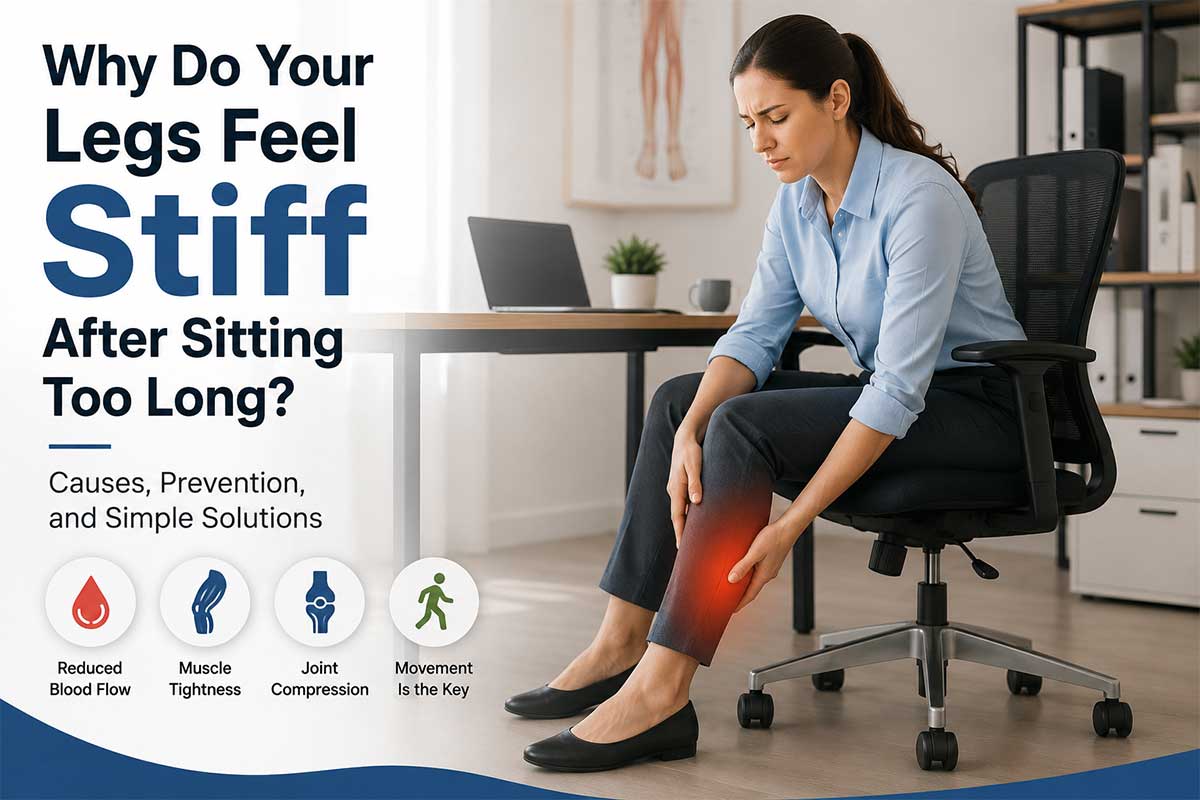
You’ve been sitting through back-to-back meetings, and when you finally stand up, your legs feel tight, achy, and slow to move. This is a common experience for anyone who works at a desk for hours at a time. Many people wonder why their legs feel stiff after sitting too long, especially when nothing seems obviously wrong. The short answer involves a mix of reduced blood flow, shortened muscles, and joint compression that builds up the longer you stay in one position. If you already deal with tired legs by the afternoon, learning how to reduce leg fatigue while sitting at a desk can make a noticeable difference before the stiffness even sets in.
| Quick Answer Your legs feel stiff after sitting too long because staying in one position reduces blood flow to your lower body and keeps muscles like your hamstrings and hip flexors in a shortened position. Without regular movement, joints such as your knees and hips also become compressed, which limits their natural range of motion. This combination of reduced circulation, muscle shortening, and joint compression is what creates the tight, achy feeling you notice when you finally stand up. Moving briefly every 30 to 60 minutes can help prevent this stiffness from building up. |
Why Do Legs Feel Stiff After Sitting Too Long?
Legs feel stiff after sitting too long because your body responds to inactivity in three connected ways. Blood flow to your lower legs slows down, key muscles around your hips and knees stay in a shortened position, and your joints lose some of their normal range of motion. Each of these changes happens gradually, which is why the stiffness often feels worse the longer a meeting or work session runs.
Think about how your body works when you walk. Your calf muscles act like a pump, squeezing blood back up toward your heart with every step. When you sit still, that pump barely activates. Blood and fluid can settle in your lower legs, and your muscles adjust to the bent position of your hips and knees. When you finally stand, your body needs a moment to reverse all of that.
A simple way to interrupt this cycle is to stand up and move for a minute or two every half hour. Even shifting your seated position, straightening your legs, or flexing your ankles under your desk can keep blood moving and prevent muscles from settling into a fixed, shortened state.
Reduced Blood Circulation in the Legs
Sitting bends your hips and knees, which can put light pressure on the blood vessels running through that area. Over time, this may slow the return of blood from your legs to your heart. Many people notice their legs feel heavier or cooler after a long stretch of sitting, and some also notice mild swelling around the ankles. Elevating your feet slightly with a footrest can support healthier blood flow through the legs, since it reduces the downward pull of gravity on fluid in your lower legs.
Muscle Shortening and Hip Flexor Tightness
Your hip flexors, hamstrings, and calf muscles all adjust to the seated position over time. When muscles stay shortened for hours, they resist stretching back out right away. This is part of why your legs can feel tight or stiff the moment you stand, even if you were not consciously tensing any muscles while sitting.
Joint Compression From Staying in One Position
Your knees and hips are designed to move through a full range of motion throughout the day. Sitting keeps them locked at roughly the same angle for extended periods, which can reduce the natural lubrication and movement inside the joint. Standing up and walking a short distance helps restore normal joint movement fairly quickly for most people.
Is Leg Stiffness After Sitting Ever a Sign of a Bigger Problem?
For most people, leg stiffness after sitting is a normal response to inactivity and improves within a few minutes of moving around. However, stiffness that is severe, persistent, or paired with other symptoms may point to a circulation or nerve-related issue that deserves closer attention.
Occasional stiffness that fades quickly once you start walking is generally not a cause for concern. It becomes more worth watching if you also notice swelling, skin discoloration, numbness, or pain that does not ease with movement. In some cases, prolonged sitting can cause poor blood circulation in your legs, which is worth understanding if stiffness keeps showing up regularly.
Some people also describe their legs feeling wobbly right after standing up, which is a related but slightly different experience worth exploring separately.
If your legs feel stiff along with noticeable swelling, warmth, redness, or pain in one leg that does not improve, it’s a good idea to speak with a healthcare professional. These symptoms can sometimes point to a circulation issue that benefits from proper evaluation.
How Can You Prevent Legs From Feeling Stiff After Sitting?
Preventing leg stiffness comes down to two things: adjusting your desk setup so your legs are properly supported, and building small amounts of movement into your day so blood keeps circulating.
Set Up Your Desk for Better Leg Support
Your chair height plays a bigger role in leg comfort than most people expect. When your seat is too high or too low, it can change the angle of your knees and add pressure behind your thighs. Reviewing how desk chair height affects leg comfort and circulation is a useful next step if you have not adjusted your setup in a while. A footrest can also help by supporting your feet at a more natural angle, especially if your feet do not fully reach the floor.
Build Movement Into Your Work Day
Short, frequent movement breaks are more effective than one long stretch at the end of the day. Standing up, walking to refill water, or doing a few simple stretches every 30 to 60 minutes keeps blood moving through your legs. Trying a few of the best desk exercises to improve leg circulation while sitting can give you a simple routine to repeat throughout your workday.
Muscle Stiffness vs. Circulation Stiffness vs. Nerve-Related Stiffness
Not all leg stiffness feels the same, and the sensation can offer clues about what’s causing it. The table below breaks down three common patterns.
| Type of Stiffness | Common Feeling | Likely Cause | What Helps |
| Muscle Stiffness | Tightness, especially in the hips and thighs | Shortened muscles from staying seated | Stretching, standing breaks |
| Circulation Stiffness | Heaviness, mild swelling, coolness in the lower legs | Reduced blood flow to the legs | Footrest, leg elevation, walking |
| Nerve-Related Stiffness | Tingling, numbness, or a “pins and needles” feeling | Nerve pressure from posture or position | Postural changes, medical evaluation if persistent |
Daily Checklist to Reduce Leg Stiffness After Sitting
Use this checklist as a simple daily routine to keep your legs feeling more comfortable.
- Stand and move for 1 to 2 minutes every 30 to 60 minutes
- Adjust chair height so your knees are level with or slightly below your hips
- Use a footrest if your feet do not rest flat on the floor
- Stretch your hip flexors and calves at least once during the day
- Avoid crossing your legs for long stretches
- Flex and rotate your ankles periodically while seated
- Elevate your feet briefly if they start to feel heavy or swollen
Common Mistakes That Make Leg Stiffness Worse
A few habits tend to make stiffness build up faster than it needs to.
- Sitting in the same position for hours without shifting, which locks joints and muscles in place
- Crossing your legs frequently, which can add extra pressure behind the knee
- Ignoring an unsupportive chair or a missing footrest, which leaves your legs without proper support
- Skipping movement breaks because of a busy schedule, which allows stiffness to build up unchecked
- Only stretching once a day instead of spreading it out, since short, frequent movement works better than one long session
Key Takeaways
- Legs feel stiff after sitting too long mainly due to reduced circulation, muscle shortening, and joint compression.
- Moving for a minute or two every 30 to 60 minutes helps prevent stiffness from building up.
- A properly adjusted chair and footrest can reduce pressure on your legs.
- Occasional stiffness is normal, but persistent swelling, numbness, or pain deserves medical attention.
- Small, consistent habits matter more than one long stretch break at the end of the day.
Frequently Asked Questions
Why do my legs feel stiff every time I sit for a long period?
This usually happens because sitting reduces blood flow to your legs and keeps muscles like your hamstrings and hip flexors in a shortened position. The longer you stay still, the more noticeable the stiffness becomes once you stand up and start moving again.
Is it normal for legs to feel stiff after sitting at a desk all day?
Yes, mild stiffness after several hours of sitting is common and usually resolves within a few minutes of walking or stretching. It becomes worth watching more closely if the stiffness is severe, lasts a long time, or comes with swelling or numbness.
How long does it take for leg stiffness to go away after standing up?
For most people, stiffness eases within a few minutes of walking or light movement. If it lingers much longer than that, or happens every single time you sit, it may be worth reviewing your desk setup and movement habits.
Can a footrest help reduce leg stiffness while sitting?
A footrest can support your feet at a more natural angle and reduce pressure behind your thighs, which may help with circulation and comfort. It works best when paired with regular movement breaks rather than as a stand-alone fix.
Does poor chair height make leg stiffness worse?
Yes, a chair that is too high or too low can change the angle of your hips and knees, adding pressure to your legs. Adjusting your chair so your knees are level with or slightly below your hips can ease some of that pressure.
What stretches help with stiff legs after sitting?
Simple hip flexor stretches, calf raises, and gentle hamstring stretches can help loosen muscles that tighten during sitting. Even standing and walking for a minute or two provides noticeable relief for many people.
When should I be concerned about leg stiffness after sitting?
It’s worth speaking with a healthcare professional if stiffness is severe, does not improve with movement, or comes with swelling, redness, warmth, or pain in one leg. These symptoms can sometimes point to a circulation issue that needs proper evaluation.
Can drinking more water help with leg stiffness?
Staying hydrated supports healthy circulation and muscle function in general, though movement plays a bigger role in preventing stiffness caused by sitting. Water alone is unlikely to resolve stiffness caused mainly by inactivity.
Does crossing my legs make stiffness worse?
Crossing your legs for long stretches can add extra pressure behind the knee and may slightly restrict blood flow. Keeping both feet flat on the floor or on a footrest is generally more comfortable for extended sitting.
Final Thoughts
Feeling stiff after sitting for hours is something almost everyone experiences at some point, and in most cases it’s simply your body adjusting to a long stretch without movement. Legs feel stiff after sitting too long because circulation slows, muscles shorten, and joints stay locked in one position, but small adjustments can make a real difference. Paying attention to your chair setup, using a footrest when helpful, and moving regularly throughout the day are practical ways to keep your legs feeling more comfortable.
If stiffness is paired with heaviness by the end of the day, learning how to relieve heavy legs after sitting all day at a desk offers a few additional practical steps.
According to the Mayo Clinic, persistent leg pain after prolonged sitting or standing can sometimes point to an underlying circulation concern, so it’s worth checking with a healthcare professional if symptoms don’t improve with movement.