
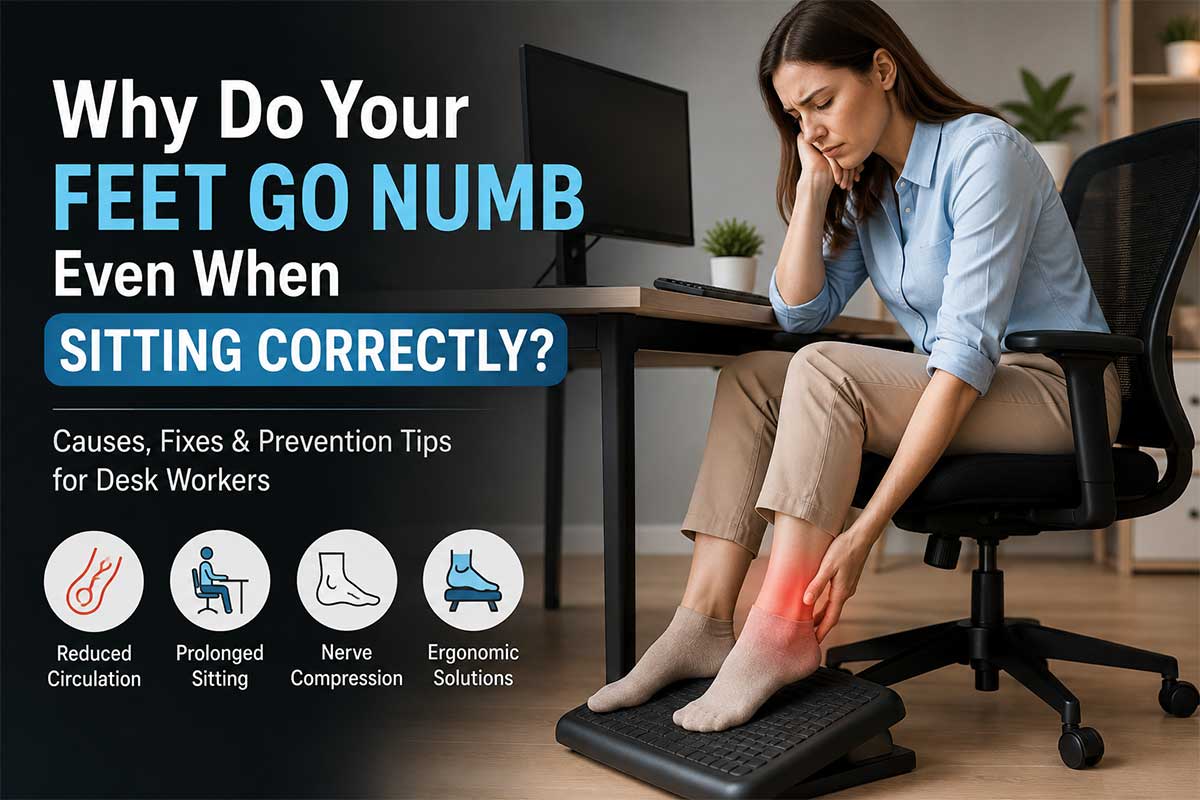
You’ve checked every box. Your feet rest flat on the floor, your knees bend at a comfortable angle, your back has support, and your chair height looks right by any posture guide you’ve read. Yet twenty or thirty minutes into a work session, your feet begin to tingle, then go numb. If you’ve asked yourself why do your feet go numb even when sitting correctly, you’re dealing with something more common than most people realize.
Office workers, remote employees, students, and gamers often follow every posture recommendation available and still experience numb feet at their desk. The reason is that correct posture is only one piece of a genuinely comfortable sitting setup. Prolonged stillness, small pressure points, and workstation details that a posture checklist doesn’t cover can all play a role, even when your form looks textbook.
| Quick Answer Feet can go numb even when you sit correctly because good posture alone doesn’t eliminate every source of pressure or restricted blood flow. Staying still for long stretches, pressure behind the knees or under the thighs, feet that aren’t fully supported, or a chair that doesn’t quite fit your body can all contribute to numb feet at a desk. In most cases, changing position and moving more often helps the sensation ease. |
Why Can Your Feet Go Numb Even When You Sit Correctly?
Feet can still go numb during desk work because sitting correctly addresses body alignment, not movement or pressure over time. Posture guides typically focus on where your joints should be positioned: knees near hip height, feet flat, back supported. They rarely address how long you stay in that position or whether pressure builds up somewhere along the way.
Good posture is one part of a comfortable setup. The other parts are movement, workstation fit, and how your individual body responds to sitting still. A person can have a technically correct sitting position and still develop numb feet if they stay in that exact position without shifting for an hour or more. Someone with shorter or longer thighs than average might also experience pressure behind the knees even in a “correct” position, simply because standard chair dimensions don’t fit every body the same way.
In other words, sitting correctly reduces some risks but does not remove them entirely. Movement, workstation adjustments, and awareness of pressure points matter just as much as posture itself. The comparison below outlines the difference.
| Factor | Posture Alone | Fully Supported Setup |
| Feet position | Flat, near hip height | Flat and evenly supported, floor or footrest |
| Movement | Not addressed | Regular shifts and short breaks |
| Pressure points | Can still build up | Checked and reduced where possible |
| Chair fit | Assumed standard | Adjusted to individual leg length and seat depth |
| Typical outcome | May still cause numbness over time | Lower chance of numbness with consistent habits |
Common Desk-Related Reasons Your Feet May Feel Numb
Several everyday desk habits and setup details can contribute to feet falling asleep at a desk, even with good posture. Here are the most common ones worth checking.
Staying in One Position for Too Long
Numbness often develops from prolonged stillness rather than posture itself. When you stay in one position for an extended period, blood flow and nerve signals in that area can become temporarily restricted. This is a normal physiological response, not something exclusive to poor sitting habits. Many people who sit still for too long notice their legs feel weak or numb by the time they finally stand up, regardless of how “correct” their posture was. If this sounds familiar, can sitting still for too long make your legs feel weak? explores this connection in more depth. Breaking up long stretches of stillness is one of the simplest ways to reduce this effect.
Pressure From the Chair
Pressure behind the knees or under the thighs is a common contributor to numb feet, even in a well-aligned sitting position. This pressure can come from a seat that’s slightly too long for your thighs, a chair edge that presses into the back of your knees, or padding that compresses unevenly over time. If you’ve noticed pressure building up during long sitting sessions, it may help to look into how a footrest can help reduce pressure behind your knees, since adjusting your lower-body position can ease that specific pressure point.
Feet Not Fully Supported
If your feet are not resting flat and evenly, some parts of your foot and ankle may bear more pressure than others. This can happen even when a chair looks like the right height, particularly if the seat is slightly too high or the desk setup encourages one foot to rest at an angle. Reviewing how to position your feet correctly while sitting at a desk can help you spot small positioning issues that a general posture checklist might miss.
Chair Height and Seat Depth
An otherwise “correct-looking” sitting position can still be poorly matched to your individual body. Chair height affects how much pressure builds up under your thighs, while seat depth affects how much of your leg is supported versus hanging past the edge. Two people can sit in what looks like the same posture and experience very different amounts of pressure, simply because their chair doesn’t fit their proportions. For a closer look at this connection, see how desk chair height affects leg comfort and circulation.
Limited Movement During Concentrated Work
It’s common to have generally good posture and still move very little during focused work. Deep concentration often means staying still for far longer than intended, sometimes without noticing. This lack of movement, rather than the posture itself, is frequently what leads to numb or tingling feet during long, focused sessions.
Can Good Posture Still Cause Foot Numbness?
Yes, good posture can still be paired with foot numbness, because posture is not a guarantee against pressure or restricted movement. Static sitting, even in a well-aligned position, means certain areas of your legs and feet experience sustained pressure for long stretches. Add individual differences in body shape, chair fit, and daily movement habits, and it becomes clear why numbness can occur despite a technically correct setup.
There isn’t a single “perfect posture” that works identically for every person. What counts as correct alignment for one body may create subtle pressure points for another, depending on leg length, chair dimensions, and desk height. This is why workstation fit and regular movement matter just as much as the position itself. Aiming for a comfortable, well-supported setup with frequent small adjustments tends to be more useful than chasing one exact “ideal” position and holding it rigidly.
What Should You Check If Your Feet Keep Going Numb?
If numbness keeps showing up during desk work, a quick self-check can help you narrow down the cause. Ask yourself:
- Are both feet fully supported, either on the floor or a footrest?
- Is your chair height appropriate for your desk and leg length?
- Is the seat edge pressing into the back of your thighs?
- Are you staying in one position for long stretches without shifting?
- Are you moving your ankles regularly throughout the day?
- Are you frequently crossing or tucking your legs while working?
- Does standing or walking improve the sensation within a few minutes?
- Does the numbness happen on one side only, or both feet?
Working through this list can help you identify whether the issue is related to pressure, positioning, movement, or something worth discussing with a healthcare provider.
Simple Ways to Reduce Foot Numbness During Desk Work
Most desk-related foot numbness responds well to small, consistent changes. These adjustments are easy to build into a workday without disrupting focus.
Change Position Regularly
Shifting your sitting position every 20 to 30 minutes can help prevent the sustained pressure that often leads to numbness. This doesn’t need to be dramatic; even small shifts in weight or leg position can make a difference.
Perform Simple Ankle Movements
Ankle pumps, ankle circles, and gentle toe raises can help encourage movement in your lower legs and feet throughout the day. These movements take only a few seconds and can be done without leaving your desk. For a broader set of options, best desk exercises to improve leg circulation while sitting covers several simple routines worth trying.
Keep Both Feet Supported
Whether you use the floor or a footrest, keeping both feet evenly supported helps distribute pressure more evenly across your legs and lower body.
Check Chair Height
Chair height should generally allow your feet to rest flat without pressure building up behind your knees. There isn’t one universal measurement that works for every person, so it’s worth adjusting based on how your legs actually feel rather than a single fixed number.
Take Short Walking Breaks
Brief walking breaks, even just a couple of minutes every hour, can help restore normal movement and circulation after periods of stillness.
Avoid Staying in One “Perfect” Position All Day
The goal isn’t to lock into one ideal posture and hold it rigidly. A comfortable setup paired with regular movement tends to work better than rigid stillness, even if that stillness looks correct on paper.
Can a Footrest Help With Foot Numbness?
A footrest may help in specific situations, though it isn’t a universal fix for foot numbness. It can be useful when your feet don’t comfortably reach the floor, your chair height can’t be adjusted enough to remove pressure, your legs feel unsupported during long sitting sessions, or you want an easy way to change your lower-body position throughout the day.
A footrest works by giving your feet a supported surface at a height that reduces pressure under the thighs and behind the knees. If you’re exploring your options, what is an ergonomic foot rest? explains how these products are designed and what to look for.
That said, a footrest cannot resolve every cause of numbness. If numbness is related to an underlying circulation or nerve-related issue rather than positioning, a footrest alone is unlikely to fully resolve it. It’s one tool among several, not a guaranteed solution.
When Foot Numbness May Need Medical Attention
Occasional numbness related to sitting often improves once you change position or start moving again. This kind of temporary numbness is common and, in most cases, not a sign of a serious problem.
However, it’s worth speaking with a healthcare professional if numbness:
- persists despite changing position or walking around
- happens frequently without an obvious sitting-related trigger
- is severe or appears to be getting worse over time
- occurs mainly on one side of the body
- is accompanied by significant pain
- happens along with noticeable weakness
- includes visible color or temperature changes in the foot or leg
- interferes with your ability to walk or go about normal activities
According to Mayo Clinic, numbness can stem from a wide range of causes, and persistent or unexplained symptoms are generally worth having evaluated by a doctor. This article is intended for general education and isn’t a substitute for personalized medical advice.
Frequently Asked Questions
Why do my feet go numb even when I sit correctly?
Even with correct posture, numbness can occur from prolonged stillness, pressure points, or a chair that doesn’t quite fit your body. Posture reduces some risk but doesn’t eliminate every cause.
Can sitting too long cause temporary foot numbness?
Yes. Staying still for extended periods can temporarily restrict blood flow and nerve signals, which often causes a tingling or numb sensation that eases once you move.
Can a footrest help prevent numb feet?
A footrest may help by supporting your feet and reducing pressure under the thighs or behind the knees, but it isn’t a guaranteed fix for every cause of numbness.
Why does my foot go numb when I sit at my desk?
It’s often related to staying in one position too long, pressure from the chair, or feet that aren’t evenly supported, rather than posture alone.
Should I worry if only one foot becomes numb?
Numbness that consistently affects only one side is worth mentioning to a healthcare professional, especially if it persists or comes with other symptoms.
Does standing up help foot numbness from sitting?
For most people, standing and moving around helps restore normal sensation within a few minutes. If it doesn’t, that’s worth paying attention to.
How often should I move my legs during desk work?
Shifting position or moving your ankles every 20 to 30 minutes can help reduce the chances of numbness building up during long sitting sessions.
Can chair height contribute to numb feet?
Yes. A chair that’s too high or too low for your desk and leg length can create pressure points that contribute to numbness, even with otherwise good posture.
Should I stop working if my feet become numb?
Occasional numbness that improves with movement usually isn’t a reason to stop working. Persistent, severe, or one-sided numbness is worth discussing with a healthcare professional.
Key Takeaways
- Sitting correctly reduces some risks but doesn’t guarantee numbness-free feet.
- Prolonged stillness, chair pressure, and unsupported feet are common desk-related causes.
- Small, regular movement often matters more than holding one “perfect” position.
- A footrest may help in specific situations but isn’t a universal solution.
- Persistent, severe, or one-sided numbness should be discussed with a healthcare professional.
Final Thoughts
Sitting correctly is a useful starting point, but it isn’t a complete answer to every desk-related discomfort. Feet can still go numb even when your posture looks right, especially if you stay still for long periods, deal with chair pressure, or use a workstation that doesn’t quite fit your body. Understanding why do your feet go numb even when sitting correctly can help you move past posture alone and look at the fuller picture: movement habits, workstation fit, and how your individual body responds to sitting.
Most cases improve with small, consistent changes, like shifting position regularly, supporting your feet fully, and taking short breaks to move. If numbness continues despite these adjustments, or comes with other symptoms, it’s worth checking in with a healthcare professional. If you’re also dealing with related discomfort, how to prevent leg numbness while sitting at a desk offers a broader look at reducing numbness throughout your legs, not just your feet.