
You settle into your desk chair, get deep into work, and a couple of hours pass without you noticing. Then you finally stand up, and your legs feel like they’re filled with sand. Sound familiar? If you’ve ever asked yourself why do your legs feel heavy after sitting but better after walking, you’re not alone. It’s one of the most common complaints among office workers, students, remote workers, and anyone else who spends long hours at a desk. The good news is that the answer is pretty straightforward, and so are the fixes. This article breaks down what actually happens inside your legs when you sit for long periods, why a short walk tends to clear up that heavy feeling quickly, and what you can do to stop it from happening in the first place.
Quick Answer
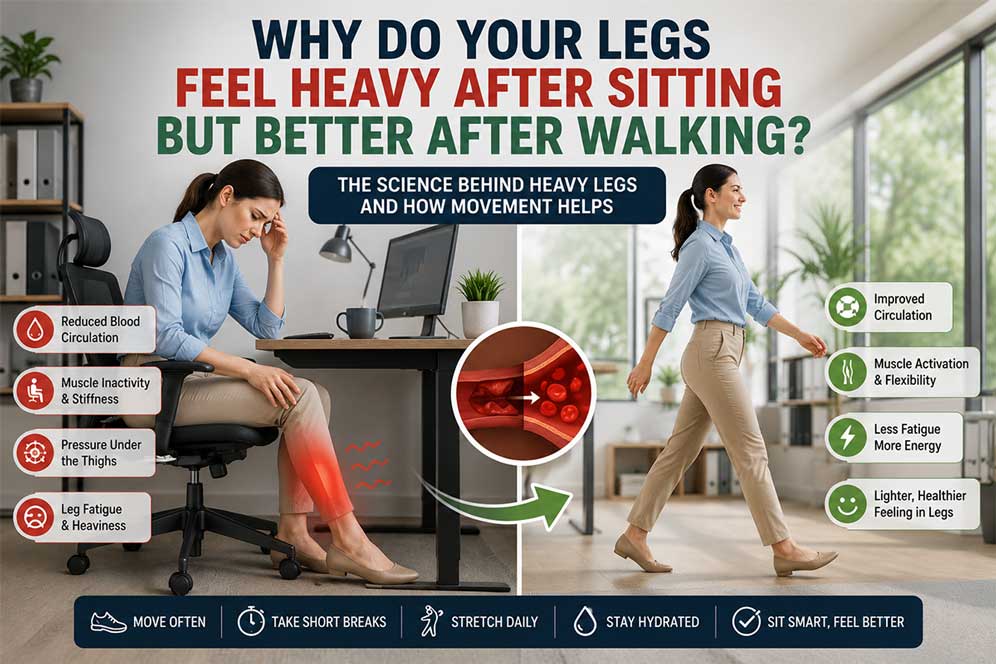
When you sit still for a long time, blood flow through your lower legs slows down significantly. Your calf muscles, which normally help pump blood back up toward your heart, are barely doing anything. The result is that blood and fluid tend to pool in the lower limbs, which creates that familiar sensation of heaviness, pressure, or tiredness.
Walking fixes this almost immediately. The rhythmic contraction of your leg muscles acts like a pump, pushing blood back into circulation, loosening stiff muscles, and reducing any fluid that has built up. Even a two- or three-minute walk can make a noticeable difference. That cycle of heaviness during sitting and relief during walking is your body giving you clear feedback. It’s asking for movement.
Why Do Your Legs Feel Heavy After Sitting but Better After Walking?
The short answer: prolonged sitting reduces movement, and reduced movement slows circulation. But let’s look at what’s actually happening inside your legs.
Your lower body depends heavily on movement to keep blood flowing properly. When you walk or even stand, your calf muscles contract and relax repeatedly. This muscle action functions like a secondary pump that helps push blood upward through your veins against gravity. When you sit, that pump essentially shuts off. According to the Mayo Clinic, prolonged inactivity can contribute to slowed circulation in the legs, which can cause discomfort, swelling, and fatigue over time.
Here’s what is typically happening during a long sitting session:
- Reduced movement: Your leg muscles become almost completely inactive, removing the pumping action that keeps blood circulating upward.
- Blood flow changes: Circulation slows in the lower limbs, and blood can pool in the veins of the calves and feet.
- Muscle inactivity: Muscles that are not being used gradually tighten up and lose their ability to contract efficiently.
- Thigh pressure: The edge of your chair seat pressing against the back of your thighs can partially restrict blood flow through that area.
- Long-term sitting habits: People who sit for most of the day accumulate these effects hour by hour, which makes the heaviness worse toward the end of the workday.
Walking reverses all of this at once. The muscle contractions reactivate the venous pump, blood starts moving again, and that heavy feeling usually fades within minutes.
What Happens to Your Legs During Long Periods of Sitting?
To understand the problem fully, it helps to look at what changes in your legs the longer you stay seated. The table below compares what typically happens in a short sitting session versus an extended one.
| What Happens | First 15–30 Minutes of Sitting | After 1+ Hours of Sitting |
|---|---|---|
| Blood flow | Mostly normal | Slowed, especially in lower legs |
| Muscle activity | Low but present | Nearly absent |
| Leg pressure | Mild under thighs | Increased, may cause numbness |
| Fluid movement | Normal | Can begin pooling toward feet |
| Leg sensation | Neutral to comfortable | Heavy, tired, or stiff |
| Energy level | Adequate | Often reduced in lower body |
As you can see, the longer you sit, the more pronounced the effects become. Most people start to notice the heaviness and fatigue somewhere around the 60 to 90 minute mark, though this varies based on posture, chair quality, hydration, and individual differences.
Beyond just the heavy feeling, prolonged sitting can cause real discomfort in the form of leg swelling, numbness, and aching. If you want to understand more about why this happens specifically in the feet and ankles, this article on why feet swell while sitting covers the mechanics in more detail.
Why Walking Often Makes Your Legs Feel Better
The relief you feel after a short walk isn’t just in your head. Several physical mechanisms kick in the moment you start moving.
Muscle Activation Restarts Circulation
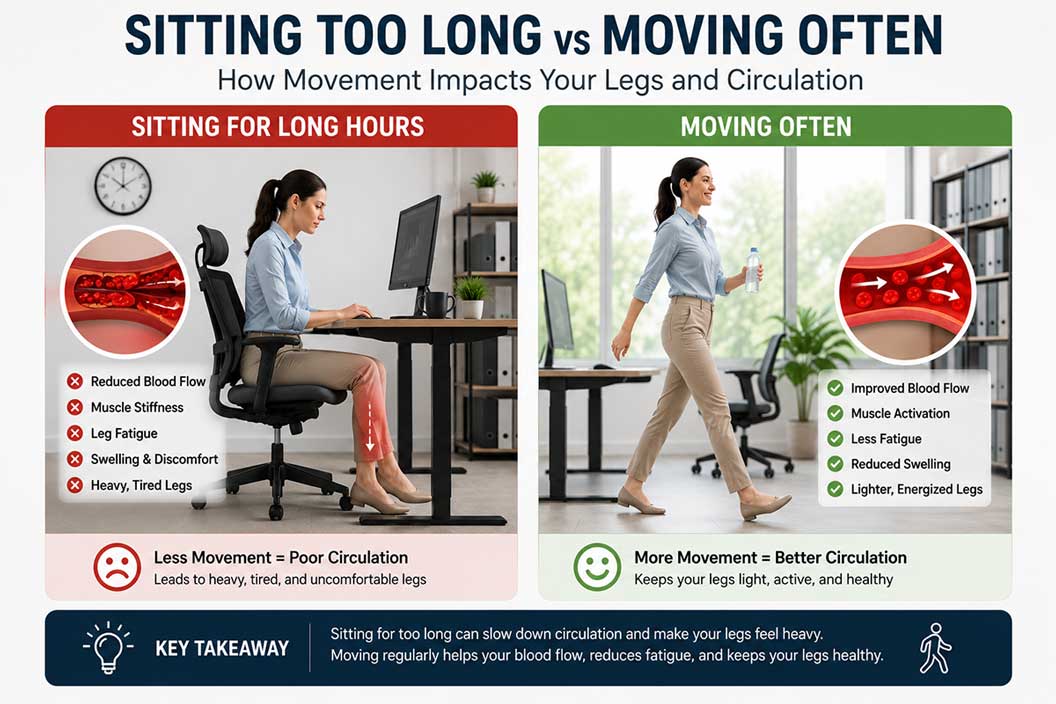
Walking engages your calf muscles, hamstrings, and quadriceps. These contractions squeeze blood through your veins and back toward your heart. Within a minute or two, the pooled blood in your lower legs starts moving again, and the heaviness begins to lift.
Reduced Fluid Buildup
When you sit for a long time, small amounts of fluid can accumulate in the tissues of your lower legs and feet. Movement encourages lymphatic drainage and venous return, helping the body reabsorb that fluid more efficiently.
Muscle Stiffness Clears Up
Sitting keeps your muscles in a shortened or compressed position. Walking stretches and lengthens these muscles in a rhythmic pattern, which eases stiffness, increases flexibility, and makes your legs feel lighter and more responsive.
Improved Oxygen Delivery
As circulation picks up, more oxygenated blood reaches your leg muscles. Tissues that were running a little low on oxygen during your sitting session get replenished, which contributes to that refreshed feeling after even a brief walk.
Can Poor Sitting Position Make Legs Feel Heavy?
Yes, absolutely. The way you sit has a direct effect on how much pressure builds up in your legs and how restricted your circulation becomes. Several common posture habits can make the problem significantly worse.
Unsupported feet are a big one. When your feet don’t rest flat on the floor or on a proper footrest, your thighs tend to bear more of your body weight against the seat edge. This compresses the soft tissue and veins running through that area. For a detailed look at how foot position matters, check out this guide on how to position your feet correctly while sitting at a desk.
Chair height also plays a bigger role than most people realize. If your chair is too high, your feet dangle, which puts extra pressure on the back of your thighs. If it’s too low, your knees end up above your hips, which can restrict circulation differently. You can learn how to dial this in with this article on desk chair height and circulation.
Crossing your legs is another culprit. It places uneven pressure on one side and can partially compress blood vessels, contributing to numbness and heaviness in the lower leg.
Slouching forward compresses the hip flexors and hamstrings, reducing the space available for blood to flow freely. Sitting with a neutral spine makes a genuine difference. For a full posture breakdown, this piece on correct sitting position for all-day desk work is worth reading if you spend most of your day at a desk.
How to Prevent Heavy Legs During Desk Work
How to Prevent Heavy Legs During Desk Work With Better Movement Habits
The most effective long-term strategy is building movement into your routine rather than relying on catching up at the end of the day. Small, frequent movement moments throughout the day are far more effective than one long walk after several hours of stillness.
Take Short Walking Breaks
Aim to stand up and walk for two to five minutes every 45 to 60 minutes. You don’t need to walk far. A trip to the kitchen, a walk to a colleague’s desk, or a loop around the office is enough to reactivate your leg muscles and reset circulation. Setting a simple timer can help make this a habit if you tend to lose track of time during focused work.
Use an Ergonomic Footrest
An under-desk footrest can make a significant difference if your feet don’t rest comfortably on the floor. By supporting your feet at the right angle, a footrest reduces pressure on the back of your thighs and encourages a more neutral leg position. This helps maintain better circulation throughout the workday. To see the full case for this, check out this article on do footrests improve blood circulation while sitting.
Try Desk Stretches for Leg Circulation
You don’t always have to leave your chair to get your blood moving. Simple seated movements like ankle circles, heel raises, and leg extensions can provide enough muscle activation to make a measurable difference. The next section covers these in detail.
Adjust Your Chair Height Properly
Your thighs should be roughly parallel to the floor when seated, with your feet flat on the ground or on a footrest. This minimizes pressure on the backs of your thighs and keeps the blood vessels there from being compressed for hours at a time.
Stay Hydrated Throughout the Day
Dehydration makes blood thicker and harder to circulate efficiently. Keeping a water bottle at your desk and drinking steadily throughout the day supports healthy blood viscosity, which matters more than most people realize when you’re sitting for long stretches.
Simple Desk Stretches for Leg Circulation
These movements can be done at your desk without disturbing coworkers or requiring any equipment. Aim to run through a few of these every hour.
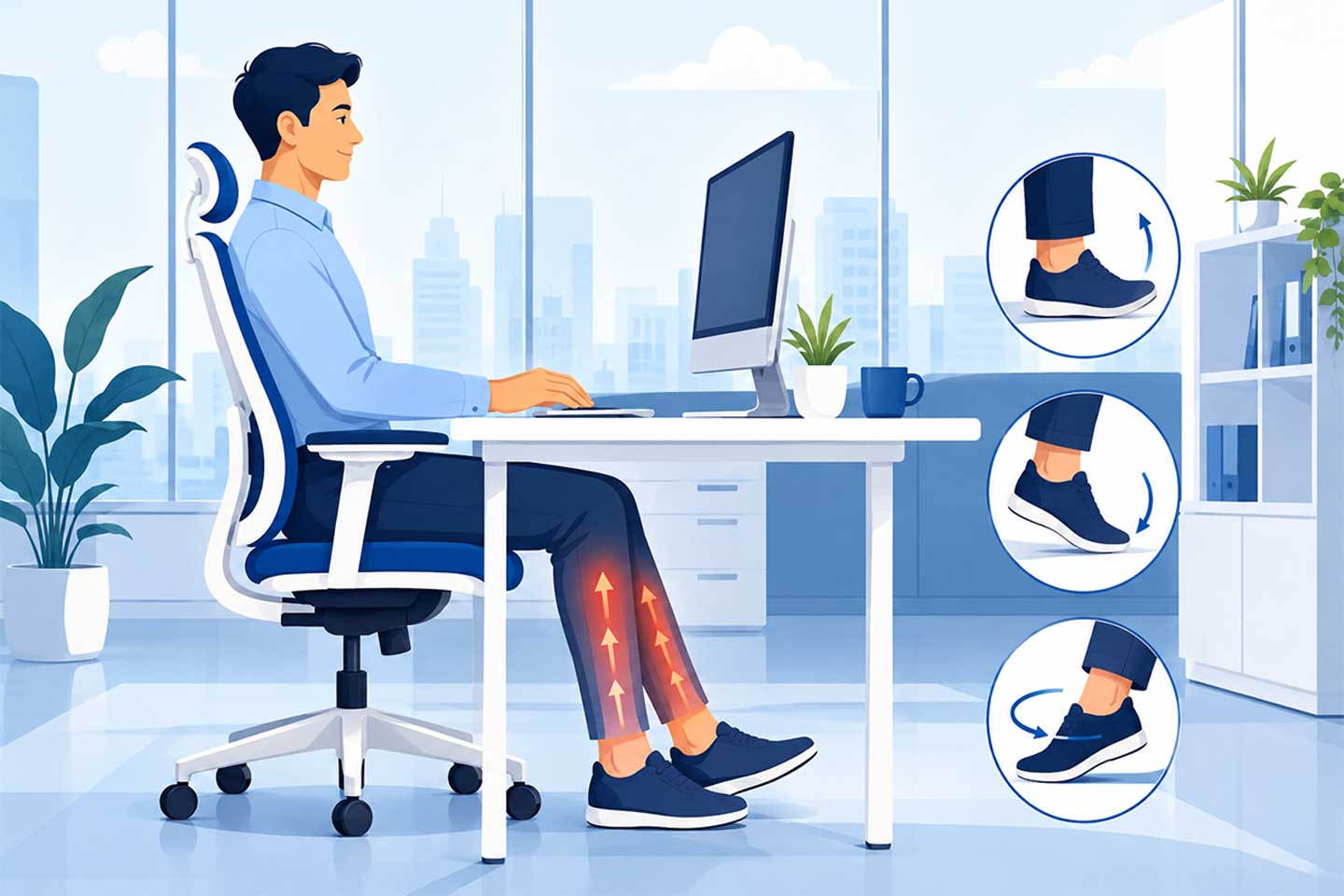
Ankle circles: Lift one foot slightly off the floor and rotate the ankle slowly in a circle, five times in each direction. Repeat on the other side. This activates the muscles in the lower leg and promotes blood flow.
Heel raises: While seated, press the balls of your feet into the floor and raise your heels as high as you can. Hold for a second, then lower. Do 10 to 15 repetitions. This directly engages the calf muscles, which are the primary circulatory pumps in your lower legs.
Seated leg extensions: Straighten one leg until it’s parallel to the floor and hold for a few seconds before lowering slowly. Alternate legs for 8 to 10 repetitions each. This activates the quadriceps and improves circulation in the thigh.
Standing calf stretches: Stand and place your hands on your desk for support. Step one foot back and press the heel down toward the floor, stretching the calf. Hold for 20 to 30 seconds and repeat on the other side. This is especially useful if your calves feel tight or cramped during the day.
If you want a more complete list of movements you can do without leaving your workspace, this article on how to reduce leg fatigue while sitting at a desk has a detailed breakdown of desk-friendly exercises.
Who Experiences Heavy Legs Most Often?
While anyone can experience leg heaviness from prolonged sitting, some groups tend to be more affected:
- Office workers who sit for six to eight hours or more per day, especially those with back-to-back meetings or long focus sessions.
- Remote workers who may have less structure in their day and fewer natural reasons to get up and move around.
- Gamers who can sit in intense sessions for several hours without taking breaks.
- Students studying or attending lectures for extended periods, particularly during exam season.
- Sedentary workers in any role where movement is limited by the nature of the job.
People who are generally less physically active tend to have weaker calf muscles, which makes the venous pump less effective even when they do move. This can amplify the effects of prolonged sitting.
For a deeper dive into prevention strategies specific to desk workers, this article on how to prevent leg numbness while sitting at a desk covers both short-term and long-term approaches.
When Heavy Legs Could Signal a Bigger Problem
For most people who sit at a desk all day, heavy legs are a normal response to inactivity and resolve with movement. However, there are situations where the sensation may be worth discussing with a healthcare professional.
Consider speaking with a doctor if you notice any of the following:
- The heaviness persists even after you’ve been up and moving for 15 to 20 minutes.
- One leg feels significantly heavier or more swollen than the other.
- You notice visible swelling, redness, warmth, or unusual skin changes in the lower leg.
- The sensation is accompanied by pain that feels sharp, cramping, or unusual.
- You have a personal or family history of blood clot-related conditions.
This article is informational and not a substitute for medical advice. If you’re concerned about the sensations you’re experiencing, it’s always worth getting a professional opinion.
Frequently Asked Questions
Why do my legs feel heavy after sitting?
When you sit for an extended period, your leg muscles become inactive. This slows blood flow in your lower limbs and reduces the efficiency of venous return, the process that pushes blood back up toward your heart. The result is a heavy, tired sensation that builds over time.
Why do my legs feel better after walking?
Walking activates your calf and thigh muscles, which act as a pump to push pooled blood back into circulation. It also stretches muscles that have become stiff from sitting, delivers fresh oxygenated blood to tired tissues, and helps the lymphatic system drain excess fluid.
Can sitting too long affect circulation?
Yes. Prolonged sitting significantly slows blood flow through the lower body. Over time, this can contribute to discomfort, swelling, stiffness, and a general feeling of fatigue in the legs. Regular movement breaks are the most effective way to counteract this.
Can a footrest help with heavy legs?
Yes, particularly if your feet don’t comfortably reach the floor. A footrest reduces the pressure on the backs of your thighs, supports a more neutral leg angle, and encourages slight movement throughout the day, all of which contribute to better circulation.
What stretches help with heavy legs?
Ankle circles, heel raises, seated leg extensions, and standing calf stretches are all effective. They can be done at or near your desk and take only a couple of minutes. Doing a few of these every 45 to 60 minutes can noticeably reduce leg fatigue.
How often should I stand up during desk work?
A common recommendation is to take a short movement break every 45 to 60 minutes. Even two to three minutes of walking is enough to restart circulation and prevent the buildup of the heaviness that comes from extended sitting.
Can poor posture cause heavy legs?
Yes. Sitting with unsupported feet, a chair that’s the wrong height, or poor spinal alignment can all increase pressure on the thighs and restrict blood flow. Correcting your posture and ergonomic setup can reduce leg discomfort significantly.
Are heavy legs normal after sitting all day?
For most people, yes. It’s a common and usually temporary response to prolonged inactivity. The fact that the sensation improves after walking confirms that movement is all that’s needed in most cases. If the feeling persists after activity or is accompanied by other symptoms, it’s worth consulting a healthcare professional.
Does hydration affect leg heaviness?
It can. Being well-hydrated keeps blood at a healthy viscosity, making it easier to circulate. Drinking water consistently throughout the day is a simple habit that supports overall circulation while you’re sitting.
Final Thoughts
If you’ve been wondering why do your legs feel heavy after sitting but better after walking, the answer comes down to one core mechanism: your legs need movement to maintain healthy circulation. Sitting shuts down the natural pump system in your calves, slows blood flow, and allows fluid to build up. Walking turns it all back on.
The relief you feel after a short walk isn’t a coincidence. It’s your circulatory system doing exactly what it’s designed to do when given the chance.
The practical takeaway is simple: build more movement into your workday. Take short walking breaks, do a few desk stretches every hour, set up your workstation ergonomically, and consider a footrest if your feet don’t comfortably reach the floor. These small adjustments add up significantly over a full workday and make a real difference in how your legs feel by the end of it. For more on managing this discomfort day-to-day, see this guide on how to relieve heavy legs after sitting all day at a desk, which covers both immediate relief techniques and longer-term strategies.