
Introduction: That Familiar Afternoon Heaviness in Your Legs
It’s 3 PM. You’ve been sitting at your desk since morning, grinding through emails, meetings, and spreadsheets. Somewhere around hour five, you notice it – a dull ache in your calves, that pins-and-needles sensation creeping up your feet, or maybe your shoes suddenly feeling tighter than when you put them on.
Sound familiar? You’re not alone.
Millions of office workers, remote employees, and students deal with this kind of lower-body discomfort every single day. Most people chalk it up to tiredness or “just sitting too long.” But what’s actually happening is more specific – and it has a lot to do with how your body handles blood flow when you’re parked in a chair for hours.
This brings up a question that’s been getting more attention in the ergonomics world: do footrests improve blood circulation while sitting? The honest answer isn’t a simple yes or no – but there’s real, practical reasoning behind why a footrest can make a meaningful difference in how your legs and feet feel throughout the day.
Let’s break it all down.
Why Blood Circulation Gets Worse While Sitting
Before talking about solutions, it helps to understand what’s actually going wrong when you sit for long periods.
The Problem With Long Sitting Hours
Your body was designed to move. According to the Mayo Clinic, sitting for long periods may contribute to poor circulation and other health concerns. When you walk, your leg muscles contract and relax, which helps pump blood back up toward your heart. When you sit still for hours, that natural pumping action slows way down. Blood flow in the lower body becomes sluggish, and your veins have to work harder to push blood upward against gravity.
Pressure Under Your Thighs
Here’s something most people don’t think about: the edge of your chair seat presses directly against the underside of your thighs. This compresses blood vessels and nerves in that area. Over time, it restricts blood flow to your lower legs and feet – and that’s when things start to get uncomfortable.
If your feet don’t rest flat on the floor (which is very common for shorter people or tall chairs), your thighs end up angled downward with extra pressure concentrated right at the seat edge. That makes everything worse.
Many people do not realize their chair is slightly too high until they start using a footrest and notice their legs feel less tired at the end of the day.
Poor Posture Compounds the Issue
Slouching forward, crossing your legs, or sitting with your feet tucked under your chair all add to the problem. These habits tilt your pelvis and change the angle of your hips, which further restricts blood flow and puts uneven stress on your legs.
What Are the Symptoms to Watch For?
If circulation is getting restricted while you sit, you might notice:
- Numbness or tingling in your feet or toes – that “fallen asleep” feeling
- Swelling in your feet or ankles, especially by late afternoon
- Heavy or tired legs, even though you haven’t been physically active
- Mild cramping in the calves
- Cold feet, even in a warm room
These aren’t just annoyances. They’re your body’s way of flagging that something in your sitting setup isn’t working well.
Do Footrests Actually Improve Blood Circulation While Sitting?
This is the big question, and here’s the straightforward answer: yes, a footrest can help – not by magically fixing your circulation, but by removing several of the physical factors that slow it down.
It Starts With Posture Support
When your feet dangle or don’t rest properly on the floor, your entire seated posture shifts. Your hips tilt, your lower back loses its natural curve, and your thighs press harder against the seat. A footrest gives your feet a stable, supported surface – which allows your hips and spine to sit in a more neutral position. Better posture means less compression throughout your lower body.
Reduced Pressure on the Back of Your Thighs
A footrest – especially one at the right height – lifts your feet so that your thighs rest more evenly on the seat rather than being pinched at the edge. That reduction in pressure at the seat edge gives blood vessels more room to do their job. Less compression equals better blood movement through that area.
A Better Sitting Angle for Your Legs
Ideally, your knees should be at roughly a 90-degree angle (or slightly more open) when you sit. If your chair is too high for your height and your feet don’t reach the floor, your legs naturally hang at a bad angle. A footrest brings the floor up to meet your feet, restoring that natural leg position and reducing the downward pressure that builds up in your lower legs.
Foot Elevation and Gravity
Some footrests are designed with a slight incline, meaning your feet rest at a mild upward angle. This gentle elevation works with gravity rather than against it, making it slightly easier for blood to flow back up from your feet toward your heart. It’s a small effect, but over an eight-hour workday, small things add up.
To be clear – a footrest isn’t a medical device, and it won’t resolve underlying blood flow conditions. But as a simple ergonomic tool, it addresses several real, physical reasons why blood flow becomes sluggish during desk work.
How Footrests Help Reduce Sitting Discomfort
Even apart from the circulation conversation, footrests offer several comfort improvements that desk workers genuinely notice.
Less Swelling in the Feet and Ankles
Swollen feet while sitting are often the result of fluid pooling in the lower legs when blood flow is restricted. By improving leg positioning and reducing thigh compression, a footrest helps minimize how much swelling builds up by the end of the day. Many people with mild ankle puffiness report real improvement just from switching to a proper ergonomic setup.
Better Support for Your Legs Throughout the Day
Having your feet resting on something solid – rather than dangling or pressing awkwardly – simply feels better. Your leg muscles don’t have to work as hard to hold your feet up, which reduces fatigue.
Fewer Pressure Points
Without a footrest, pressure tends to concentrate at the back of your knees and the underside of your thighs. A footrest distributes your body’s weight more evenly, spreading out those pressure points so no single spot takes a beating all day.
Improved Ergonomic Alignment Overall
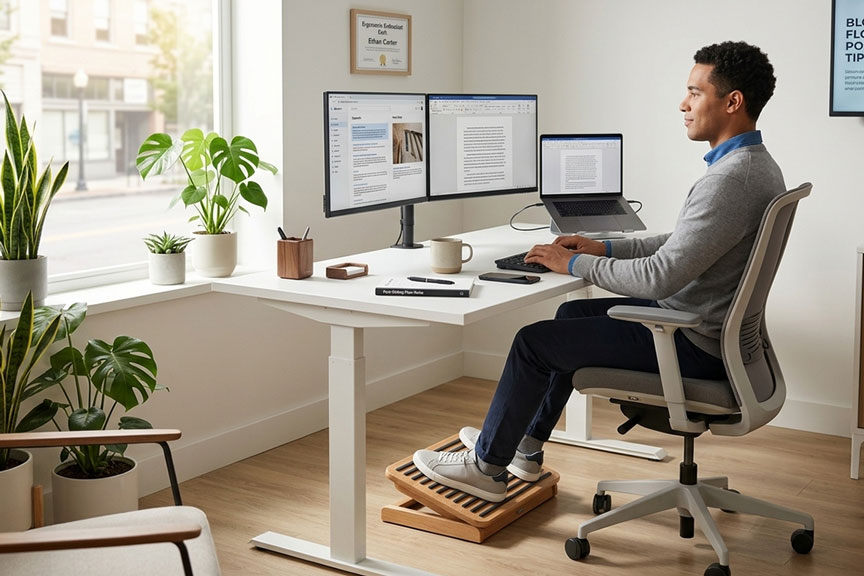
A good footrest is part of a complete ergonomic picture. When combined with a properly adjusted chair, monitor at eye level, and a keyboard in the right position, it helps your whole body stay in alignment – which reduces strain from head to toe.
Best Types of Footrests for Circulation
Not all footrests are created equal. Here’s a quick breakdown of the main types and what each one is best for.
Adjustable Footrests
These let you set the height to match your exact needs. If you sit at different desks or share a workspace, an adjustable model is the most flexible option. Getting the height right is crucial for actually solving the posture and circulation issues we’ve been talking about.
Rocking Footrests
A rocking or active footrest allows your feet to move back and forth gently while you sit. This subtle movement keeps your calf muscles lightly engaged, which helps promote blood flow. If you tend to sit very still for long periods, a rocking footrest is worth considering.
Angled (Tilted) Footrests
These have a fixed incline that positions your feet at an upward angle. They’re simple, sturdy, and work well for people who sit in the same chair all day. The angle can take pressure off the arches of your feet and subtly improve blood return.
Memory Foam Footrests
These prioritize cushioning and comfort over adjustability. They’re great for people whose main issue is foot fatigue or discomfort from hard surfaces. While they do reduce pressure, they don’t offer the posture-correcting benefits of height-adjustable options.
Additional Ways to Improve Circulation While Sitting
A footrest helps, but it works best as part of a broader set of habits. Here are some other simple, practical things you can do to keep blood flowing during long sitting sessions.
Take Movement Breaks
Stand up and walk around for even two to three minutes every hour. This is one of the most effective things you can do for leg comfort. Set a timer if you need a reminder.
Do Leg and Ankle Exercises at Your Desk
You don’t need to stand up to keep blood moving. Try:
- Ankle circles: rotate each foot slowly in both directions
- Heel raises: lift your heels off the floor and lower them repeatedly
- Knee raises: slowly lift one knee toward your chest and hold for a few seconds
- Toe presses: press your toes down against your footrest or the floor
These take about two minutes and make a noticeable difference.
Stretch Regularly
Tight hip flexors and hamstrings from prolonged sitting restrict blood flow and cause stiffness. A quick standing stretch – reaching down toward your toes, or doing a simple hip flexor stretch – helps open things back up.
Stay Hydrated
Dehydration thickens the blood slightly, which makes circulation less efficient. Keeping a water bottle at your desk and drinking steadily throughout the day supports overall cardiovascular function.
Check Your Desk Posture
Make sure your chair height, back support, and armrests are all properly set. Poor overall posture undoes a lot of the benefit a footrest provides.
When to See a Doctor
A footrest can improve sitting comfort and support better leg positioning, but it is not a medical treatment. If you regularly experience severe swelling, persistent numbness, leg pain, or unusual circulation problems while sitting, it’s important to speak with a healthcare professional.
In some cases, ongoing circulation issues may be related to underlying medical conditions that require proper evaluation.
Who Can Benefit Most From a Footrest?
While almost anyone who sits for long hours can see some benefit, certain groups tend to notice the biggest improvements.
- Office workers who spend six or more hours a day at a desk -especially those in fixed positions like call centers or data entry roles
- Remote workers who often sit on household chairs not designed for full workdays
- Students studying at desks for long stretches
- Shorter individuals whose feet naturally don’t rest flat on standard chair-height floors
- People who experience mild ankle swelling or foot fatigue by the end of the day
- Anyone recovering from minor leg discomfort who wants to reduce pressure while seated (always consult your doctor for specific conditions)
Common Mistakes When Using a Footrest
Getting a footrest is a great first step, but how you use it matters just as much.
Setting It at the Wrong Height
If the footrest is too high, your knees will rise above your hips, which creates its own problems. Too low, and it doesn’t really help at all. The right height lets your feet rest flat while your thighs are roughly parallel to the floor.
Still Sitting With Bad Posture
A footrest doesn’t fix a slumped back or a hunched neck. You need to pair it with good overall sitting habits. Keep your back supported, shoulders relaxed, and monitor at eye level.
Forgetting to Move
Even with the perfect ergonomic setup, sitting completely still for hours isn’t good for you. A footrest improves your baseline, but it doesn’t replace movement. Keep taking those regular breaks.
Using the Wrong Angle
Some people prop their footrest at an extreme angle thinking steeper is better. A moderate incline – typically five to fifteen degrees – is usually the sweet spot. Extreme angles can actually strain your ankles over time.
Frequently Asked Questions
1. Can a footrest really help with swollen feet from sitting all day?
It can make a real difference for mild swelling. By reducing the compression on the backs of your thighs and supporting a better leg position, a footrest helps improve blood flow to your feet and ankles. That said, persistent or significant swelling should be evaluated by a healthcare professional, as it can have other causes.
2. Do footrests help with circulation for people who sit for 8+ hours?
Yes – especially when combined with regular movement breaks. A footrest addresses some of the key physical causes of poor lower-body support while sitting, like thigh compression and improper leg angle. For very long workdays, pairing it with hourly movement is the most effective approach.
3. What’s the best footrest height for proper circulation?
The ideal height positions your feet flat on the footrest surface while keeping your knees at about a 90-degree angle (or slightly open). Your thighs should be roughly parallel to the floor, with no sharp pressure at the seat edge.
4. Is a rocking footrest better than a flat one for blood flow?
A rocking footrest has a slight edge because it encourages gentle, continuous leg movement. That movement activates your calf muscles, which naturally helps pump blood back upward. If you tend to sit very still, a rocking model is worth the upgrade.
5. Can I use a footrest if I’m tall and my feet already touch the floor?
Absolutely. Taller users can benefit from an angled footrest that encourages a slightly reclined leg position, which can reduce pressure at the knee and improve overall comfort. It’s more about ergonomic alignment than foot height alone.
Conclusion: Small Change, Real Difference
The question of whether footrests improve blood flowwhile sitting doesn’t have a dramatic answer – but the practical answer is genuinely useful. Yes, a footrest helps. Not by acting as a medical solution, but by correcting the physical factors that cause circulation to slow down in the first place: thigh compression, poor leg angle, uncomfortable pressure points, and static posture.
For most desk workers, the difference between sitting with dangling or poorly supported feet versus sitting with a proper footrest under your desk is very noticeable by the end of the day. Less swelling, less leg fatigue, fewer distracting aches.
The key is to pair a good footrest with a thoughtfully set up workspace – the right chair height, monitor position, and back support – and to keep moving throughout the day. Ergonomics isn’t about any one product doing all the work. It’s about getting a dozen small things right so your body can do what it’s designed to do, even when your job keeps you in a chair.
If swollen feet, numb toes, or heavy legs are a regular part of your afternoon, a quality under desk footrest is one of the simplest, most affordable things you can add to your setup. Give it a few weeks and see how your legs feel at 5 PM.
Your legs will probably thank you.