
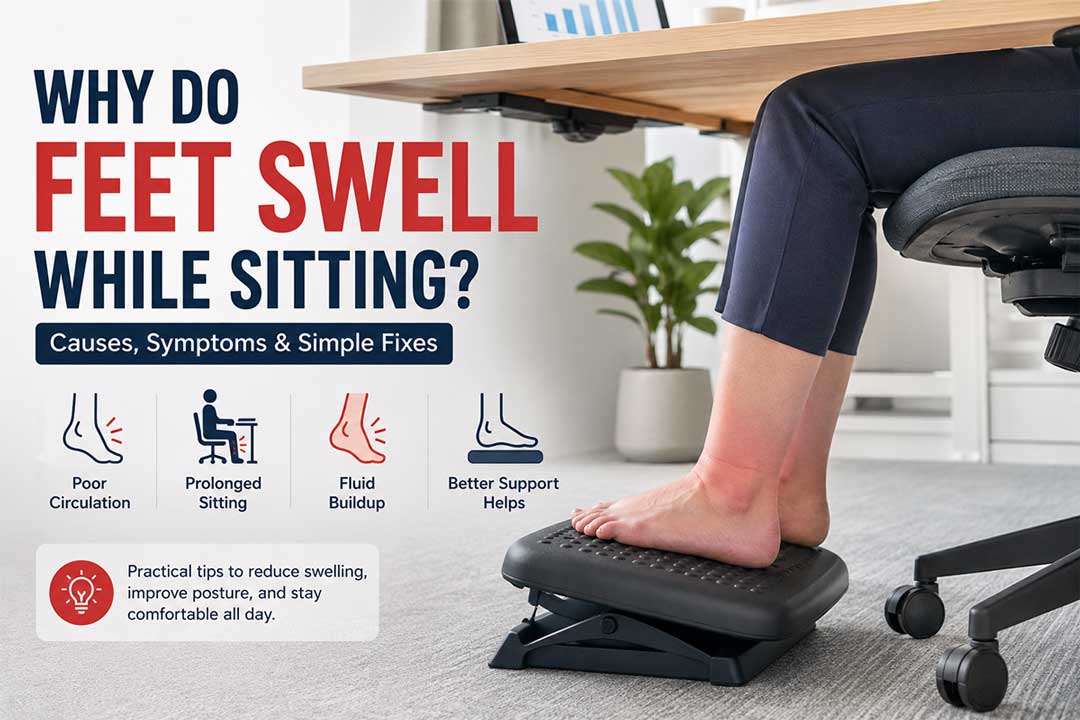
You sit down at your desk, power through a full morning of work, and by lunchtime your shoes feel noticeably tighter. Your ankles look a little puffier than usual, and there’s a dull heaviness creeping into your calves. Sound familiar? If you’ve ever experienced swollen feet while sitting at a desk, you’re definitely not alone. It’s one of the most common discomforts among office workers, remote employees, students, and anyone spending long hours in a chair.
So why do feet swell while sitting? The short answer is that staying in one position for too long slows down the movement of fluid in your lower body. Gravity pulls that fluid downward, and without regular movement, it pools around the ankles and feet. The good news is this problem is well understood, and there are simple, practical ways to manage it.
This guide breaks down the causes, symptoms, and most importantly, what you can actually do about it – including some ergonomic adjustments that make a bigger difference than most people expect.
Why Do Feet Swell While Sitting for Long Hours?
Extended sitting puts your lower body in a compromised position. When you’re upright in a chair but not moving, several things happen at once that contribute directly to leg swelling from sitting.
Reduced Fluid Movement
Your leg muscles act like a natural pump. Every time you walk or shift your weight, those muscles squeeze against your veins and help push blood back up toward your heart. When you sit still, that pump stops working. Fluid, particularly in the lymphatic system and venous blood, starts to accumulate in the lower extremities.
Gravity and Fluid Buildup
Gravity is relentless. The longer you sit with your feet on the floor, the more fluid is pulled downward into your feet and ankles. This is sometimes called dependent edema, and it explains why your feet are often most swollen at the end of a long workday rather than the beginning.
Pressure Under the Legs
A hard chair seat pressing into the back of your thighs can partially restrict the flow of blood in the femoral veins. Over hours of sitting, this sustained pressure builds up and makes it harder for blood to return efficiently from the legs. The result? More fluid stays where gravity is pulling it.
Poor Posture and Foot Position
Slouching forward, crossing your legs, or sitting with your feet tucked under your chair all change the alignment of your lower body. These postures can kink or compress the pathways your blood needs to travel. Poor sitting posture is often an overlooked factor in desk sitting discomfort, including foot swelling.
Inactivity Over Extended Periods
The human body wasn’t designed for hours of unbroken stillness. Even short periods of walking or standing give your cardiovascular system the push it needs to keep fluid moving. Without those breaks, sitting all day foot pain and swelling become the predictable outcome.
Common Symptoms of Feet Swelling From Sitting
Not everyone notices swollen feet immediately. The symptoms tend to build gradually across the day. Here’s what to watch for:
- Shoes that feel tighter in the afternoon than they did in the morning
- Visible puffiness around the ankles or the tops of the feet
- A sensation of heaviness or fullness in the lower legs
- Mild tingling or numbness in the toes or feet
- General foot discomfort or aching after prolonged sitting
- Socks or shoe straps leaving deeper imprints than usual on the skin
These symptoms are typically harmless when caused by extended sitting. However, sudden, severe, or one-sided swelling paired with pain or redness can be a sign of something that warrants medical attention. More on that further below.
How Sitting Posture Affects Swelling
The way you sit matters more than most people realize. Your posture directly influences how fluid moves through your lower body during a long workday.
Dangling Feet
If your chair is too high and your feet don’t rest flat on the floor, they dangle. This may not sound like a big deal, but dangling feet means the backs of your thighs carry more pressure, and your ankles have no support to help maintain proper positioning. Over a few hours, that lack of support contributes meaningfully to feet swelling at desk.
Chair Height and Leg Angle
The ideal sitting position keeps your knees at roughly a 90-degree angle with your feet flat and supported. When your chair is too low, your knees rise above your hips, which increases pressure on the veins in the back of your legs. When the chair is too high, your feet dangle as described above.
Crossed Legs
Crossing your legs feels natural, but it’s one of the worst habits for preventing lower-body swelling. It creates a point of compression behind one knee that actively impedes venous return from that leg. If you catch yourself crossing your legs regularly, that alone could be a significant factor in your swelling.
Unsupported Feet
Even when your feet do touch the floor, they may not be in an optimal position. Feet that sit flat on hard flooring with no cushioning or elevation can still experience pressure buildup at the heel and sole. This is precisely where ergonomic solutions like a footrest come in.
Can a Footrest Help Reduce Feet Swelling?
Yes — and this is one of the most underrated ergonomic changes a desk worker can make. An ergonomic footrest does more than just make sitting feel nicer. It addresses several of the root causes of foot swelling at the same time.
Understanding the full benefits of using a footrest under desk goes a long way in appreciating why ergonomic professionals recommend them so consistently.
Reducing Pressure Under the Thighs
A footrest elevates your feet slightly, which reduces the pressure the chair seat places on the back of your thighs. Less compression in that area means better venous return from the lower legs.
Improving Leg Angle and Posture
With a footrest, you can adjust your leg angle so that your knees are at a comfortable, open position rather than pressed tightly at 90 degrees. This small change encourages better fluid movement throughout the day. If you’re specifically looking for an under desk foot rest for swollen feet, there are products designed with tilted and cushioned surfaces that further encourage gentle movement.
Encouraging Micro-Movements
Many footrests have a slight rocker or tilt mechanism. These designs prompt your feet to shift and gently flex throughout the day, which mimics the micro-movement your legs need to keep fluid from pooling. It’s a passive benefit – you don’t have to think about it.
Comfort for Shorter Desk Workers
People with shorter legs often sit with their feet hovering just above the floor. This makes dangling-foot swelling particularly common. An under desk foot rest for short legs solves this directly by bringing the floor up to meet your feet rather than forcing you to strain downward.
Choosing the right product also matters. Learning how to choose the right footrest height for better desk comfort can make the difference between a footrest that helps and one that creates new strain. The right height keeps your hips and knees aligned without forcing an unnatural angle.
Here’s a quick look at how different desk habits affect foot swelling throughout the day:
| Sitting Habit | Effect on Swelling | Recommended Change |
|---|---|---|
| Feet dangling off floor | Increases pressure, poor support | Use a footrest or lower chair |
| Legs crossed | Compresses veins behind knee | Keep feet flat and uncrossed |
| No movement for 2+ hours | Fluid pools in ankles/feet | Take a short walk every 45–60 min |
| Chair too high | Thigh compression, reduced flow | Adjust chair height or add footrest |
| Feet flat, no support | Mild sole/heel pressure over time | Add cushioned footrest or mat |
| Regular micro-movement | Promotes fluid return | Rocker footrest or ankle rotations |
Other Ways to Reduce Feet Swelling While Sitting
A footrest is a great start, but it works best as part of a broader approach. Here are additional strategies that genuinely help reduce foot swelling during long desk sessions.
Take Regular Movement Breaks
Standing up and walking for even two to three minutes every hour makes a noticeable difference. Set a timer if you tend to lose track of time while working. The goal isn’t a full workout – just enough movement to get your leg muscles pumping again.
Do Ankle and Calf Exercises at Your Desk
You don’t need to leave your seat to help things along. Try rotating your ankles in circles, flexing and pointing your feet, or lifting your heels off the floor repeatedly. These simple movements activate the calf muscles and help push fluid upward. A few minutes every hour is enough to make a difference.
Stay Hydrated
It might seem counterintuitive, but drinking enough water actually helps reduce swelling. When you’re dehydrated, your body holds onto fluid more aggressively. Adequate hydration keeps fluid balance more stable throughout the day.
Elevate Your Feet When Possible
During lunch breaks or whenever you have a few minutes to rest, try propping your feet up slightly above heart level. Even resting them on a footrest while reclined can help fluid drain back toward the torso.
Reconsider Your Desk Setup
Your entire workstation setup contributes to how your body handles long sitting sessions. Monitor height, chair depth, and armrest position all affect posture, which in turn affects how your lower body manages fluid. If you haven’t evaluated your full setup recently, it’s worth doing. Understanding what is an ergonomic foot rest and how it fits into a properly configured workstation is a useful starting point.
Wear Supportive Footwear
Tight, unsupportive shoes worsen swelling. Footwear with good arch support and enough room in the toe box allows for natural foot movement and doesn’t constrict areas where fluid tends to collect.
Who Is Most Likely to Experience Feet Swelling While Sitting?
Foot swelling from extended sitting can affect almost anyone, but certain groups tend to experience it more frequently.
- Office workers spending 7–9 hours at a desk daily
- Remote workers who may have less-optimized home office setups
- Students in long lectures or marathon study sessions
- Gamers who sit for hours without taking breaks
- People with sedentary jobs or lifestyles who rarely walk during the day
- Individuals who are pregnant, as fluid retention is naturally higher
- People who are overweight, where added pressure on leg veins is a factor
- Older adults, as venous efficiency naturally decreases with age
That said, even healthy young adults who sit for long stretches without moving regularly will notice feet swelling at desk to some degree. The body’s need for movement doesn’t really have an age limit.
When Swelling May Need Medical Attention
For most desk workers, occasional mild swelling that eases after walking around is nothing to worry about. It’s a normal response to prolonged sitting. That said, there are signs worth taking more seriously.
You should consider consulting a healthcare provider if you notice:
- Swelling that appears suddenly and is significant
- Swelling that affects only one leg rather than both
- Swelling accompanied by pain, redness, or warmth in the leg
- Swelling that doesn’t improve after walking or elevating your feet
- Shortness of breath or chest tightness alongside leg swelling
These can occasionally be signs of conditions that go beyond typical desk sitting discomfort and may need professional evaluation. The Mayo Clinic has published helpful guidance on the health risks associated with prolonged sitting, which is worth reviewing if you spend the majority of your day seated.
This article is informational only and should not replace advice from a qualified medical professional.
Frequently Asked Questions
Why do my feet swell when I sit too long?
When you sit for extended periods without moving, your leg muscles aren’t actively pumping blood back toward your heart. Gravity pulls fluid into the lower legs and feet, leading to the puffiness and heaviness many desk workers notice by afternoon. Regular movement breaks are the most effective remedy.
Can a footrest improve sitting comfort?
Absolutely. An ergonomic footrest reduces pressure under the thighs, supports proper leg alignment, and can encourage gentle foot movement throughout the day. For people who struggle with swollen feet or lower leg discomfort, a footrest is one of the easiest and most cost-effective ergonomic improvements available.
Is swelling from sitting normal?
Mild swelling that develops gradually during a long day of sitting and resolves after you walk around is generally considered a normal response to inactivity. It becomes a concern if the swelling is severe, one-sided, sudden, or accompanied by other symptoms like pain or redness.
Does posture affect foot swelling?
Yes, significantly. Crossing your legs, sitting with feet dangling, or slumping in your chair can restrict venous return from the lower legs. Good posture, supported feet, and an appropriate chair height all help reduce the likelihood of swelling throughout the day.
How often should I move during desk work?
A general guideline is to take a brief movement break every 45 to 60 minutes. This doesn’t need to be a full stretch routine — even walking to get water, standing for a minute, or doing a few ankle rotations at your desk is enough to keep fluid moving and reduce swelling.
Can sitting all day affect circulation?
Extended sitting does reduce the efficiency of blood flow in the lower extremities. The leg muscles, which normally assist venous return during walking and standing, become inactive. Over time, this can contribute to lower leg swelling, fatigue, and discomfort. Building movement into your daily routine is the most direct way to counteract this effect.
Final Thoughts
Swollen feet and ankles are one of the most common side effects of long hours at a desk — but they’re also one of the most preventable. The answer isn’t complicated: your body needs movement, proper support, and a workstation setup that doesn’t work against it.
Start with the basics. Get up and move every hour. Adjust your chair so your feet are properly supported. If your feet don’t reach the floor comfortably, invest in a footrest. These steps alone will make a meaningful difference for the vast majority of people dealing with feet swelling at desk.
For those who want to dig deeper into the ergonomic side of things, exploring the full range of ergonomic footrest benefits is a smart next step. Small changes in your daily setup compound over weeks and months into noticeably better comfort and fewer problems at the end of the workday. Your feet carry you through life – give them a little support while you work.