
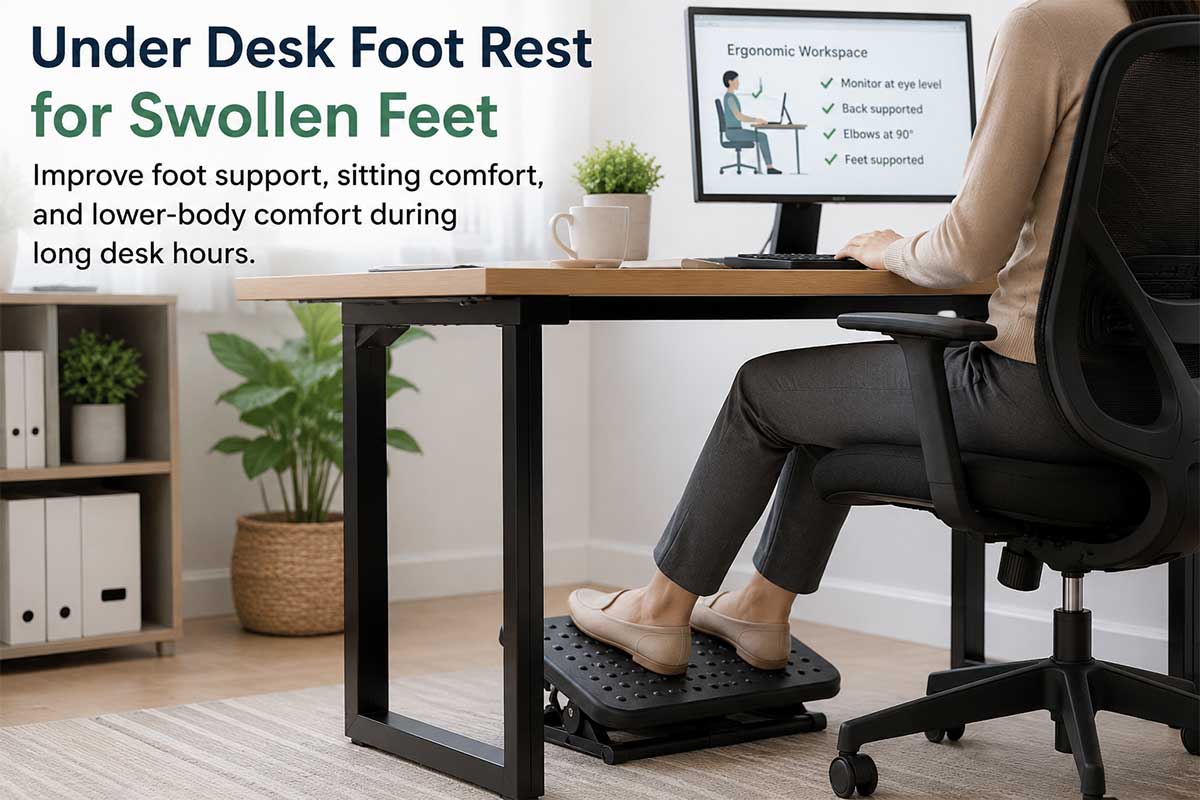
Sitting at a desk for several hours a day is something millions of people do – and over time, many notice their feet and legs starting to feel heavy, tight, or uncomfortable. When your feet are unsupported or positioned awkwardly under a chair, that discomfort can build up quickly. This is why so many desk workers, students, and remote workers have started looking into simple ergonomic tools to improve how they sit. One option that often comes up is an under desk foot rest for swollen feet – a practical addition that may help with foot positioning, sitting posture, and overall lower-body comfort during long desk hours.
Quick Answer
An under desk foot rest for swollen feet may help improve sitting comfort by giving your feet a stable, elevated surface to rest on. This can encourage better lower-body positioning and reduce the discomfort that comes from feet dangling or being left unsupported for long periods. While it is not a medical solution, it can be a simple and useful part of a more comfortable desk setup.
Why Feet May Feel Swollen During Long Sitting Hours
Many people notice their feet starting to feel puffy, heavy, or uncomfortable after several hours at a desk. There are a few reasons this happens.
When you sit still for a long time, your body gets less movement overall. Your lower legs and feet, which are furthest from the heart, may be especially affected when they stay in the same fixed position for extended periods.
Unsupported feet can also make things worse. If your feet dangle in the air or rest awkwardly on the floor, there may be added pressure underneath your thighs, and your feet may feel heavier and more uncomfortable as the day goes on.
Poor chair and desk alignment plays a role too. If your chair is too high for your height, or your desk setup doesn’t allow your feet to rest flat and comfortably, this can contribute to the discomfort many desk workers feel in their lower body by mid-afternoon.
It’s worth noting that persistent, painful, sudden, or severe swelling in the feet or legs can sometimes be a sign of an underlying health issue. If your swelling falls into any of those categories, it’s always best to speak with a qualified healthcare professional rather than relying on ergonomic tools alone.
Can an Under Desk Foot Rest Help with Swollen Feet Comfort?
The short answer is: it may help, depending on your situation.
An under desk footrest gives your feet a proper place to rest instead of dangling or pressing unevenly against the floor. This can improve how your legs are positioned and may reduce some of the discomfort that comes from sitting for long, uninterrupted stretches.
Some footrests also have a rocking or tilting function, which allows small, gentle movements while you sit. This kind of subtle motion can encourage slight shifts in posture and may feel more comfortable than sitting completely still for hours.
That said, it’s important to be clear: a footrest is an ergonomic comfort tool, not a medical device. It won’t treat any medical condition, and it won’t address the underlying cause of any serious swelling. Think of it as one piece of a larger ergonomic puzzle – useful when combined with proper chair height, regular movement breaks, and a sensible desk setup.
For more background on what these tools are designed to do, you can read our guide on What Is an Ergonomic Foot Rest? to get a clearer picture before making any decisions.
Benefits of Using an Under Desk Foot Rest for Swollen Feet
Better Foot Support
One of the most straightforward benefits of a footrest is that it gives your feet somewhere comfortable to land. Rather than resting on a hard floor at an awkward angle – or not touching the floor at all – your feet can sit on an elevated, cushioned surface. This kind of stable support may reduce the pressure and tension that builds up in the lower body during long sitting sessions.
More Comfortable Leg Positioning
When your feet are properly supported, the rest of your lower body tends to follow. Your knees may settle into a more relaxed angle, and your thighs can rest more evenly on the seat of your chair instead of hanging over the edge. This overall improvement in leg positioning can make a noticeable difference in how your feet and legs feel by the end of a long day.
Reduced Pressure from Dangling Feet
People who are shorter or who use high chairs or standing desks adjusted for a taller person often find that their feet don’t quite reach the floor. Dangling feet might seem harmless, but over time, the lack of support can create pressure under the thighs and leave the feet feeling heavy and uncomfortable. A footrest closes that gap and helps take that strain off.
Gentle Movement and Position Changes
Some footrest designs include a rocking or tilting platform. This small feature can actually make a meaningful difference over long hours, because it allows you to shift your feet and change the angle of your legs slightly without having to stand up. That gentle motion may reduce the stiffness that comes from sitting completely still and can help your feet feel more comfortable as the hours pass.
Improved Desk Ergonomics
Using a footrest is part of building a desk setup that works for your body. When your feet are supported, it’s easier to keep your back in a good position and your hips properly aligned. A well-arranged desk setup – one that includes the right chair height, monitor positioning, and foot support – tends to feel better throughout the day than one that was never thought through. You can explore this topic further in our article on the Benefits of Using a Footrest Under Desk.
Who May Benefit Most from a Foot Rest?
Not everyone needs a footrest, but there are quite a few groups of people who tend to find them particularly helpful.
Desk workers and office employees who spend most of their day sitting are among the most common users. Hours of sitting without proper support can leave the feet and legs feeling uncomfortable, and a footrest can make a real difference.
Remote workers often deal with less-than-ideal setups at home – a dining chair that’s too high, or a kitchen table that’s at the wrong height. A portable footrest can help fill those gaps without requiring a full office furniture overhaul.
Shorter users frequently find that standard chairs and desks aren’t sized for them. Even when a chair is adjusted to its lowest setting, their feet may not sit flat on the floor – and a footrest solves that problem neatly.
People using high chairs or bar-height desks almost always need a footrest, since the seated height puts their feet well off the ground.
Older adults may be more sensitive to the discomfort that comes from prolonged sitting, and may find that the added support makes their seated hours noticeably more comfortable.
Students who spend long hours studying or working at a desk can also benefit, especially if their workspace wasn’t set up with ergonomics in mind.
Features to Look for in a Foot Rest for Swollen Feet
Not all footrests are built the same. If you’re looking for one that may help with foot comfort during long sitting sessions, here are some features worth thinking about.
Adjustable Height
A footrest that can be set to different heights gives you flexibility. Everyone’s chair and desk height is different, and being able to adjust the footrest means you can find the position that keeps your knees at a comfortable angle and your feet fully supported.
Tilt or Rocking Function
As mentioned earlier, a tilting or rocking surface allows gentle movement while you sit. This can help prevent the legs and feet from feeling stiff or heavy after long stretches of stillness.
Wide and Comfortable Surface
A larger surface area means there’s room to shift your feet around without falling off the edge. This is especially useful for people who like to change position throughout the day.
Non-Slip Base
A footrest that slides around on the floor is more of a frustration than a help. Look for one with a rubberized or textured base that stays in place during normal use.
Soft or Textured Surface
A surface that has some cushioning or texture can feel more comfortable under your feet than a hard, flat platform. Some people also like textured surfaces for the gentle sensation underfoot.
Stable Construction
A footrest should feel solid. If it wobbles or collapses under pressure, it won’t provide the reliable support your feet need. Look for sturdy materials and good construction before buying. Our Adjustable Foot Rest Buying Guide can help you compare your options before making a decision.
How to Use a Foot Rest Correctly
Getting the most out of a footrest means using it as part of a well-adjusted desk setup, not just sliding it under your chair and forgetting about it.
Start by adjusting your chair height so your hips are at a comfortable level and your thighs are roughly parallel to the floor. Then position the footrest so your feet can rest fully on it – don’t just prop your toes on the edge.
Try to rest your whole foot on the surface, not just the heels or just the toes. This gives you better weight distribution and feels more comfortable over time.
Change foot position occasionally. Even with a footrest, sitting in the exact same position for hours isn’t ideal. Shift your feet from time to time, try rocking if your footrest allows it, and give your legs a slight stretch when you can.
Stand up and move regularly. A footrest is a sitting comfort tool, not a substitute for movement breaks. Getting up for a few minutes every hour or so is one of the most effective things you can do for your overall comfort during a long desk day. According to OSHA’s ergonomics guidance, proper workstation setup – combined with regular movement – is key to reducing discomfort from prolonged sitting.
Finally, combine it with a proper overall setup – the right monitor height, a chair with good lumbar support, and a desk at the right height. A footrest works best when it’s part of a setup that makes sense for your body from head to toe.
When a Foot Rest May Not Be Enough
It’s worth being clear about the limits of an ergonomic footrest.
If your feet or legs feel swollen in a way that is severe, sudden, painful, or has been going on for a long time, that’s not something an ergonomic tool can address. A footrest can improve your sitting comfort and support your feet during long desk hours, but it is not a treatment for any medical condition.
Symptoms like significant swelling that doesn’t go away after resting, swelling in just one leg, swelling accompanied by pain or shortness of breath, or swelling that has appeared suddenly without an obvious cause – these are situations where speaking with a qualified healthcare professional is the right move.
Ergonomic improvements are valuable for general comfort and posture, but they work best for people who are otherwise healthy and simply want to feel more comfortable at their desk. For anything beyond that, professional advice is always the better path. If your situation involves back or leg pain as well, our article on Under Desk Foot Rest for Sciatica Relief may also be a helpful read.
Frequently Asked Questions
Can a foot rest help with swollen feet while sitting?
A footrest may help improve comfort and reduce some of the discomfort that comes from unsupported or poorly positioned feet during long desk hours. It gives your feet a stable, elevated surface to rest on and can encourage better lower-body alignment. However, it is not a medical solution and won’t treat swelling caused by a health condition.
Should my feet be elevated at a desk?
Slight elevation – enough to allow your feet to rest comfortably with your knees at roughly a 90-degree angle – is often recommended as part of good desk ergonomics. A footrest can help achieve this, especially for shorter users or those whose chairs don’t sit at the right height for their body.
Is a rocking footrest better for swollen feet?
A footrest with a rocking or tilting function allows gentle movement while you sit, which many people find more comfortable over long periods than a completely static footrest. The ability to shift your feet slightly and change the angle of your legs can help reduce the stiffness and heaviness that often builds up during extended sitting sessions.
Can poor sitting posture make feet feel uncomfortable?
Yes, it can. Poor posture – such as sitting with feet dangling, legs pressed unevenly against a hard chair edge, or lower body poorly aligned – can contribute to increased discomfort in the feet and legs over time. Improving your sitting setup may help reduce some of this.
Who should use an under desk foot rest?
Anyone who spends long hours sitting at a desk and finds their feet and legs feeling uncomfortable could benefit from trying a footrest. It’s especially useful for shorter people, those using high chairs, remote workers with improvised desk setups, students, and older adults who spend extended periods seated.
Final Thoughts
For anyone spending long hours at a desk, small ergonomic improvements can add up to a noticeably more comfortable day. An under desk foot rest for swollen feet may not solve everything, but it can be a simple, practical upgrade that supports better foot positioning, encourages gentle movement, and reduces the discomfort that comes from poorly supported feet during long sitting sessions.
Think of it as one part of a broader approach to desk comfort – one that also includes the right chair height, a sensible monitor position, and regular breaks to move around. Used thoughtfully, a footrest can make your seated hours feel more manageable and your lower body feel less worn out by the end of the day.
That said, if your feet or legs feel swollen in a way that is persistent, painful, or unusual, please don’t rely on ergonomic tools alone. Speaking with a qualified healthcare professional is always the right call when swelling raises concern.
A more comfortable desk setup starts with small, smart choices – and a good footrest might just be one of them.