
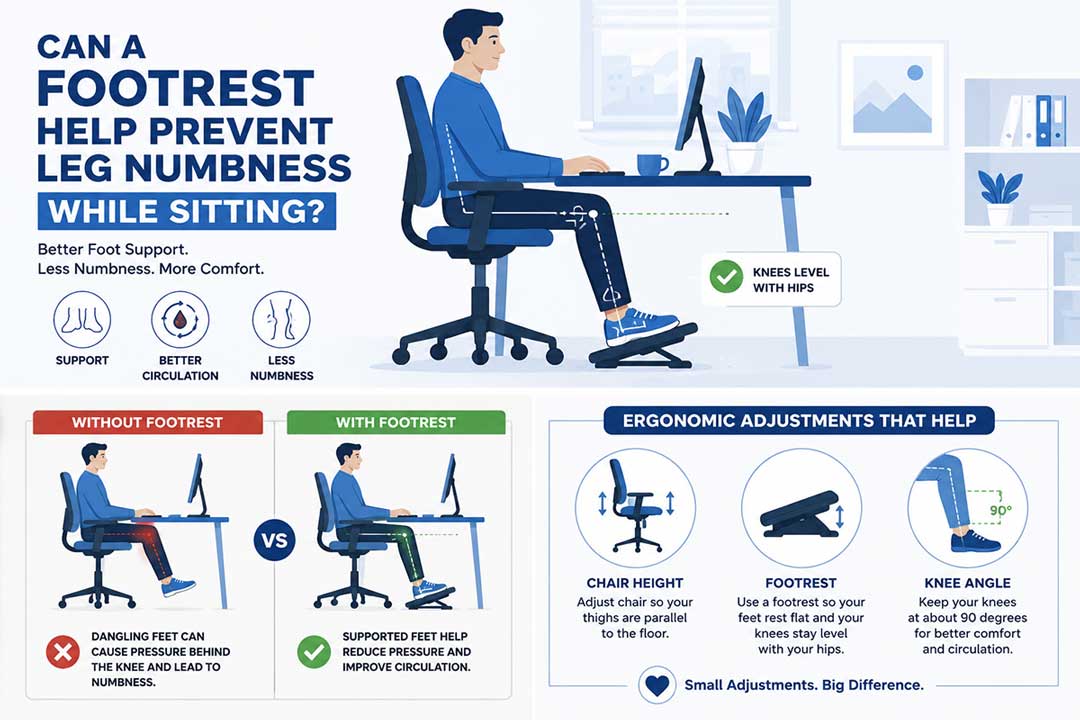
If your legs or feet regularly go numb, tingly, or “fall asleep” during long stretches at your desk, you’ve probably wondered whether a simple footrest could fix it. Leg numbness while sitting is a common complaint among office workers, remote workers, students, and gamers, and foot positioning plays a bigger role in it than most people realize. So, can a footrest help prevent leg numbness while sitting? For many people, the answer is yes, but only as part of a broader approach to how the legs are positioned and supported throughout the day.
Quick Answer
A footrest can help prevent leg numbness while sitting for some people by supporting a more stable foot position and reducing pressure behind the knees and thighs. It works best when the chair is set too high for your leg length or when your feet don’t comfortably reach the floor. A footrest alone, however, will not resolve numbness caused by prolonged sitting duration, poor overall posture, or nerve compression unrelated to foot support, so it should be paired with correct chair height, regular movement, and good sitting habits.
Why Does Leg Numbness Happen While Sitting?
Numbness while sitting typically happens when sustained pressure affects a nerve or reduces blood flow to a specific area of the leg or foot. When you sit for a long time without shifting position, soft tissue near nerves and blood vessels can become compressed. This is often described as a limb “falling asleep,” a temporary sensation that usually resolves once you move and pressure is relieved.
Several everyday sitting habits can contribute to this feeling, including a chair seat that presses into the back of the thighs, crossing the legs for extended periods, or sitting in the same static position for hours without a break. Because numbness is often linked to sustained pressure, small setup adjustments, including foot support, chair height, and posture, can make a meaningful difference for many people.
How Does Foot Positioning Affect Nerves and Circulation?
Foot positioning influences how weight is distributed through the legs while seated. When your feet don’t reach the floor, more pressure tends to concentrate along the underside of the thighs and behind the knees, areas where nerves and blood vessels sit close to the surface. Over time, this uneven pressure may contribute to the tingling or numb sensations some people notice, particularly during long, uninterrupted sitting sessions.
A stable, supported foot position helps distribute body weight more evenly between the seat and the floor, or between the seat and a footrest. This is closely connected to how the feet are angled and placed more broadly, a topic covered in more detail in guidance on positioning your feet correctly while sitting.
Can a Footrest Help Prevent Leg Numbness While Sitting?
A footrest can help prevent leg numbness while sitting in situations where the root cause is inadequate foot support, such as a chair set higher than your leg length comfortably allows. By giving the feet a stable surface, a footrest can reduce the tendency to dangle the feet, tuck them under the chair, or cross the legs, all of which can concentrate pressure in ways that contribute to numbness.
It’s worth being clear that a footrest is not a guaranteed fix for every case of leg numbness. It addresses one contributing factor, foot and lower leg support, rather than every possible cause. For a broader view of prevention strategies beyond footrests alone, see how to prevent leg numbness while sitting at a desk, which covers additional habits and adjustments.
Who Is More Likely to Experience Leg Numbness While Sitting?
Leg numbness while sitting can affect almost anyone, but certain situations make it more likely. Office and remote workers who spend hours at a fixed desk setup, especially with a chair that doesn’t match their leg length, often report numbness later in the day. Students working at shared desks or in lecture halls may deal with the same issue when furniture isn’t adjustable to their height.
Gamers face a slightly different pattern, since long, uninterrupted sessions in a reclined gaming chair can concentrate pressure behind the knees and thighs for extended stretches without the natural breaks that come with a typical office schedule. Anyone who is shorter than average, uses a desk with a fixed height, or works from furniture not originally suited to their body may also notice numbness more frequently, simply because their feet are less likely to reach the floor comfortably.
When Can a Footrest Help?
- Your feet don’t comfortably reach the floor once your chair is adjusted to the correct desk height.
- You notice pressure or discomfort behind your knees from an unsupported or dangling foot position.
- You tend to tuck your feet under the chair or cross your legs because your feet lack a stable resting surface.
- You’re shorter than average or use a desk with a fixed height that doesn’t match your leg length.
In these situations, a footrest can restore a more balanced leg position, which may help reduce some of the pressure-related sensations linked to numbness. This aligns with the broader ergonomic benefits described in benefits of using a footrest under desk.
When a Footrest Won’t Solve the Problem
A footrest is unlikely to meaningfully help if leg numbness is caused by factors unrelated to foot support. These include sitting for very long periods without moving, an office chair with a seat pan that’s too deep or too firm, or postural habits like sitting cross-legged for extended stretches. If cross-legged sitting is a regular habit, it’s worth reviewing can sitting cross-legged at a desk cause leg pain or numbness, since this posture can contribute to numbness independently of foot support.
A footrest also won’t correct numbness that stems from causes unrelated to desk posture, such as circulation conditions, nerve-related conditions, or prolonged pressure from other sources. If numbness is frequent, severe, or doesn’t improve with posture and movement changes, it’s best addressed with a healthcare professional rather than through equipment adjustments alone.
Proper Footrest Positioning to Support Circulation
Positioning matters as much as the decision to use a footrest at all. A footrest that’s too high can raise the knees above hip level, which may create new pressure points rather than relieving them. A footrest that’s too low may not provide meaningful support at all.
- Adjust the footrest height so your knees sit roughly level with, or slightly lower than, your hips.
- Keep your feet flat and fully supported on the footrest surface rather than resting on your toes or heels alone.
- Choose a footrest with a stable, non-slip surface to avoid sliding during the day.
- Recheck the height whenever you change chairs, shoes, or desk setups.
For a detailed walkthrough of getting this measurement right, see how to choose the right footrest height for better desk comfort, and for guidance on how much time to spend using one, see how long should you use a footrest while sitting at a desk.
Best Desk Habits to Avoid Numbness
- Take a short movement break every 30 to 60 minutes to relieve sustained pressure on the legs.
- Adjust chair height first, then add a footrest if your feet still don’t reach the floor comfortably.
- Avoid crossing your legs for long periods, especially during video calls or focused work.
- Keep a small gap between the back of your knees and the front edge of the seat.
- Change position periodically rather than holding one exact posture for hours at a time.
- Pay attention to early tingling sensations and shift position before numbness sets in.
Common Mistakes That Undermine a Footrest’s Benefits
- Using a footrest that’s too tall, which can raise the knees above the hips and create new pressure points.
- Relying on a footrest alone without adjusting chair or desk height first.
- Resting only the heels or toes on the footrest instead of the whole foot.
- Assuming a footrest will resolve numbness caused by sitting duration or unrelated postural habits.
- Using an unstable or slippery surface instead of a properly designed ergonomic footrest, a distinction explained in what is an ergonomic foot rest.
If you’re comparing footrest options, an adjustable foot rest buying guide can help you choose a model suited to your chair height and desk setup.
Comparison Table: Without Footrest vs Properly Adjusted Footrest
The table below summarizes how foot support, pressure distribution, and circulation-related sensations tend to differ with and without a properly adjusted footrest.
| Factor | Without a Footrest | With a Properly Adjusted Footrest |
|---|---|---|
| Foot and leg support | Feet may dangle or rest unevenly if the chair is higher than leg length allows | Feet rest flat and stable, reducing pressure points along the thighs |
| Pressure behind the knees | Seat edge may press into the back of the knees, especially in a higher chair | A supported foot position can help reduce excess pressure behind the knees |
| Posture consistency | People often shift, cross legs, or tuck feet under the chair to compensate | Encourages a more stable, neutral leg position, which may reduce compensatory habits like leg crossing |
| Circulation-related sensations | Prolonged uneven pressure may contribute to tingling or numbness in some people | May help reduce some pressure-related tingling, though it will not resolve numbness from nerve compression elsewhere in the body |
| Root cause coverage | Does not address desk height, chair depth, or sitting duration | Works best when combined with correct chair height, desk setup, and regular movement breaks |
When to Seek Medical Advice
Occasional, brief numbness that resolves quickly after moving is common and generally not a cause for concern. However, it’s a good idea to consult a qualified healthcare professional if numbness is frequent, lasts long after you’ve changed position, spreads to other areas, or is accompanied by pain, weakness, or swelling. A healthcare provider can help determine whether the numbness is related to sitting posture or another underlying cause.
Frequently Asked Questions
Can a footrest completely stop leg numbness while sitting?
A footrest may help reduce some pressure-related numbness by supporting a more stable foot position, but it’s unlikely to completely resolve numbness caused by other factors like prolonged sitting duration or nerve-related conditions.
Why do my legs go numb even though I already use a footrest?
This can happen if the footrest is set at the wrong height, if you’re sitting for very long periods without breaks, or if the numbness stems from a cause unrelated to foot support, such as leg crossing or an unsuitable chair.
What height should a footrest be to help with numbness?
A footrest should generally be set so your feet rest flat and your knees are level with or slightly lower than your hips, which helps maintain even pressure distribution.
Does sitting with feet flat on the floor prevent numbness better than a footrest?
If your feet already rest flat and comfortably on the floor, a footrest isn’t necessary. A footrest is most helpful when your chair height prevents your feet from reaching the floor naturally.
Can crossing my legs cause numbness even with a footrest?
Yes, crossing your legs can contribute to numbness regardless of footrest use, since it creates its own pressure points behind the knee and along the leg.
How often should I take breaks to prevent numbness while sitting?
Many people find it helpful to stand up and move for a minute or two every 30 to 60 minutes, though preferences and needs vary from person to person.
Is leg numbness while sitting always related to circulation?
Not always. Numbness while sitting is often related to nerve pressure rather than circulation alone, though both can contribute depending on posture and duration.
Can gamers benefit from a footrest for numbness prevention?
Gamers who sit for long, uninterrupted sessions may benefit from a footrest if their chair or desk height leaves their feet unsupported, though regular movement breaks remain important as well.
Should I see a doctor if my foot stays numb after standing up?
If numbness persists well after you’ve stood up and moved around, or happens frequently, it’s a good idea to speak with a qualified healthcare professional.
Key Takeaways
- A footrest can help prevent leg numbness while sitting when the cause is inadequate foot support or a chair set too high for your leg length.
- Foot positioning affects how pressure is distributed through the thighs and behind the knees, areas linked to numbness.
- A footrest works best alongside correct chair height, good posture habits, and regular movement breaks.
- Poor footrest positioning, such as one that’s too tall, can create new pressure points instead of relieving them.
- A footrest won’t resolve numbness caused by prolonged sitting duration or unrelated postural habits like leg crossing.
- Frequent, severe, or persistent numbness should be evaluated by a qualified healthcare professional.
Final Thoughts
So, can a footrest help prevent leg numbness while sitting? For many people, yes, particularly when the numbness is linked to unsupported feet or pressure behind the knees from a chair that’s too high. A footrest works best as one part of a broader approach that includes proper chair height, mindful posture, and regular movement throughout the day. If numbness continues despite these adjustments, it’s worth looking beyond equipment and considering other contributing factors, or speaking with a healthcare professional for further guidance. For general guidance on workstation setup and reducing musculoskeletal strain, the Cleveland Clinic’s guidance on sitting and body health offers additional context on how prolonged sitting affects the body.