
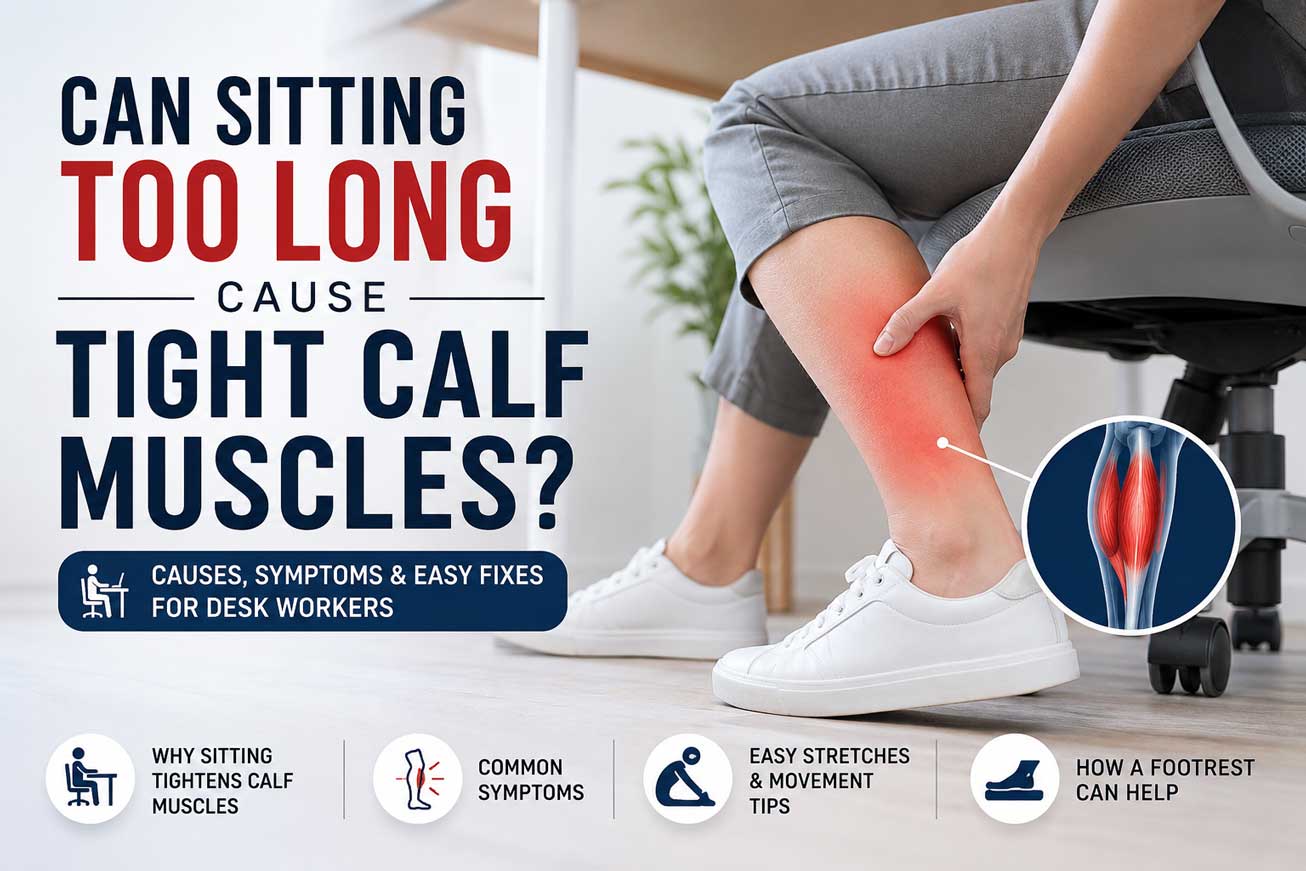
If your calves feel tight, stiff, or achy after a long day at your desk, you are not imagining it. Many people wonder, can sitting too long cause tight calf muscles, especially after spending six to ten hours in the same seated position. The short answer is yes, prolonged sitting can contribute to calf tightness, and understanding why can help you address it.
This guide explains what causes tight calf muscles from sitting, common symptoms to watch for, and practical daily habits, stretches, and ergonomic adjustments that may help you feel more comfortable during long workdays.
| Quick Answer Yes, sitting too long can cause tight calf muscles. When you sit for extended periods, your calf muscles stay in a shortened, inactive position, and reduced movement can slow blood flow to the lower legs. This combination often leads to stiffness, tightness, or a heavy feeling in the calves. Simple habits like moving regularly, stretching, adjusting your chair height, and using proper foot support may help ease this tightness during long workdays. |
What Is Calf Muscle Tightness?
Calf muscle tightness refers to a feeling of stiffness, tension, or reduced flexibility in the muscles at the back of the lower leg. It can range from a mild, dull tightness to a more noticeable stiffness that makes standing up or walking feel uncomfortable at first.
Tightness is different from sharp or shooting pain. It is usually described as a gradual buildup of tension rather than a sudden injury, and it often improves with movement, stretching, or a change in position.
Many people notice calf tightness specifically after long periods of sitting, since the muscle rarely gets a chance to fully contract and relax the way it does during walking or standing. Recognizing this pattern is the first step toward addressing it with simple daily habits.
Can Sitting Too Long Cause Tight Calf Muscles?
There are a few reasons why extended sitting is closely linked to calf tightness. Understanding the cause can make it easier to choose the right fix, rather than guessing at a solution that may not address the actual source of the tension.
Reduced Muscle Activity
Your calf muscles play an active role in circulation by helping pump blood back up toward the heart with every step you take. When you sit for long stretches without moving, this natural pumping action slows down significantly, which can contribute to a feeling of heaviness or tightness in the lower legs.
Shortened Muscle Position
Sitting with your feet flat, tucked under your chair, or resting on your toes can keep the calf muscles in a shortened position for hours at a time. Muscles that stay shortened without regular stretching may gradually feel tighter, similar to how any muscle feels after being held in one position for too long.
Reduced Circulation
Long periods of sitting can slow blood flow to the legs and feet. Reduced circulation may contribute to stiffness, tightness, or a dull, heavy sensation in the calves, especially toward the end of a long workday. This effect tends to be more noticeable in people who sit for six or more hours without regular breaks, since the muscles have less opportunity to reset.
Common Symptoms of Tight Calf Muscles from Sitting
Calf tightness from prolonged sitting can show up in a few different ways, and recognizing the pattern can help you catch it early. People experiencing this often describe:
- A stiff or tense feeling in the back of the lower leg.
- Difficulty fully flexing the ankle right after standing up.
- A heavy or tired sensation in the calves by the afternoon.
- Mild discomfort that eases after walking or stretching.
- Occasional cramping, especially after very long sitting sessions.
If tightness is paired with ongoing fatigue in your legs, our guide on how to reduce leg fatigue while sitting at a desk covers additional habits that may help.
Daily Desk Habits That Contribute to Calf Tightness
Several common desk habits can make calf tightness more likely to build up over the course of a workday.
Sitting for Hours Without Movement
Staying seated for long, uninterrupted stretches is one of the biggest contributors to calf tightness. The longer your muscles stay still, the more they tend to stiffen up.
Building a broader set of leg-friendly habits can help. Our guide on the best desk habits to keep your legs healthy during long workdays covers simple routines you can build into your day.
Poor Chair or Desk Height
If your chair is too high or too low, your ankles and calves may sit at an awkward angle for hours at a time. Over time, this can add extra tension to the calf muscles.
See our article on how desk chair height affects leg comfort and circulation to check whether your setup may be contributing to the problem.
Feet Tucked, Crossed, or Unsupported
Sitting with your feet tucked under your chair, crossed at the ankles, or dangling without support can keep your calf muscles in an unnatural position for extended periods, which may increase tightness.
Tight or Restrictive Footwear
Shoes that fit tightly around the ankle or lower leg can restrict circulation and add extra tension to the calf muscles during long sitting sessions. This is especially common with stiff dress shoes or boots worn for a full workday. Switching to more comfortable, supportive footwear, or slipping into socks or slippers at a home desk, can reduce unnecessary pressure on the lower legs.
Practical Ways to Reduce Calf Tightness
The good news is that small, consistent changes can often ease calf tightness caused by long periods of sitting.
- Stand up and move for a few minutes every 30 to 45 minutes.
- Adjust your chair so your knees sit near a 90-degree angle.
- Keep your feet flat on the floor or supported on a footrest.
- Avoid crossing your legs or tucking your feet under your chair for long periods.
- Take short walking breaks throughout the day.
Proper foot placement makes a noticeable difference here. Our guide on how to position your feet correctly while sitting at a desk explains how to find a comfortable, supportive position.
Stretching and Movement Tips for Tight Calves
Gentle stretching and light movement are two of the most effective ways to ease calf tightness during a long workday. A few simple options include:
- Ankle circles to loosen the lower leg and improve mobility.
- Seated calf raises, lifting your heels while keeping your toes on the floor.
- Standing calf stretches against a wall or desk during breaks.
- Short walks to encourage natural muscle pumping action.
For a more complete routine you can follow at your desk, see our guide on the best desk exercises to improve leg circulation while sitting.
Can a Footrest Help with Tight Calf Muscles?
A footrest may help reduce calf tightness by supporting your feet in a more neutral position, especially if your chair height is not fully adjustable. Proper support can make it easier to keep your ankles and calves in a relaxed position rather than pointed, tucked, or dangling.
To understand how footrests may support circulation, see our article on whether footrests improve blood circulation while sitting. If you are considering adding one to your setup, our best adjustable foot rest for under desk buying guide compares top options to help you choose the right fit.
When to Seek Medical Advice
Occasional calf tightness after a long day of sitting is common and often improves with movement, stretching, and small ergonomic adjustments. However, if you experience persistent swelling, redness, warmth, sharp pain, or tightness that does not improve with movement, it is best to consult a qualified healthcare professional. These symptoms can sometimes point to a circulation issue that deserves medical attention.
According to the Mayo Clinic, regular movement throughout the day can help support healthy circulation, particularly for people who sit for extended periods at work.
Comparison of Desk Habits and Calf Tightness
The table below summarizes common contributing habits and what may help.
| Desk Habit | How It Affects Calf Muscles | What Helps |
| Sitting for hours without moving | Slows natural muscle pumping action | Move every 30–45 minutes |
| Feet dangling or unsupported | Adds pressure, restricts blood flow | Use a footrest for support |
| Feet tucked or pointed | Keeps calf muscles shortened | Keep feet flat and neutral |
| Chair too high or too low | Creates awkward ankle angle | Adjust chair and desk height |
| Skipping stretch breaks | Muscles stay tense longer | Stretch calves during breaks |
| Restrictive footwear | Limits circulation while seated | Choose supportive, roomy shoes |
Daily Checklist to Prevent Tight Calf Muscles
- Adjust your chair so your knees sit near a 90-degree angle.
- Keep your feet flat on the floor or supported on a footrest.
- Stand up and move every 30 to 45 minutes.
- Do a few ankle circles or seated calf raises during breaks.
- Avoid tucking your feet under your chair for long periods.
- Take a short walk at least once every couple of hours.
- Wear comfortable, supportive footwear during the workday.
Common Mistakes That Make Calf Tightness Worse
- Sitting in the same position for hours without any movement.
- Ignoring chair height and letting your ankles sit at an awkward angle.
- Ending the workday without stretching your calves at all.
- Wearing tight or unsupportive shoes for long sitting sessions.
- Crossing your legs or tucking your feet under your chair out of habit.
| Key Takeaways Yes, sitting too long can cause tight calf muscles due to reduced movement and circulation.Feet that are tucked, crossed, or unsupported can keep calf muscles shortened for long periods.Moving every 30 to 45 minutes and stretching during breaks can help ease tightness.A footrest and correct chair height may reduce strain on the calves.Persistent swelling, redness, or pain that does not improve should be checked by a healthcare professional. |
Frequently Asked Questions
Can sitting too long cause tight calf muscles?
Yes, sitting too long can cause tight calf muscles. Reduced movement and circulation during long sitting sessions can leave the calf muscles feeling stiff or tense.
What does calf tightness from sitting usually feel like?
It often feels like a dull, stiff, or tense sensation in the back of the lower leg, which may be more noticeable right after standing up.
How long does it take for calves to feel tight from sitting?
This varies by person, but many people notice tightness after one to two hours of continuous sitting without movement. Factors like chair setup, foot position, and footwear can also influence how quickly tightness builds up.
Can a footrest help with calf tightness?
A footrest may help by supporting your feet in a neutral position, which can reduce strain on the calf muscles during long sitting sessions, especially if your chair or desk height is not fully adjustable.
What stretches help with tight calves from sitting?
Ankle circles, seated calf raises, and standing calf stretches against a wall or desk are simple options that may help ease tightness.
Is calf tightness from sitting serious?
Occasional tightness is common and usually not serious. However, persistent swelling, redness, warmth, or pain should be evaluated by a healthcare professional.
Can sitting cross-legged make calf tightness worse?
Sitting cross-legged for long periods may add extra pressure and reduce circulation, which can contribute to tightness in some people.
Do standing breaks really help with calf tightness?
Yes, standing and moving periodically helps reactivate the calf muscles and supports healthy circulation, which may reduce stiffness.
Can shoes affect calf tightness while sitting at a desk?
Tight or unsupportive shoes can restrict circulation and add tension to the lower legs, so comfortable, well-fitted footwear is generally recommended.
Final Thoughts
So, can sitting too long cause tight calf muscles? In most cases, yes, and it usually comes down to reduced movement, prolonged muscle shortening, and slower circulation during long sitting sessions. The good news is that small, consistent habits, like moving regularly, adjusting your chair, stretching, and supporting your feet, can go a long way toward keeping your calves more comfortable during long workdays.