
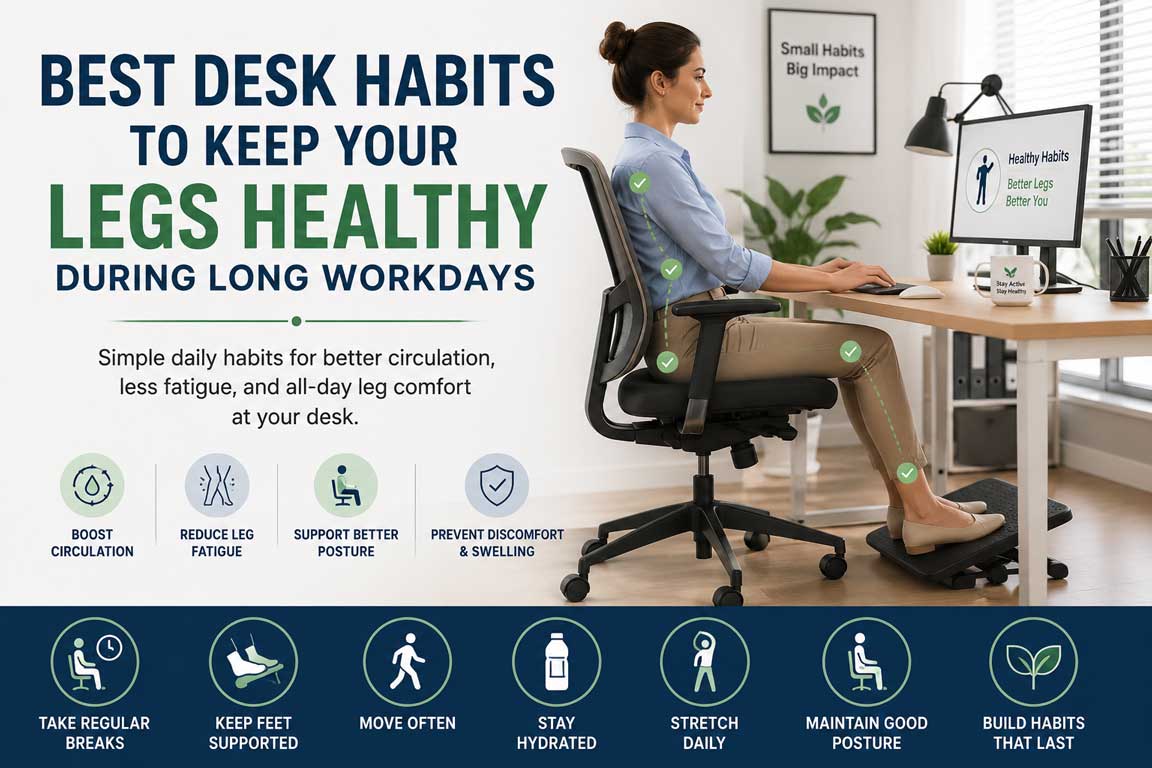
If you spend six to ten hours a day at a desk, your legs are doing more work than you might realize. Sitting for long stretches without movement can leave your legs feeling tired, stiff, or achy by the end of the day. The good news is that a few simple, consistent habits can make a real difference in how your legs feel during and after long workdays.
This guide covers the best desk habits to keep your legs healthy during long workdays, including posture adjustments, movement routines, footrest use, and simple daily habits that support circulation and comfort. Whether you work from an office, a home setup, or a gaming desk, these habits are easy to build into your day.
| Quick Answer The best desk habits to keep your legs healthy during long workdays include adjusting your chair and desk height, moving your legs every 30 to 45 minutes, using a footrest for added support, avoiding crossed legs, keeping feet flat on the floor, stretching during breaks, and staying hydrated. These habits may help reduce leg fatigue, support circulation, and make long sitting sessions more comfortable. |
Why Leg Health Matters During Long Workdays
When you sit for extended periods, blood flow to your legs can slow down, and the muscles that normally help pump blood back toward your heart become less active. Over time, this can contribute to feelings of heaviness, tingling, or fatigue in the legs and feet.
Building healthy desk habits for leg health is not about dramatic lifestyle changes. It is about small, repeatable actions that support circulation, reduce pressure on your legs, and encourage regular movement throughout the day.
What Happens to Your Legs When You Sit Too Long
Prolonged sitting can lead to reduced blood flow, tight hip flexors, and pressure on the back of the thighs. Many people notice their legs feel stiff or heavy after several hours of uninterrupted sitting. This is a common experience for office workers, remote employees, students, and gamers alike, and it often improves with small changes to daily habits.
It also helps to understand that leg discomfort from sitting is rarely caused by one single factor. Chair height, desk setup, posture habits, and how often you move all play a role together. That is why the most effective approach usually combines several small habits rather than relying on just one fix, such as a footrest or a single stretch break.
Best Desk Habits to Keep Your Legs Healthy During Long Workdays
Below are the most effective desk habits for leg health that you can start using today. Each one is simple to apply, whether you are at a traditional office desk or a home workstation.
1. Adjust Your Chair and Desk Height
Your chair height directly affects how your legs feel throughout the day. Ideally, your knees should sit close to a 90-degree angle, with your feet flat on the floor or supported on a footrest. If your chair is too high, your feet may dangle, which can add pressure behind the knees and reduce circulation.
If your desk setup makes proper chair height difficult, a footrest can help bridge the gap. Our guide on how to choose the right footrest height for better desk comfort explains how to find the right fit for your setup.
2. Move Your Legs Every 30 to 45 Minutes
One of the simplest office habits for healthy legs is also one of the most effective: standing up and moving regularly. A short walk to refill your water bottle, a quick stretch, or even shifting your seated position can help keep blood moving through your legs.
Setting a reminder every 30 to 45 minutes is an easy way to build this habit without disrupting your workflow.
3. Use a Footrest for Better Support
A footrest can help keep your feet properly supported, especially if your chair or desk height is not fully adjustable. Supporting your feet may reduce pressure on the back of your thighs and encourage a more neutral leg position throughout the day.
To learn more about how footrests may support circulation, see our article on whether footrests improve blood circulation while sitting.
4. Avoid Crossing Your Legs for Long Periods
Crossing your legs may feel comfortable in the short term, but holding this position for long stretches can add pressure on the knees and reduce circulation in one leg. If you tend to cross your legs out of habit, try alternating positions regularly or using a footrest to keep both feet supported instead.
5. Keep Your Feet Flat and Supported
Proper foot positioning is one of the most overlooked desk habits for leg health. Feet that are flat on the floor or a footrest, rather than tucked under the chair or dangling, help distribute weight evenly and reduce strain on the legs.
For a closer look at ideal foot placement, check out our guide on how to position your feet correctly while sitting at a desk.
6. Stretch During Breaks
Light stretching, such as ankle circles, calf raises, or seated leg extensions, can help release tension that builds up during long sitting sessions. Stretching for even a few minutes during breaks may help legs feel less stiff by the end of the day.
If you want a more structured routine, our article on the best desk exercises to improve leg circulation while sitting offers simple movements you can do without leaving your desk.
7. Stay Hydrated Throughout the Day
Staying hydrated supports healthy circulation and may help reduce feelings of heaviness in the legs. Keeping a water bottle at your desk also naturally encourages more frequent movement, since you will need to get up periodically to refill it or use the restroom.
8. Choose Supportive, Non-Restrictive Footwear
What you wear on your feet during the workday can also play a role in leg comfort. Tight shoes or footwear with poor support can restrict circulation and add unnecessary strain during long sitting sessions. Choosing comfortable, well-fitted shoes, or switching to slippers or socks at a home desk, can make it easier to shift positions and keep your feet relaxed throughout the day.
Comparison of Desk Habits for Leg Health
The table below compares common desk habits for leg health, their main benefit, and how much effort they typically require to maintain.
| Desk Habit | Main Benefit | Effort Level |
| Adjust chair and desk height | Better leg alignment and posture | Low (one-time setup) |
| Move every 30–45 minutes | Supports circulation, reduces stiffness | Low |
| Use a footrest | Added foot and leg support | Low |
| Avoid crossed legs | Reduces pressure on knees | Low |
| Keep feet flat and supported | Even weight distribution | Low |
| Stretch during breaks | Releases tension in legs | Moderate |
| Stay hydrated | Supports overall circulation | Low |
Daily Desk Habit Checklist for Healthy Legs
Use this simple daily checklist to build consistent, leg-friendly habits into your workday.
- Set up your chair and desk so your knees sit at roughly a 90-degree angle.
- Use a footrest if your feet do not rest flat on the floor.
- Stand up or walk for a few minutes every 30 to 45 minutes.
- Avoid crossing your legs for extended periods.
- Keep both feet flat or supported rather than tucked under your chair.
- Stretch your calves and ankles during breaks.
- Drink water regularly throughout the day.
- Check in with how your legs feel at the midpoint of your workday and adjust your position if needed.
- Wear comfortable, supportive footwear that does not restrict circulation.
Common Mistakes That Affect Leg Health at Your Desk
Even with good intentions, certain habits can work against leg comfort during long workdays.
- Sitting in the same position for hours without any movement.
- Ignoring chair height and letting feet dangle without support.
- Crossing legs out of habit rather than for occasional comfort.
- Skipping stretch breaks because of a busy schedule.
- Wearing restrictive footwear that limits circulation while seated.
- Forgetting to hydrate during long focus sessions.
When to See a Doctor
Occasional leg fatigue or stiffness after long sitting sessions is common and often improves with the habits described above. However, if you experience persistent swelling, ongoing pain, numbness that does not resolve, or noticeable changes in leg color or temperature, it is best to consult a qualified healthcare professional. These symptoms can sometimes point to circulation issues that deserve medical attention.
According to the Mayo Clinic, regular movement throughout the day can help support healthy circulation, especially for people who sit for extended periods at work.
| Key Takeaways: -Adjusting chair and desk height supports better leg alignment. -Moving every 30 to 45 minutes helps maintain circulation. -A footrest can add support when full chair adjustment is not possible. -Avoiding crossed legs and keeping feet supported reduces pressure on the knees. -Stretching and staying hydrated are simple, low-effort habits that add up over time. |
Frequently Asked Questions
What are the best desk habits to keep your legs healthy during long workdays?
The best desk habits to keep your legs healthy during long workdays include adjusting your chair and desk height, moving regularly, using a footrest, avoiding crossed legs, keeping your feet supported, stretching, and staying hydrated.
How often should I move my legs while sitting at a desk?
Standing up or moving your legs every 30 to 45 minutes is a helpful general guideline for supporting circulation during long workdays.
Can a footrest really help with leg health?
A footrest may help by supporting your feet in a neutral position, which can reduce pressure on the back of the thighs and encourage better posture.
Is it bad to cross my legs while working at a desk?
Crossing your legs occasionally is generally fine, but holding the position for long periods may reduce circulation and add pressure on the knees, so it is best to switch positions regularly.
What is the correct leg position for sitting at a desk?
A comfortable leg position usually involves knees at roughly a 90-degree angle, feet flat on the floor or a footrest, and thighs parallel to the ground.
Can drinking more water help with leg fatigue?
Staying hydrated supports healthy circulation and encourages more frequent movement, both of which may help reduce feelings of leg fatigue during long workdays.
What stretches help with leg stiffness from sitting?
Simple stretches like ankle circles, calf raises, and seated leg extensions can help release tension that builds up from prolonged sitting.
Do these desk habits work for gamers and students too?
Yes. Anyone who sits for extended periods, including gamers and students, can benefit from these habits, since the underlying cause of leg fatigue is the same regardless of the type of work.
When should I be concerned about leg discomfort from sitting?
If you experience persistent swelling, ongoing pain, or numbness that does not improve with movement, it is a good idea to speak with a qualified healthcare professional.
Final Thoughts
Keeping your legs healthy during long workdays comes down to consistency rather than complicated routines. Small habits, like adjusting your chair, moving regularly, and supporting your feet, add up to noticeably better comfort over time.
If leg fatigue is a regular problem for you, our guide on how to reduce leg fatigue while sitting at a desk offers additional strategies you can pair with the habits above.
For readers dealing with tingling or numbness, how to prevent leg numbness while sitting at a desk walks through common causes and simple fixes.
To fine-tune your overall posture, see our guide on the correct sitting position for all-day desk work.
If you want a movement routine you can follow at your desk, try our best desk exercises to improve leg circulation while sitting.
Chair setup plays a bigger role than many people realize; learn more in how desk chair height affects leg comfort and circulation.
For a deeper look at circulation concerns from prolonged sitting, read can sitting too long cause poor blood circulation in your legs.
Getting your feet positioned correctly matters too; see how to position your feet correctly while sitting at a desk.
And if you are considering added support, our article on whether footrests improve blood circulation while sitting breaks down what the research and expert guidance suggest.
None of these habits require a complete overhaul of your workday. Start with one or two changes, such as adjusting your chair height and setting a movement reminder, and build from there. Over time, these small adjustments can make a noticeable difference in how your legs feel by the end of a long workday.