
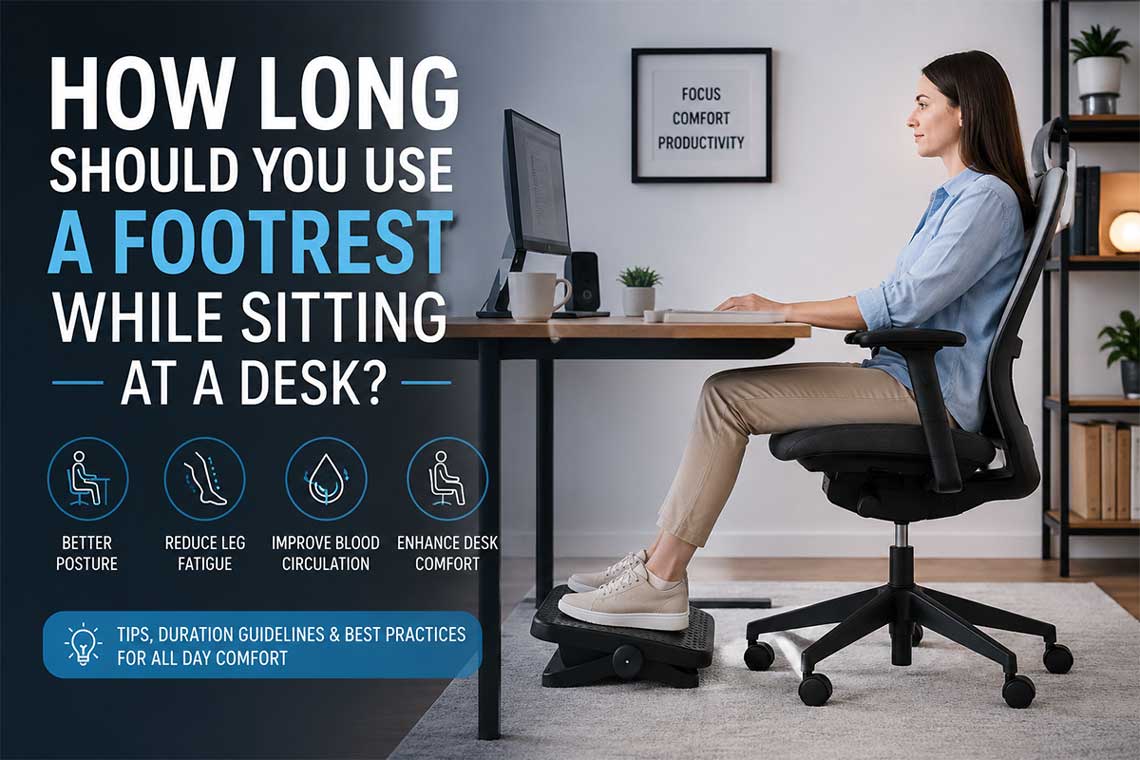
You sit down to work, slide a footrest under your desk, and feel an instant bit of relief. Your feet are supported, your back feels slightly better, and you settle into your chair with a little more confidence. But then the question creeps in: how long should you use a footrest while sitting at a desk? Is it fine to keep it there all day, or should you only use it for part of your session?
It’s a surprisingly common question. Many people buy a footrest, use it for a while, then start wondering whether they might be relying on it too much. Others pull it out only when their legs ache, unsure if that’s the right approach. The short answer is that most people can use a footrest throughout their entire seated workday. But knowing how long should you use a footrest while sitting at a desk really depends on your setup, your body, and how you combine footrest use with regular movement breaks.
Quick Answer
For most people, using a footrest throughout their full seated workday is completely appropriate and beneficial. The key is that the footrest must support proper foot and knee positioning. Combine it with standing or stretching every 30 to 60 minutes, and you have a solid, comfortable setup that supports long hours at your desk.
What Happens When You Use a Footrest Correctly?
Using an ergonomic footrest the right way changes how your whole lower body feels during a long sitting session. Here is what typically improves:
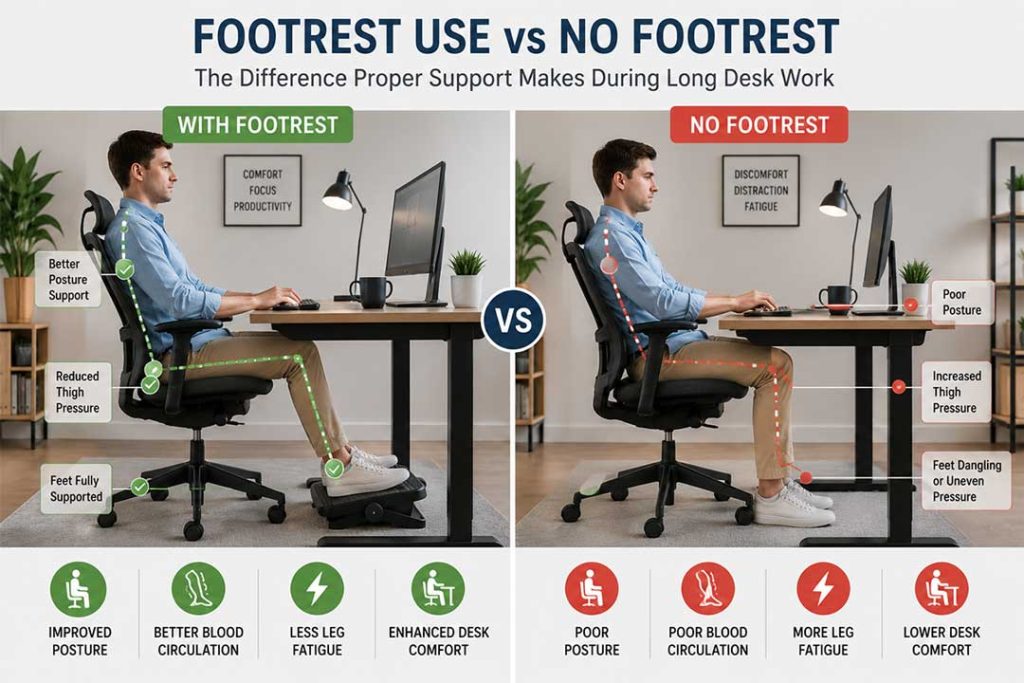
- Better lower-body support — your feet rest on a firm, stable surface rather than dangling or pressing unevenly against the floor.
- Reduced pressure under your thighs — when your feet are properly elevated, the edge of your chair seat stops cutting into the backs of your legs.
- Improved sitting posture — supported feet make it easier to keep your hips level and your spine in a neutral position.
- Less strain on your legs — muscles in your calves and thighs do not have to work as hard to keep your feet from sliding or dropping.
- Better overall desk comfort — when your lower body feels settled, it is easier to focus on your work instead of shifting around constantly.
These benefits do not appear only after hours of sitting. Many people feel a difference within a few minutes of correct setup. If you want to understand the full picture, the article on the benefits of using a footrest under desk covers this in depth.
Can You Use a Footrest All Day?
Yes, you can use a footrest all day — provided your setup is correct and you include movement breaks. There is a common misconception that using any supportive accessory for extended periods creates dependency or weakens muscles. With a footrest, that concern is not well founded.
What matters most is the difference between support and complete stillness. A footrest gives your feet a stable surface. It does not force you into a rigid position. You can still shift your weight, move your ankles, and change how your feet are resting throughout the day.
Sitting completely motionless for hours is the real issue, with or without a footrest. The Mayo Clinic recommends that people who sit for long periods take regular breaks to stand, stretch, and move. A footrest supports that goal by making your seated position more comfortable between those breaks.
Ergonomic footrest use is most effective when it is one part of a broader comfort routine. Think of it as a foundation, not a complete solution. You can absolutely use a footrest all day, but combine it with position changes and standing intervals.
How Long Should You Use a Footrest While Sitting at a Desk?
There is no universal number, but there are practical guidelines based on who you are and how you work. Below are realistic recommendations for different groups.
For Office Workers
If you work a standard eight-hour day at a desk, keeping a footrest in place for your full seated time is a sensible approach. Office environments often involve long stretches of focused work where movement gets forgotten. A footrest supports your lower body during those stretches and reduces fatigue.
A good target is to stay seated with the footrest for no more than 45 to 60 minutes at a stretch before standing briefly or walking a short distance. The footrest does not replace those breaks — it makes the sitting time between breaks more comfortable.
For Remote Workers
Remote workers often have more flexibility with their schedules, which is both helpful and risky. Without the natural movement that comes from office life — walking to meetings, heading to a kitchen — remote workers can sit for very long unbroken periods.
Using a footrest throughout a home-based workday makes sense, but remote workers especially benefit from setting a timer to prompt movement every 45 minutes. Keep the footrest as a permanent part of your desk setup rather than something you pull out only when discomfort appears.
For Shorter Users
Shorter people often have the most to gain from consistent footrest use. If your feet do not comfortably reach the floor when your chair height is set correctly, you essentially need a footrest whenever you sit at a desk. Using it throughout the entire seated session is not optional — it is the correct ergonomic approach. Choosing the right footrest height matters most here.
For People With Leg Fatigue or Discomfort
If you regularly deal with heavy legs, numbness, or fatigue from sitting, a footrest can be especially helpful throughout the day. Research and ergonomic guidance both point to poor lower-body positioning as a common driver of these symptoms. Keeping your feet supported reduces the strain that builds up over hours of desk work. The guide on how to reduce leg fatigue while sitting at a desk has additional strategies that pair well with footrest use.
So, when people ask how long should you use a footrest while sitting at a desk, the answer for most users is: for as long as you are seated, paired with regular movement.
Signs Your Footrest Is Being Used Correctly
If your footrest is working as it should, you will notice several positive indicators:
- Your feet rest flat on the surface of the footrest without sliding or tipping forward.
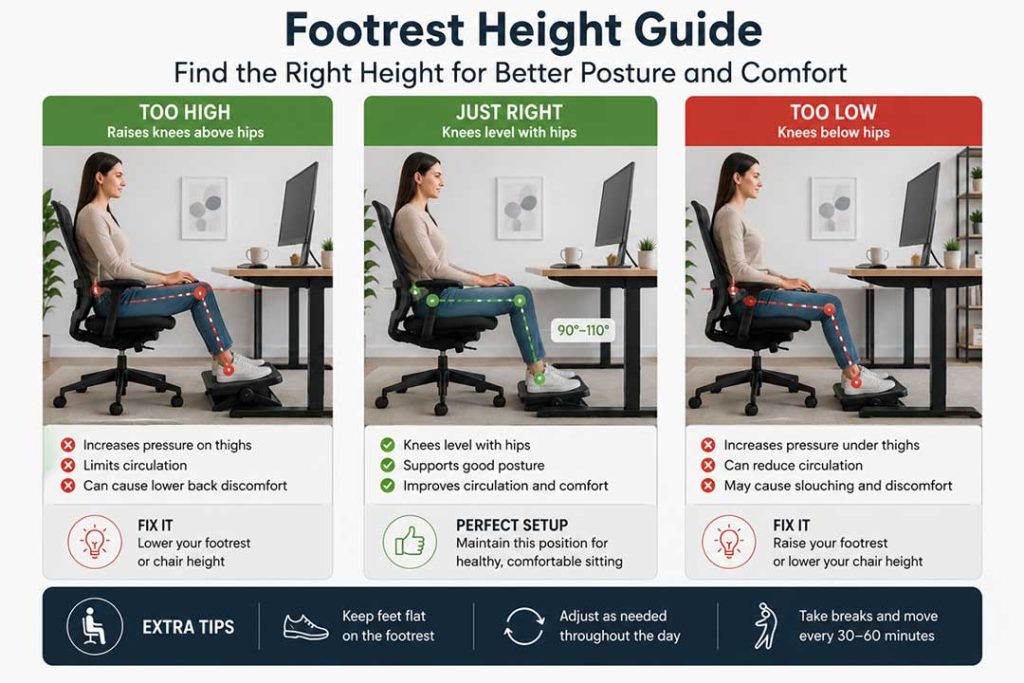
- Your knees form roughly a 90-degree angle, or slightly more open — not pulled upward or pushed down.
- You feel less pressure from the front edge of your chair seat pressing into the backs of your thighs.
- Your sitting posture feels stable and natural without constant readjusting.
- After a full sitting session, you notice less fatigue in your legs and feet compared to sitting without the footrest.
Signs Your Footrest Setup Needs Adjustment
Not every setup works perfectly from the start. Watch for these warning signs that something needs to change:
- Your knees are pulled too high, which compresses your hip flexors and tips your pelvis backward.
- Your knees drop lower than your hips, meaning the footrest may be too low or your chair too high.
- Your feet keep sliding off the footrest surface during normal sitting.
- You feel new discomfort in your lower back, hips, or legs that was not there before using the footrest.
- Your thigh angle feels forced or unnatural, suggesting a mismatch between footrest height and chair height.
If any of these appear, revisit your footrest height and chair height together. The article on how to position your feet correctly while sitting at a desk walks through the full alignment process in a way that is easy to apply.
Footrest Use vs. No Footrest
| Factor | Using a Footrest | No Footrest |
|---|---|---|
| Leg support | Feet rest flat on a stable surface | Feet may dangle or press unevenly |
| Sitting comfort | Thigh pressure reduced, posture easier to hold | Edge of seat digs into thighs over time |
| Pressure distribution | Weight spread across foot and thigh evenly | Pressure concentrated under thighs |
| Foot stability | Feet stay in a consistent position | Feet slide, tap, or press into the floor |
| Long-term desk comfort | More sustainable for long sessions | Discomfort builds up faster |
| Leg fatigue risk | Lower with correct setup | Higher, especially for shorter users |
Common Mistakes When Using a Footrest
Footrests help most when used correctly. These are the errors that reduce their effectiveness:
- Wrong footrest height — too high or too low shifts the problem instead of solving it. Height should allow a comfortable knee angle without tilting your pelvis.
- Sitting completely still — a footrest supports comfortable sitting, but staying frozen in one position for hours causes tension to build regardless.
- Poor chair height — if your chair is not adjusted to complement the footrest, the two accessories work against each other rather than together.
- Constantly crossing your legs — crossing pulls your weight to one side and undermines the balanced positioning a footrest creates.
- Skipping movement breaks — ergonomic accessories reduce discomfort during seated time, but they do not replace the physical benefit of standing and moving.
How to Combine Footrest Use With Movement Breaks
The most effective approach treats a footrest as one part of a comfortable, active sitting routine. Here is how to combine them:
- Stand for two to five minutes every 30 to 60 minutes. You do not need to go far — just break the seated position.
- Walk briefly when you can. A short walk to refill water, use the restroom, or step outside resets your circulation and posture.
- Stretch your hip flexors and calves periodically. These muscles tighten during long sitting sessions and benefit from even brief stretching.
- Do ankle rotations while seated. Simple ankle circles activate your calf muscles and support circulation without leaving your desk.
- Try calf raises during calls or video meetings. Rising onto your toes and lowering slowly keeps blood moving through your lower legs.
Combining these habits with consistent footrest posture support gives you both immediate comfort and better long-term outcomes. Do footrests improve blood circulation while sitting? — that article covers the circulation side of this in detail.
Frequently Asked Questions
How long should you use a footrest while sitting at a desk?
For most people, using a footrest throughout their full seated workday is appropriate. The key is pairing footrest use with regular movement breaks every 30 to 60 minutes.
Can you use a footrest all day?
Yes. A footrest designed for desk use can stay in place for a full workday. The concern is not how long the footrest is there — it is whether you are combining it with good posture and regular standing breaks.
How many hours should I use a footrest?
Use it for as many hours as you sit at your desk. If you work an eight-hour day and spend six of those hours seated, keep the footrest in position for all six hours. The footrest helps make seated time more comfortable regardless of duration.
Is a footrest bad for circulation?
A correctly positioned footrest can support rather than restrict circulation. The bigger circulation risk is sitting motionless for too long. Keeping your feet elevated to a comfortable angle and adding ankle movement while seated helps maintain blood flow.
Should both feet stay on the footrest?
Generally yes — keeping both feet on the footrest helps maintain balanced positioning. Resting only one foot shifts your weight and can create uneven tension in your hips and lower back. That said, occasional foot shifts are natural and fine.
Can a footrest reduce leg fatigue?
It can. Reduced pressure under the thighs and stable foot placement both contribute to less fatigue over a long sitting session. People who deal with heavy or tired legs from sitting often notice improvement with a properly set up footrest.
Is a footrest useful for shorter people?
Especially so. Shorter people frequently cannot keep their feet flat on the floor when their chair is at the correct working height. A footrest fills that gap and makes correct ergonomic positioning possible.
Can I use a footrest while gaming?
Absolutely. Gaming sessions can run long, and the same ergonomic principles apply whether you are working or gaming. A footrest for desk work supports your lower body during extended seated sessions regardless of what you are doing on the screen.
Final Thoughts
The question of how long should you use a footrest while sitting at a desk does not have a complicated answer. For most people, the right answer is: use it whenever you are sitting.
What matters more than tracking exact minutes is making sure your setup is correct. Your feet should rest flat on the footrest surface, your knees should form a comfortable angle, and your chair height should complement the footrest rather than fight it.
Do not worry about whether you are using it too much. Focus instead on getting the positioning right, and then add regular standing breaks to keep your body moving throughout the day. That combination — good support plus consistent movement — is what actually keeps you comfortable across long hours of desk work. If you are still working out the right configuration, the article on how to position your feet correctly while sitting at a desk is a practical starting point for dialing in your full lower-body ergonomic setup.