
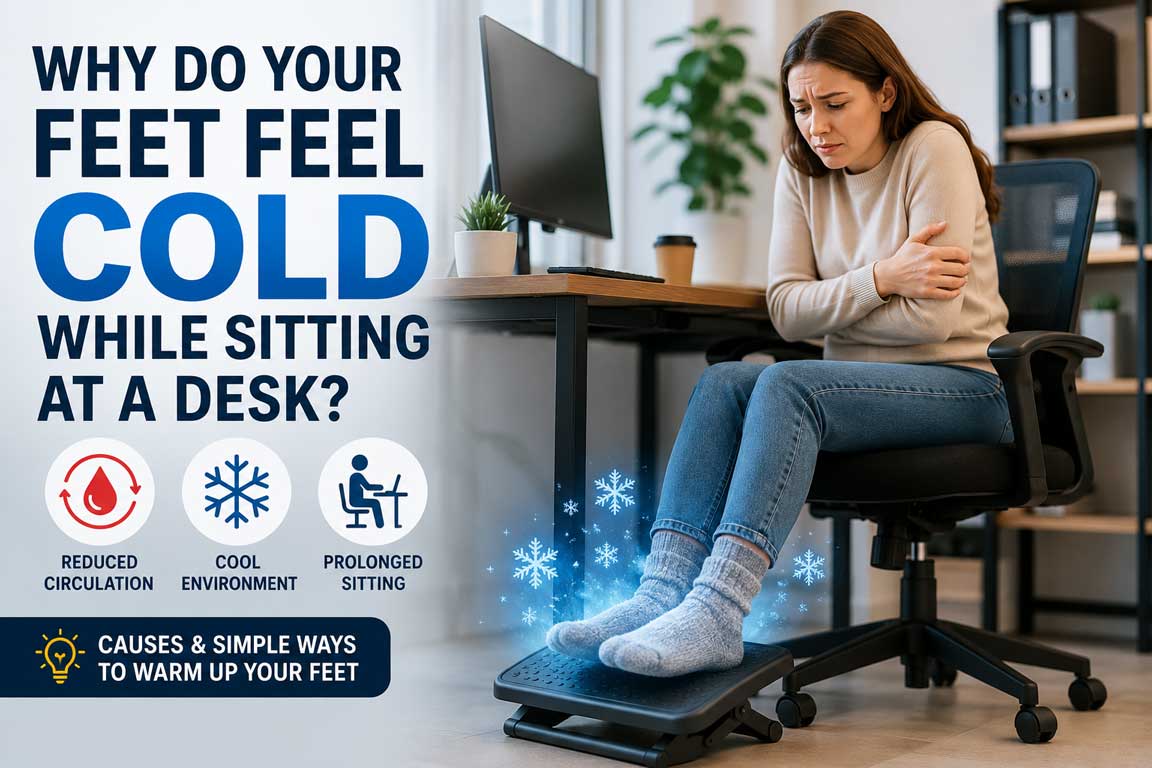
If you’ve ever glanced down in the middle of a workday and noticed your feet feel oddly cold, even though the rest of your body feels fine, you’re not imagining it. Many people ask why do your feet feel cold while sitting at a desk, especially during long stretches of typing, video calls, or focused work. This is a common and usually harmless response to sitting still for extended periods. When your legs stop moving, blood flow to your feet naturally slows down, leaving them noticeably cooler than the rest of your body. Understanding why this happens makes it much easier to find a comfortable fix.
| Quick Answer Your feet often feel cold while sitting at a desk because prolonged stillness reduces blood circulation to your lower legs and feet, which is one of the most common reasons why do your feet feel cold while sitting at a desk in the first place. Sitting for long periods lowers muscle activity, and your leg muscles normally help pump blood back toward your heart. Without that movement, blood can pool lower in your legs, leaving your feet with less warm blood flow. Cold office air, unsupported feet, and poor chair height often make the feeling worse. In most cases, cold feet while sitting improve with movement, better posture, and simple ergonomic adjustments like a footrest. |
Why Do Feet Feel Cold While Sitting?
So why do your feet feel cold while sitting at a desk? The short answer is reduced movement. When you sit for long periods, your leg muscles stop contracting the way they do when you walk, stand, or shift your weight. Those contractions normally help push blood back up toward your heart, a process often called the calf muscle pump.
Without that pumping action, blood tends to move more slowly through your lower legs and feet. This is a temporary circulation change, not a sign that something is wrong. Your body is simply responding to inactivity the way it’s designed to.
Several other factors combine with this reduced movement:
- Reduced muscle activity in the calves and feet
- Temporary circulation changes from staying in one position too long
- Cooler room temperature, especially near air vents or windows
- Prolonged sitting without breaks, which compounds the effect over hours
Most people notice this pattern gets worse the longer they sit, and improves fairly quickly once they stand up and move around. That quick improvement is actually a helpful clue that the cause is circulation-related rather than something more serious.
Common Reasons Your Feet Feel Cold at a Desk
Cold feet at a desk usually comes down to a combination of small daily habits rather than one single cause. Understanding which of these apply to your setup can help you target the right fix.
- Sitting too long without breaks: Long, uninterrupted sitting sessions reduce circulation more than shorter sessions broken up with movement.
- Unsupported feet: When your feet dangle without touching the floor or a footrest, blood flow behind your knees and calves can be restricted.
- Chair height: A chair that’s too high or too low changes the angle of your knees and hips, which can affect circulation to your lower legs.
- Crossed legs: Sitting with your legs crossed for long periods can put pressure on blood vessels and nerves, making cold feet more likely.
- Air conditioning: Office environments are often kept cooler than most homes, and cold air moving across your ankles and feet adds to the sensation.
- Poor workstation setup: A desk, chair, and monitor that don’t work together often lead to awkward, static postures that reduce natural movement throughout the day.
If you already deal with related discomfort, it may help to review this guide on why feet swell while sitting, since swelling and cold feet often share similar causes.
Symptoms That Often Occur Along With Cold Feet
Cold feet rarely shows up completely on its own. Many people notice a few related sensations at the same time, especially during long desk sessions. Common symptoms that often accompany cold feet while sitting include:
- Numbness or a “pins and needles” feeling in the toes
- Tingling sensations in the feet or ankles
- Stiffness when you first stand up
- General leg fatigue by the afternoon
- Mild swelling around the ankles or feet
- A heavy or sluggish feeling in the legs
These symptoms typically ease once you stand up, stretch, and move around for a few minutes. If leg tiredness is a regular part of your workday, this guide on reducing leg fatigue while sitting at a desk covers additional strategies that pair well with the tips below.
How to Warm Up Cold Feet While Sitting at a Desk
The good news is that cold feet from sitting usually responds well to a handful of simple habits. None of these require special equipment, though a few small upgrades can make a noticeable difference. Here are the most effective ways to keep your feet warmer and more comfortable throughout the workday.
Move Every 30–60 Minutes
Why it helps: Movement reactivates the muscle pump in your calves, encouraging blood to circulate more efficiently back toward your heart. Even a minute or two of walking can noticeably improve how your feet feel.
How to do it: Set a timer or use a habit-tracking app to remind yourself to stand up every 30 to 60 minutes. Walk to refill your water bottle, take a short lap around the office, or simply stand while reading an email.
Common mistakes: Waiting until your feet feel numb or ice-cold before moving is a common mistake. By that point, circulation has already slowed significantly. Regular, shorter breaks work better than occasional long ones.
Do Simple Ankle Exercises
Why it helps: Rotating and flexing your ankles activates the small muscles in your lower legs and feet, which can help support circulation even while you stay seated.
How to do it: Try ankle circles, toe raises, or heel lifts for 30 to 60 seconds every hour. These movements are subtle enough to do during a call or while reading.
Common mistakes: Doing these exercises too infrequently, or only once a day, tends to produce limited results. Consistency throughout the day matters more than intensity.
Keep Both Feet Supported
Why it helps: When your feet dangle or rest unevenly, blood flow behind your knees and calves can be restricted. Full support helps distribute pressure more evenly across your legs.
How to do it: Make sure both feet are flat on the floor, or use a footrest if your chair or desk height keeps your feet from reaching comfortably. Learning how to position your feet correctly while sitting at a desk can make this adjustment easier to get right the first time.
Common mistakes: Letting one foot rest on the chair base or tucking a foot underneath you creates uneven pressure and can make cold feet worse on one side.
Adjust Chair Height
Why it helps: Correct chair height keeps your knees at a comfortable angle, which supports healthier circulation to your lower legs.
How to do it: Set your chair so your knees are roughly level with, or slightly below, your hips, with your feet flat on the floor or a footrest. For more on dialing in your overall setup, this guide on correct sitting position for all-day desk work walks through the basics of chair and desk alignment.
Common mistakes: Guessing at chair height instead of adjusting it deliberately is common. If your feet don’t reach the floor comfortably, a footrest is often a simpler fix than replacing your chair.
Wear Warm Comfortable Socks
Why it helps: Warm, breathable socks add a layer of insulation, which is especially useful in cooler office environments with air conditioning.
How to do it: Choose socks made from wool or wool blends rather than thin synthetic materials, which trap less warmth. Avoid socks with tight elastic bands around the ankle, since these can restrict circulation.
Common mistakes: Wearing socks that fit too tightly is a common mistake, since restricted circulation can make cold feet worse rather than better, even if the material itself is warm.
Use an Ergonomic Footrest
Why it helps: An ergonomic footrest supports your feet at a comfortable angle, reduces pressure under your thighs, and encourages small, natural foot movements throughout the day. For many people whose chair or desk height doesn’t let their feet rest flat naturally, this is one of the more practical answers to why do your feet feel cold while sitting at a desk.
How to do it: Choose a footrest height that lets your knees stay level with, or slightly below, your hips. Many people researching options start with a comparison guide like Best Under Desk Foot Rest, which compares several models side by side to help narrow down the right fit for their space and budget.
Common mistakes: Choosing a footrest that’s too high or too tilted can create new pressure points instead of relieving them. Take a few minutes to adjust the angle and height once it’s set up.
Can an Ergonomic Footrest Help?
Yes, an ergonomic footrest can help support healthier circulation and reduce discomfort for many people who sit for long hours, although it isn’t a guaranteed fix for cold feet on its own.
A footrest may help by:
- Providing better lower-body support so your feet aren’t left hanging unsupported
- Reducing pressure under your thighs, which can otherwise restrict blood flow behind the knees
- Improving your overall sitting position, encouraging a more neutral angle at the hips and knees
- Improving overall desk comfort, which makes it easier to maintain good posture for longer stretches
Research on footrests and circulation is still limited, so it’s worth being cautious about overstating the benefits. Some people notice a meaningful difference, especially if their chair or desk height was previously forcing their feet to dangle. Others find a footrest works best when combined with regular movement rather than as a stand-alone fix.
If you’re curious whether a footrest specifically supports circulation, this article on do footrests improve blood circulation while sitting takes a closer look at the connection. And if you’re wondering how much time to spend using one, how long you should use a footrest while sitting at a desk covers practical guidance on that as well. For a broader overview of what a footrest can do for your workday, see this rundown of the benefits of using a footrest under desk.
When Cold Feet May Need Medical Attention
In most cases, cold feet from sitting is simply a circulation response to staying still, and it tends to ease once you move around. However, some symptoms are worth discussing with a healthcare professional rather than managing on your own.
Consider speaking with a doctor if you experience:
- Cold feet that persist even after standing and moving around
- Noticeable color changes in your feet or toes, such as pale, blue, or blotchy skin
- Numbness or tingling that doesn’t improve with movement
- Pain, swelling, or a feeling of heaviness that doesn’t ease up
- Cold feet that only affect one side of your body
- Symptoms that seem unrelated to how long you’ve been sitting
These signs can sometimes point to circulation issues that go beyond ordinary desk-related stiffness. According to the Cleveland Clinic, cold feet are commonly linked to reduced blood flow and are worth having checked by a healthcare provider if they happen often or don’t improve. This article is educational and doesn’t replace professional medical guidance, so readers with persistent or unusual symptoms should consult a doctor.
Frequently Asked Questions
Why are my feet cold while sitting?
Your feet feel cold while sitting mainly because staying still reduces blood circulation to your lower legs and feet. Movement normally helps pump blood back toward your heart, so long periods of stillness can leave your feet feeling noticeably cooler.
Is sitting too long bad for circulation?
Sitting for extended periods without breaks can temporarily reduce circulation in your legs and feet. This usually isn’t harmful on its own, but regular movement throughout the day supports healthier long-term circulation.
Can a footrest help cold feet?
A footrest may help by supporting your feet fully and reducing pressure behind your knees, which can support better circulation for some people. It works best alongside regular movement rather than as a stand-alone solution.
Should I worry about cold feet?
Occasional cold feet while sitting is common and usually not a cause for concern. If cold feet are persistent, severe, or paired with other symptoms like color changes or numbness that don’t improve, it’s a good idea to check in with a healthcare professional.
Can office air conditioning make feet cold?
Yes. Cold air moving across your ankles and feet, especially near a vent, can add to the cooling sensation on top of reduced circulation from sitting still.
Does walking help with cold feet?
Walking is one of the most effective ways to warm up cold feet, since it reactivates the calf muscle pump and improves blood flow to your lower legs almost immediately.
Are ankle exercises useful for cold feet?
Simple ankle circles, toe raises, and heel lifts can help activate the muscles in your lower legs and feet, supporting circulation even while you stay seated at your desk.
How often should I stand up while working?
Standing up every 30 to 60 minutes is a reasonable target for most desk workers. Short, frequent breaks tend to be more effective for circulation than occasional long ones.
Can crossing my legs cause cold feet?
Sitting with your legs crossed for long periods can put pressure on blood vessels and nerves, which may contribute to cold feet. Keeping both feet flat on the floor or on a footrest is generally more comfortable for circulation.
Key Takeaways
- Cold feet while sitting is usually caused by reduced movement and slower circulation, not a serious medical issue
- Standing and moving every 30 to 60 minutes helps reactivate circulation in your lower legs
- Ankle exercises, proper foot support, and correct chair height all support warmer, more comfortable feet
- An ergonomic footrest can help by supporting your feet and reducing pressure behind the knees
- Persistent, severe, or one-sided symptoms are worth discussing with a healthcare professional
Cold Feet Habit Comparison
Here’s a quick look at how common desk habits affect cold feet:
| Habit | Helps Cold Feet? | Why |
| Standing up every 30–60 minutes | Yes | Reactivates the calf muscle pump and restores circulation |
| Using an ergonomic footrest | Often | Supports feet fully and reduces pressure behind the knees |
| Crossing your legs for long periods | No | Restricts blood flow to the lower legs and feet |
| Doing ankle circles or toe raises | Yes | Activates lower-leg muscles that support circulation |
| Sitting directly under an AC vent | No | Cold air across the feet adds to the cooling sensation |
| Wearing warm, non-restrictive socks | Yes | Adds insulation without limiting blood flow |
| Keeping both feet flat on the floor | Yes | Distributes pressure evenly and supports circulation |
Final Thoughts
Cold feet while sitting at a desk is a common, everyday experience for people who spend long hours at a computer, and in most cases it simply reflects reduced circulation from staying still. Rather than worrying right away, try building small habits into your day, standing regularly, doing quick ankle exercises, keeping your feet supported, and adjusting your chair or footrest so your legs sit at a comfortable angle. Together, these small changes are often the most practical answer to why do your feet feel cold while sitting at a desk, and they can make a real difference in how comfortable your workday feels. If cold feet persist despite these changes, or if you notice other unusual symptoms, checking in with a healthcare professional is always a reasonable next step.