
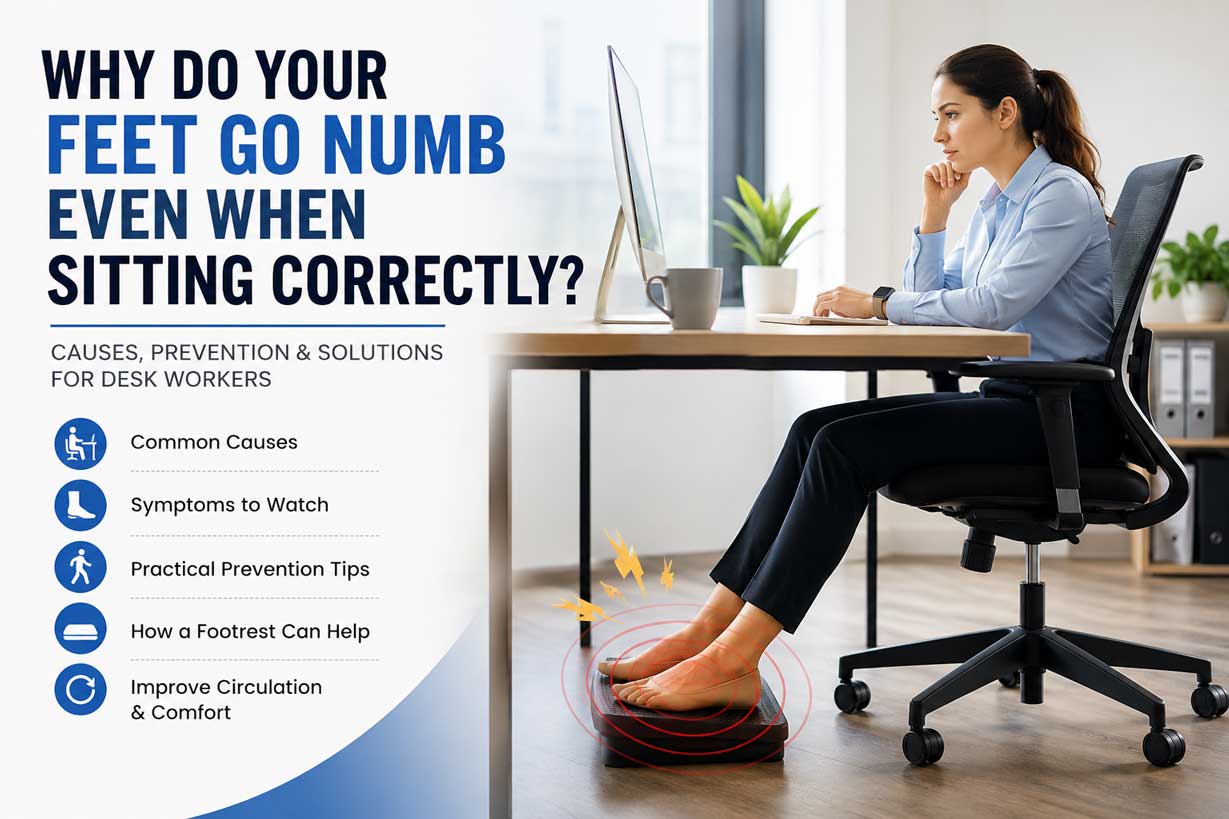
You finally get your posture right. Feet flat on the floor, back against the chair, screen at eye level. Then, twenty minutes into a video call, that familiar tingle creeps in anyway. If you’ve been asking why do your feet go numb even when sitting correctly, you’re not imagining it, and you’re not doing everything wrong. Good posture reduces strain on your back and shoulders, but it doesn’t automatically remove every source of pressure on the nerves and blood vessels running through your legs and feet. This guide breaks down what’s actually happening, the most common everyday triggers, and practical adjustments that help your feet stay comfortable through a full workday.
| Quick Answer: Feet can go numb even with proper sitting posture because numbness is usually caused by temporary nerve compression or reduced blood flow, not posture alone. Sitting still for long stretches, even in a well-aligned position, limits movement in the legs and feet. This can put pressure on nerves behind the knees or along the lower leg, or slow circulation enough to cause tingling. Chair height, footwear, and how long you stay in one position often matter more than the angle of your back. Moving regularly and supporting your feet properly tends to help more than posture adjustments alone. |
Why Do Your Feet Go Numb Even When Sitting Correctly?
Feet often go numb during desk work because prolonged stillness, not poor posture, is usually the real trigger. Even a technically correct sitting position keeps your legs in roughly the same shape for hours, and that lack of movement can temporarily compress the small nerves and blood vessels that run through your lower legs and feet.
Nerve compression is one of the most common explanations. Nerves like the peroneal nerve near the knee or smaller branches in the foot can become temporarily squeezed when you sit in one position for too long, even a healthy one. This kind of pressure interrupts normal nerve signaling for a short time, which is what produces that tingling, “pins and needles” feeling.
Reduced blood flow plays a role too. Sitting decreases the natural pumping action your calf muscles normally provide when you walk or stand. Less movement can mean blood pools slightly in the lower legs, which some people experience as numbness, heaviness, or coolness in the feet.
Individual body mechanics also matter. Leg length, chair dimensions, desk height, and even shoe choice all interact with your posture. Two people sitting in what looks like the same “correct” position can experience very different pressure points depending on their build and setup. A shorter person in a standard office chair, for example, may find their thighs press into the seat edge even with a straight back, while a taller person in the same chair might feel no pressure at all. None of this means something is medically wrong. It simply means posture is only one variable among several that affect circulation and nerve comfort while sitting.
It also helps to remember that numbness is a normal nervous system response to sustained pressure, not a sign that your body is failing you. Nerves are sensitive to compression by design, which is part of how they protect tissue from prolonged strain. Understanding this can make the occasional tingling feel far less alarming.
Common Causes of Foot Numbness During Desk Work
Several everyday habits contribute to foot numbness at a desk, often stacking on top of each other:
- Sitting too long without a break, even in good posture
- Feet that are unsupported or dangling above the floor
- Incorrect chair height, either too high or too low
- Crossing your legs, which compresses nerves and vessels behind the knee
- Tight footwear or socks that restrict circulation in the foot
- Staying in a prolonged static posture without shifting your weight
Most people experience a combination of these factors rather than just one. Reviewing your setup for each of these points can reveal which habit is contributing most to your discomfort.
Symptoms That Often Accompany Numb Feet
Foot numbness at a desk rarely shows up alone. Many people notice a cluster of related sensations, including:
- Tingling or a mild “buzzing” feeling
- Pins and needles, especially when standing back up
- Cold feet, even in a warm room
- Stiffness in the ankles or toes
- Heavy or achy legs by mid-afternoon
- Mild, temporary discomfort that fades within a few minutes of moving
These symptoms are commonly associated with prolonged sitting and typically ease once you stand, stretch, or walk around. If cold feet are your main complaint, our guide on why your feet feel cold while sitting at a desk covers that specific issue in more depth.
How to Prevent Foot Numbness While Sitting
Preventing foot numbness usually comes down to breaking up stillness and improving support for your lower legs. The strategies below work well together, and most take only a few minutes to put into practice.
Move Every 30–60 Minutes
Why it helps: Regular movement restarts circulation and relieves pressure on nerves that build up during long stretches of sitting.
How to do it: Set a recurring reminder to stand, stretch, or walk for one to two minutes every half hour to hour. Even a short walk to refill your water bottle counts.
Common mistakes: Waiting until your feet already feel numb before moving, or relying on memory instead of a timer.
Keep Both Feet Properly Supported
Why it helps: Feet that dangle or barely touch the floor increase pressure behind the knees and reduce healthy blood flow to the lower leg.
How to do it: Make sure both feet rest flat, either directly on the floor or on a supportive surface. Our guide on positioning your feet correctly while sitting at a desk walks through ideal foot placement in more detail.
Common mistakes: Letting one foot tuck under the chair or rest on its toes for long periods.
Adjust Chair Height
Why it helps: The right chair height keeps your knees roughly level with your hips and prevents the back of your thighs from pressing into the seat edge, which can compress nerves.
How to do it: Adjust your chair so your feet rest flat and your knees form close to a 90-degree angle. For more detail on the ideal knee position, see whether your knees should sit higher than your hips at a desk.
Common mistakes: Setting chair height based on desk height alone, without checking how your feet and knees actually align.
Perform Simple Ankle Exercises
Why it helps: Small, repeated ankle and calf movements activate the muscles that help pump blood back up through the legs, easing pressure that builds during sitting.
How to do it: Try ankle circles, toe raises, or gentle heel lifts every hour. Our roundup of desk exercises to improve leg circulation while sitting offers several easy options you can do without leaving your chair.
Common mistakes: Skipping these movements on busy days, when they matter most.
Improve Your Desk Setup
Why it helps: An ergonomic setup reduces the small compensations your legs and feet make throughout the day. For a broader look at posture fundamentals, see our guide on the correct sitting position for all-day desk work.
How to do it: Review chair height, desk height, and monitor position together rather than adjusting one in isolation. A small change to one, like raising your monitor, can shift how you sit and change the pressure on your legs without you noticing.
Common mistakes: Focusing only on upper body posture while ignoring how the legs and feet are positioned underneath the desk.
Use an Ergonomic Footrest
Why it helps: A footrest gives your feet a stable, supported surface when your chair or desk height doesn’t allow your feet to rest flat on the floor.
How to do it: Choose an adjustable footrest that lets your knees stay level with your hips. Our best under desk foot rest comparison compares several top options if you’re shopping for one.
Common mistakes: Using a footrest that’s too high, which can push the knees above hip level and create new pressure points.
Can an Ergonomic Footrest Help Prevent Foot Numbness?
An ergonomic footrest can help prevent foot numbness by giving your lower legs better support and reducing pressure points that build up during long sitting sessions. When feet rest on a stable, slightly angled surface instead of dangling or resting flat on a hard floor, pressure is distributed more evenly across the foot and lower leg.
A footrest may also encourage small, natural foot movements, like slight tilting or rocking, which can support circulation without requiring you to leave your desk. This is one reason many people ask whether footrests improve blood circulation while sitting, and the general answer is that a footrest may support comfort and circulation as part of a broader ergonomic setup, though it is not a guaranteed fix on its own.
A footrest works best alongside the other habits covered in this article, such as regular movement and correct chair height, rather than as a stand-alone solution.
When Foot Numbness May Need Medical Attention
Occasional, mild numbness that fades within a few minutes of standing or moving is common and usually linked to prolonged sitting. However, some patterns are worth discussing with a healthcare professional rather than managing on your own.
Consider reaching out to a qualified healthcare provider if numbness is persistent rather than occasional, if it is accompanied by significant pain, noticeable weakness, or changes in skin color or temperature, or if it occurs even when you haven’t been sitting for an extended period. These patterns can sometimes point to circulation or nerve issues unrelated to desk posture, and a professional evaluation is the safest way to understand what’s happening.
According to the Cleveland Clinic, numbness that is sudden, severe, or paired with other concerning symptoms should be evaluated promptly. This article is educational and is not a substitute for professional medical advice.
Common Mistakes That Can Make Foot Numbness Worse
A few habits tend to make foot numbness more frequent or more noticeable:
- Sitting for hours without a movement break
- Crossing your legs regularly throughout the day
- Leaving chair height unadjusted after switching desks or chairs
- Ignoring foot support because posture elsewhere feels correct
- Staying in one exact position for long video calls or focused work
Many of these mistakes overlap with habits that contribute to broader leg fatigue. Our guide on reducing leg fatigue while sitting at a desk covers related strategies that pair well with the tips above.
At a Glance: Causes, Symptoms, and Solutions
| Possible Cause | Common Symptom | Practical Solution |
| Sitting still too long | Tingling or mild numbness | Stand and move every 30–60 minutes |
| Unsupported feet (dangling) | Pressure behind the knees | Use an ergonomic footrest |
| Chair seat too high | Numb toes or forefoot | Adjust chair height so feet rest flat |
| Crossed legs | Tingling in one foot | Keep both feet flat and uncrossed |
| Tight shoes or socks | Cold or numb toes | Wear looser, breathable footwear at your desk |
| Reduced circulation from stillness | Heavy, achy legs | Perform simple ankle and calf exercises |
Frequently Asked Questions
Why do my feet go numb while sitting?
Feet often go numb while sitting because prolonged stillness temporarily compresses nerves or slows circulation in the lower legs, not necessarily because of anything wrong with your health.
Can sitting correctly still cause numb feet?
Yes. Sitting correctly reduces strain on your back and shoulders, but it doesn’t remove every pressure point in your legs. Numbness can still occur if you stay still for long periods, even with good posture.
Can a footrest help with numb feet?
A footrest may help by supporting your feet properly and reducing pressure points, especially if your chair or desk height doesn’t let your feet rest flat on the floor.
Does walking help reduce foot numbness?
Walking is one of the most effective ways to restart circulation and relieve nerve pressure, which is why short walking breaks are commonly recommended throughout the workday.
Should I worry about numb feet at my desk?
Occasional, mild numbness that resolves quickly after moving is common and generally not a cause for concern. Persistent, severe, or unusual symptoms are worth discussing with a healthcare professional.
How often should I stand up during the workday?
Many ergonomic guidelines suggest standing or moving briefly every 30 to 60 minutes to support circulation and reduce stiffness.
Can chair height cause numb feet?
Yes. A chair that’s too high or too low can change the angle of your knees and hips, which may increase pressure on nerves and reduce comfortable circulation in the legs and feet.
What exercises help with foot numbness?
Simple ankle circles, toe raises, and heel lifts can support circulation and reduce stiffness without requiring you to leave your desk.
Can crossing my legs cause foot numbness?
Crossing your legs can compress nerves and blood vessels behind the knee, which is a common contributor to tingling or numbness in the foot.
Key Takeaways
- Foot numbness while sitting is usually linked to nerve compression or reduced blood flow, not posture alone.
- Even correct posture can’t fully offset long periods of stillness.
- Moving every 30–60 minutes helps restart circulation and ease nerve pressure.
- Proper foot support and correct chair height reduce common pressure points.
- An ergonomic footrest can help, especially when your feet don’t naturally rest flat on the floor.
- Persistent, severe, or unusual numbness deserves a conversation with a healthcare professional.
Final Thoughts
If you’ve been asking why do your feet go numb even when sitting correctly, the honest answer is that posture is just one piece of the puzzle. Prolonged stillness, chair height, foot support, and even footwear all play a role in how your legs and feet feel by the end of the workday. Rather than assuming good posture alone should solve the problem, focus on building in regular movement and improving how your feet are supported throughout the day. Small, consistent changes, like standing every half hour or adjusting your chair height, often make a bigger difference than posture adjustments alone.