
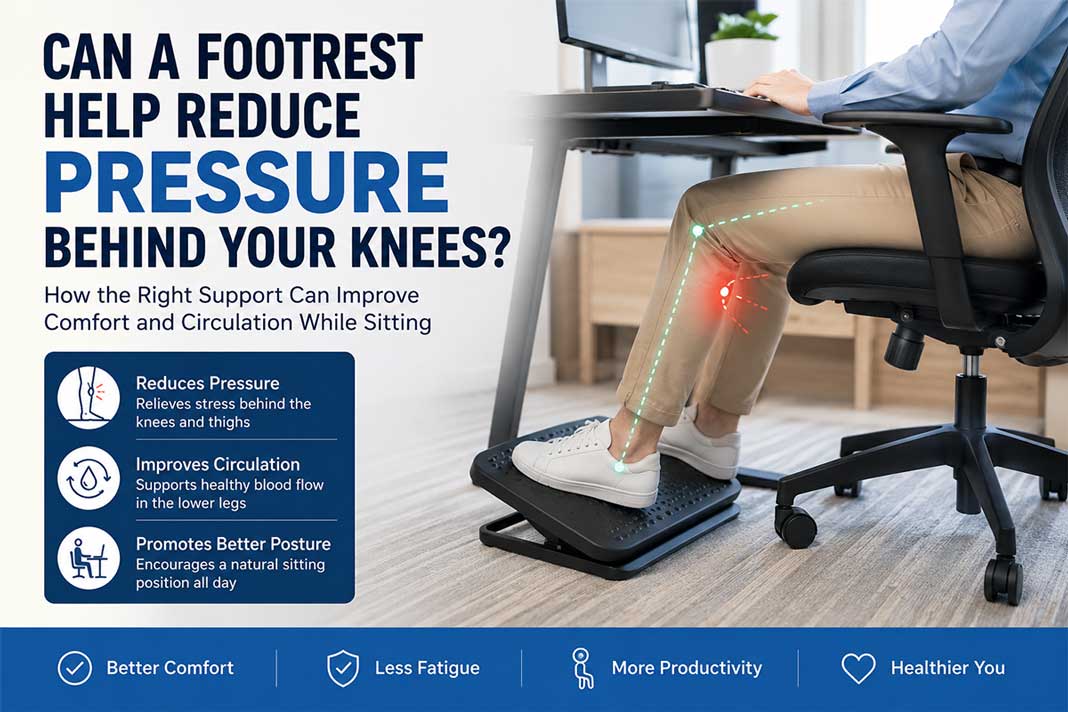
If you’ve ever stood up from your desk chair and felt a strange tightness or indentation behind your knees, you’re not imagining it. That pressure is a common side effect of how most office chairs are designed—and the wrong setup can make it worse the longer you sit.
Quick Answer
Yes, a footrest can a footrest help reduce pressure behind your knees in many cases. When a chair is too high or feet don’t fully reach the floor, the front edge of the seat can press into the back of the thighs and knees, restricting blood flow and creating discomfort. Raising your feet to a supported, neutral position with a footrest often shifts weight off that area, distributing pressure more evenly along the thighs instead of concentrating it behind the knee.
Why Pressure Develops Behind the Knees While Sitting
The area behind your knees—sometimes called the popliteal region—contains blood vessels, nerves, and soft tissue with very little cushioning. When you sit, your weight naturally shifts backward into the seat, and if the chair edge sits too close to this area, even small amounts of pressure can feel disproportionately uncomfortable over time.
This usually comes down to one core issue: the relationship between your seat height, your leg length, and the distance your feet travel before reaching solid ground.
What Happens When Your Feet Don’t Reach the Floor
When your feet dangle or only partially touch the ground, your legs lose a stable base of support. Instead, your thighs end up bearing more weight against the seat, and the back of your knees can press into the front lip of the chair. Over a full workday, this small but constant contact point may contribute to stiffness, tingling, or a feeling of heaviness behind the knee.
Common Causes
Several everyday setup issues tend to contribute to this kind of pressure:
- Chair seat sitting too high relative to your leg length
- Desk height forcing the chair upward to align with the keyboard or monitor
- Seat depth that’s too long, pushing the front edge further into the back of the knee
- Lack of foot support, leaving legs unsupported for hours at a time
- Crossing legs or tucking feet under the chair, which shifts pressure unevenly
Most of these causes are fixable without replacing your furniture, which is why footrests are often one of the first ergonomic adjustments people try.
How an Ergonomic Footrest May Help
An ergonomic footrest is designed to support your feet at a height where your knees rest in a more neutral, open angle—typically close to 90 degrees or slightly greater. This often reduces direct contact between the back of the knee and the seat edge.
A footrest may help in a few specific ways:
- Redistributing weight away from the thighs and knees and onto the feet
- Encouraging a more open knee angle, which can ease pressure on the popliteal area
- Supporting circulation by reducing prolonged compression behind the knee
- Allowing small position changes, since many footrests tilt or rock, encouraging gentle movement throughout the day
It’s worth noting that a footrest works best as part of a properly adjusted setup—not as a stand-alone fix. If you’re unfamiliar with how footrests function day to day, our guide on what an ergonomic foot rest actually does breaks down the basics, and our overview of the general benefits of using a footrest at your desk covers the wider comfort picture beyond just knee pressure.
Chair Height vs. Footrest: Which Should You Adjust First?
This is one of the most common questions readers have, and the honest answer is: try your chair first.
If your chair is adjustable, lowering it so your feet rest flat on the floor with knees at a comfortable angle is the most direct fix. A footrest becomes useful when:
- Your chair is already at its lowest setting and your feet still don’t comfortably reach the floor
- Your desk height is fixed, forcing your chair higher than ideal
- You’re tall or short in a way that standard furniture doesn’t accommodate well
For a deeper look at how seat height specifically affects circulation and leg comfort, see our article on how your chair’s height influences leg comfort and blood flow. If you’ve already determined a footrest is the right move, our buying guide for adjustable footrest height can help you choose the correct height for your setup.
Signs Your Desk Setup Needs Adjustment
Watch for these common indicators that your chair or footrest setup may need attention:
- A visible indentation or line behind your knees after sitting
- Tingling, numbness, or a “pins and needles” feeling in the lower legs
- Feet that consistently dangle or rest only on tiptoes
- Needing to slide forward in your chair to reach the floor
- Increased stiffness when standing up after long sitting periods
If these symptoms are mild and improve once you stand up or adjust your setup, they’re often related to positioning. However, if symptoms are severe, persistent, or worsening, it’s a good idea to speak with a healthcare professional rather than relying on ergonomic adjustments alone.
Common Mistakes People Make
- Choosing a footrest that’s too high, which can create new pressure points under the thighs
- Using a footrest without adjusting chair height first, leading to an awkward leg angle
- Sitting too far back or forward instead of using the full depth of the seat properly
- Ignoring seat depth, even when chair height and footrest are correct
- Ignoring movement breaks, assuming a footrest alone solves prolonged static sitting
Practical Tips for Reducing Pressure Behind the Knees
- Sit with your back against the chair and check whether there’s a noticeable gap or pressure point behind your knees
- Adjust footrest height gradually—small changes can make a noticeable difference
- Pair a footrest with short standing or stretching breaks every 30–60 minutes
- Check that your seat depth allows two to three fingers of space between the back of your knee and the seat edge
- Review your foot positioning while sitting to ensure your footrest is actually being used correctly, not just present under your desk
Helpful Comparison: Chair Adjustment vs. Footrest Use
| Factor | Adjusting Chair Height | Using a Footrest |
|---|---|---|
| Best for | Adjustable chairs, feet near the floor already | Fixed-height desks, feet far from the floor |
| Cost | Free (no new equipment) | Low to moderate |
| Effort | Quick adjustment | Requires choosing correct height |
| Addresses root cause | Often yes | Sometimes, alongside other changes |
| Works for very tall/short users | Limited | Often more effective |
Frequently Asked Questions
Can a footrest help reduce pressure behind your knees if my chair is already adjustable?
It may still help, especially if your desk height limits how low you can set your chair. In many cases, adjusting the chair first is the simpler solution.
Is pressure behind the knees always caused by chair height?
Not always. Seat depth, posture habits like leg crossing, and how long you sit without moving can all contribute.
How do I know if my footrest is the wrong height?
If you notice new pressure under your thighs or your knees feel pushed upward uncomfortably, the footrest may be too high.
Can sitting with pressure behind my knees affect circulation?
Prolonged pressure in this area is often associated with reduced blood flow. For more detail on this connection, see our article on whether long sitting sessions affect circulation in the legs.
Should I use a footrest every day or only occasionally?
This depends on your setup and comfort needs. Our guide on how long a footrest should be used during the day offers a practical breakdown.
Can a tilting footrest help more than a flat one?
Tilting or rocking footrests may encourage small movements throughout the day, which can help reduce static pressure compared to a completely flat surface.
Is knee pressure while sitting a sign of a medical condition?
It can sometimes be related to circulation or joint issues, but it’s often simply positional. If discomfort is severe, persistent, or accompanied by swelling, consult a healthcare professional.
What’s the fastest way to relieve pressure behind my knees right now?
Standing up, walking briefly, and gently stretching the legs can offer quick relief, alongside reassessing your chair and footrest height afterward.
Can poor posture contribute to knee pressure even with a footrest?
Yes. Slouching or sitting too far forward can offset the benefits of a footrest. Reviewing your overall sitting posture for desk work can help ensure your setup works as intended.
Key Takeaways
- Pressure behind the knees often results from a chair that sits too high or a seat that’s too deep
- A footrest may help reduce this pressure by supporting the feet and encouraging a more open knee angle
- Adjusting chair height should usually be tried first, with a footrest used to fill the remaining gap
- Persistent or severe symptoms should be discussed with a healthcare professional
- Small daily habits, like movement breaks, complement footrest use rather than replace it
Final Thoughts
Pressure behind the knees while sitting is a common, often fixable problem rooted in chair height, seat depth, and foot support. For many people, the answer to whether a footrest can help reduce pressure behind your knees is yes—particularly when paired with proper chair adjustment and mindful posture. As with any ergonomic change, small, consistent adjustments tend to make the biggest difference over time. According to the Mayo Clinic, maintaining good posture and supporting the lower body during prolonged sitting are widely recognized as helpful habits for overall comfort and circulation. If discomfort continues despite these adjustments, a healthcare professional can help rule out other contributing factors.