
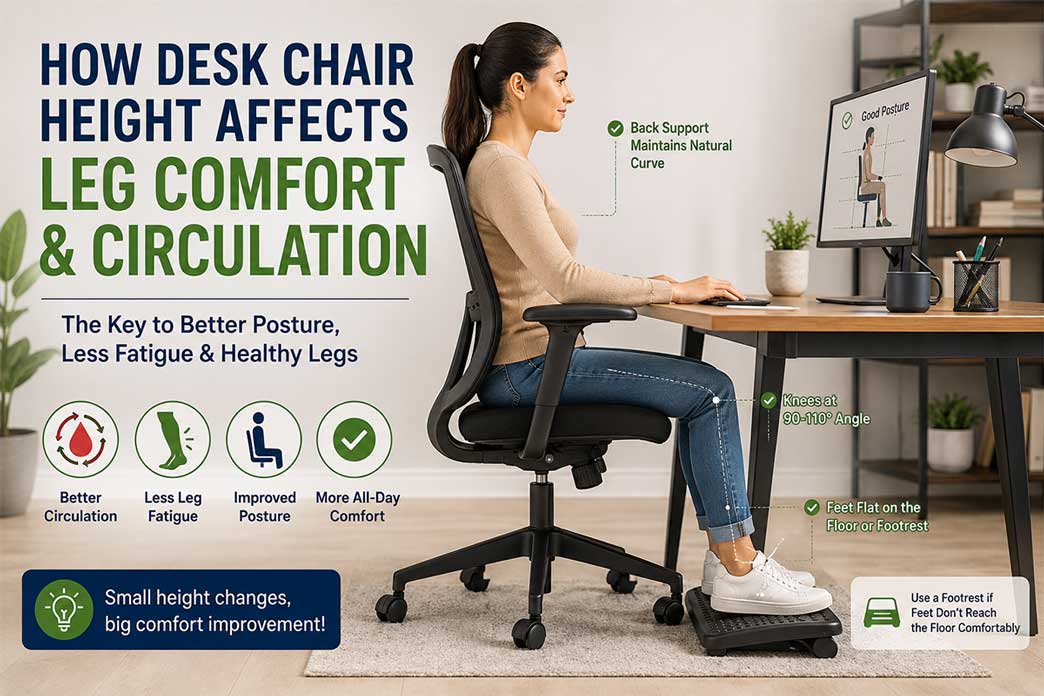
Many people adjust their desk chair to feel comfortable in the moment, then forget about it. But desk chair height and circulation are more closely linked than most people realise. Sitting at the wrong height can quietly restrict blood flow, increase leg fatigue, and cause discomfort that builds over time. Whether you work from home or in an office, understanding how chair height affects your body is one of the simplest ways to improve your daily comfort.
Quick Answer
Yes. Desk chair height and circulation are directly connected. When your chair is set too high or too low, blood flow to your legs and feet can become restricted. This leads to heavy legs, tingling, numbness, and swollen feet. Setting your chair at the correct height keeps your knees at a healthy angle and allows blood to flow freely through your lower body.
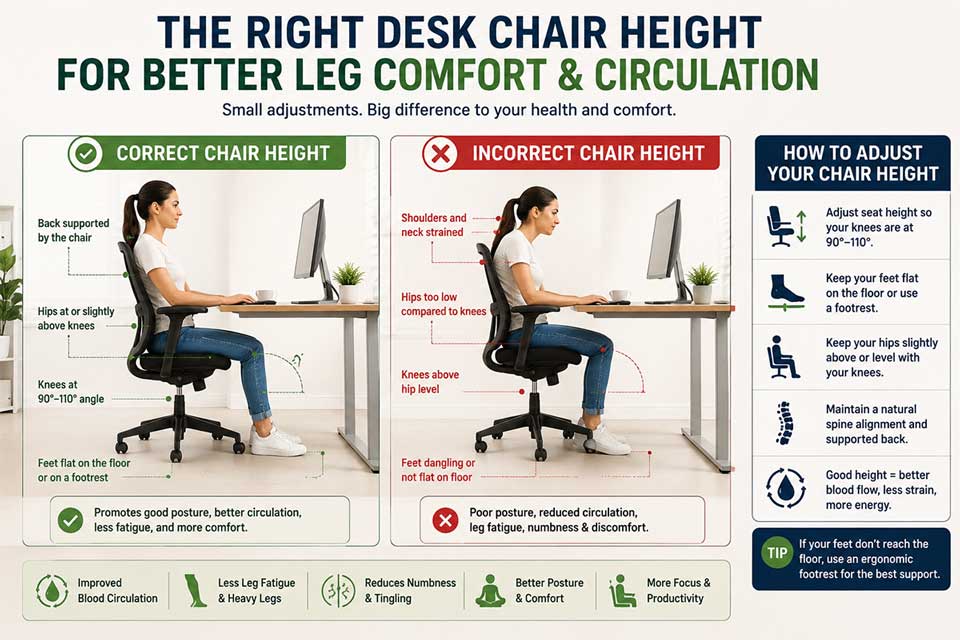
Correct vs Incorrect Desk Chair Height
| Factor | Correct Chair Height | Incorrect Chair Height |
| Knee Position | Bent at 90–100 degrees, comfortable | Too high or too low, causing strain |
| Foot Placement | Flat on floor or supported footrest | Dangling, tiptoe, or forced outward |
| Blood Circulation | Flows freely through legs and feet | Restricted, especially behind knees |
| Leg Comfort | Relaxed muscles, no pressure points | Constant aching, tension, or soreness |
| Fatigue Level | Low fatigue even after long sessions | Rapid onset of heaviness and tiredness |
Poor blood circulation from prolonged sitting in this position often shows up as aching in the hips, stiffness in the lower back, and fatigue in the thighs. The bent, elevated knee position narrows the space for blood vessels behind the knee joint.
Pressure Behind the Knees
A seat that is too long from front to back can press against the back of your knees even when the height is correct. This popliteal pressure directly compresses veins and arteries.
The result is a gradual build-up of fluid in the lower legs and a feeling of heaviness that worsens throughout the day. Adjusting seat depth alongside chair height helps resolve this. We cover this further in the desk ergonomics tips section below.
Common Signs Your Chair Height Is Wrong
Your body signals discomfort before pain becomes obvious. Watch for these signs during or after a long workday.
- Heavy legs: A feeling of weight or dullness in the thighs and calves. This is a common sign that blood is not circulating freely. Learn more about
- Heavy legs: A feeling of weight or dullness in the thighs and calves. This is a sign that blood is not circulating freely. Read our guide on how to relieve heavy legs after sitting all day for practical solutions.
- Tingling or pins and needles: A sensation of prickling in the feet or toes. This indicates nerve compression or reduced blood flow.
- Leg numbness while sitting: Complete loss of feeling in part of the leg. This usually points to sustained pressure on a nerve or blood vessel. See our guide on how to prevent leg numbness while sitting at a desk.
- Swollen feet while sitting: Fluid pooling in the feet or ankles by end of day. This is often linked to poor circulation caused by sustained pressure on the thighs.
- Leg fatigue while sitting: Tired, aching muscles even when you have not been active. Muscles should not fatigue from sitting. If they do, your posture is making them work harder than necessary.
If you notice more than one of these signs regularly, your chair height is the first thing to check.
The Ideal Desk Chair Height for Better Comfort
Getting your chair height right does not require special equipment. It just requires a few adjustments made with awareness of your body.
Knee Angle
Your knees should bend at roughly 90 to 100 degrees when seated. This keeps the thighs roughly parallel to the floor and prevents excessive pressure on the backs of the legs.
If your knees rise above your hips, raise the chair. If your thighs slope sharply downward, lower it.
Foot Placement
Your feet should rest flat and fully supported. They should not dangle, press on tiptoe, or be tucked under the chair.
If your feet do not reach the floor when your chair is at the correct height for your desk, an ergonomic footrest bridges that gap. This is especially useful for shorter individuals or those using fixed-height desks.
Hip Position and Desk Chair Height and Circulation
Your hips should sit slightly higher than your knees, or at the same level. This tilt encourages the natural curve of the lumbar spine and reduces compression on the lower back.
If you are unsure whether your sitting posture is correct, our detailed guide on correct sitting position for all-day desk work walks through each adjustment step by step.
How an Ergonomic Footrest Can Help
Not every desk setup allows perfect chair-to-floor alignment. This is where an ergonomic footrest becomes a practical tool rather than an optional accessory.
A footrest provides a raised, stable surface for your feet. This restores the correct knee angle even when your chair needs to sit higher to align with your desk. It also reduces the downward pressure of your legs on the seat edge, which is a primary cause of restricted circulation.
Key benefits of using an ergonomic footrest include:
- Provides stable foot support when the floor is out of reach
- Reduces pressure on the back of the thighs and behind the knees
- Encourages a more neutral pelvis and improved posture
- May reduce swelling in the feet and ankles by supporting better circulation
- Can reduce leg fatigue by allowing the muscles to relax more fully
If you are dealing with swelling or circulation-related discomfort, read about the benefits of using a footrest under your desk for a more complete overview.
Simple Desk Stretches for Leg Circulation
Even with a perfectly adjusted chair, sitting for long periods slows circulation. Short movement breaks and simple desk stretches for leg circulation help keep blood moving.
1. Ankle Circles
Lift one foot slightly off the floor or footrest. Rotate the ankle in slow circles, five times in each direction. Switch feet. This activates the calf muscles and encourages blood flow back toward the heart.
2. Seated Calf Raises
Keep both feet flat on the floor. Slowly raise your heels as high as you can, hold for two seconds, then lower. Repeat ten times. This engages the calf pump, which plays a key role in venous return.
3. Knee Extensions
Sit upright and straighten one leg slowly until it is parallel to the floor. Hold for five seconds, lower, and switch. This activates the quadriceps and stimulates circulation through the knee.
4. Seated Hip Flexor Stretch
Sit toward the front of your seat. Slide one foot back and let the hip of that leg open slightly downward. Hold for fifteen to twenty seconds. This stretches the hip flexors, which tighten from prolonged sitting and restrict movement through the pelvis.
5. Standing Desk Break
Stand up fully, shift your weight from foot to foot, and walk a short distance if possible. Even thirty seconds of standing every thirty to forty minutes significantly improves blood return from the legs.
For a more complete routine, see our article on how to reduce leg fatigue while sitting at a desk.
Additional Desk Ergonomics Tips
Chair height is the foundation, but full desk ergonomics involves several other adjustments that support circulation and comfort.
Monitor Height
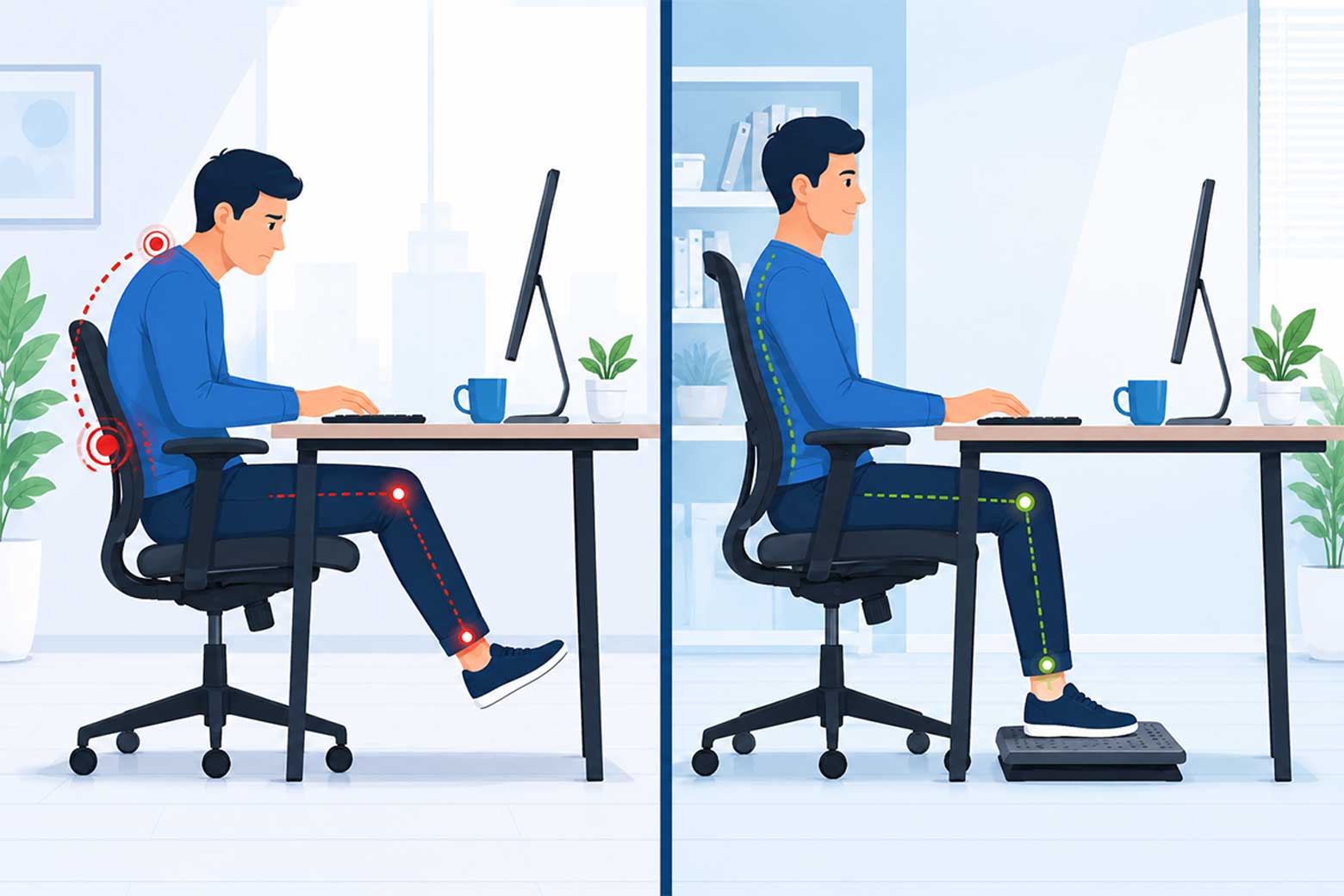
Your monitor should sit at roughly eye level. If it is too low, you lean forward, which rounds your back and shifts weight onto the thighs in a way that compresses blood vessels. A monitor arm or riser helps correct this.
Sitting Posture
Sit with your back supported by the chair backrest, shoulders relaxed, and elbows close to your sides at about 90 degrees. Avoid crossing your legs, which directly restricts blood flow in the lower extremities.
Movement Breaks
The Mayo Clinic notes that prolonged sitting is associated with several health risks, including poor circulation. Taking a short break every thirty to forty-five minutes helps. Even standing for two minutes is enough to interrupt the effects of sustained pressure.
Seat Depth
There should be a gap of two to three fingers between the back of your knee and the front edge of the seat. If the seat is too long, it presses against the popliteal area and restricts blood flow regardless of how well your chair height is set.
Frequently Asked Questions
What is the relationship between desk chair height and circulation?
Desk chair height and circulation are directly linked through pressure mechanics. When your chair is too high or too low, it creates abnormal pressure on the thighs and behind the knees. This compresses the blood vessels that carry blood to and from the lower legs. Over time, this leads to reduced circulation, which can cause heaviness, tingling, numbness, and swelling.
How high should my desk chair be?
Your chair should be set so your feet rest flat on the floor (or on a footrest), your knees bend at roughly 90 to 100 degrees, and your hips are level with or slightly above your knees. This position keeps the thighs parallel to the floor and reduces pressure on the major blood vessels running behind the knee.
Why do my legs feel heavy after sitting all day?
Heavy legs after sitting usually result from reduced circulation in the lower limbs. When you sit for long periods without movement, blood pools in the veins of the legs. Poor chair height amplifies this by adding mechanical pressure to the problem. Regular movement breaks, correct chair adjustment, and footrest use can all help reduce this sensation.
Can a footrest improve leg circulation while sitting?
Yes. An ergonomic footrest supports your feet at the correct angle, which reduces pressure on the underside of the thighs. This allows blood to circulate more freely through the lower legs. A footrest is especially useful when your chair needs to be raised to align with a higher desk, making it difficult to keep your feet flat on the floor.
What causes foot numbness while sitting at a desk?
Foot numbness while sitting is usually caused by sustained pressure on a nerve or blood vessel. This can result from a chair that is too high (putting pressure on the backs of the thighs), crossed legs, or a seat edge that presses behind the knees. Adjusting your chair height, uncrossing your legs, and using a footrest can all help resolve this.
How often should I take breaks from sitting?
Most ergonomics guidance suggests taking a brief movement break every thirty to forty-five minutes. This does not need to be a long break. Standing for a minute, doing a few ankle circles, or walking to another room is enough to restart the circulation in your legs and reduce the build-up of fatigue and pressure.
Conclusion
The connection between desk chair height and circulation is simple but often overlooked. A chair set at the wrong height creates sustained pressure that slows blood flow, increases leg fatigue, and can lead to numbness and swelling over time.
The good news is that the fix is also simple. Adjusting your chair so your knees sit at roughly 90 degrees, your feet are fully supported, and your hips are level can make a noticeable difference from day one. Pair that with a quality ergonomic footrest, regular movement breaks, and a few simple desk stretches, and you will find that leg fatigue and circulation issues are largely avoidable. Your chair is the starting point. Use it well.